
“We’re Dropping the 2” Blizzard Rebrands Overwatch 2 Back to Overwatch and Sets a 2026 Roadmap
Blizzard Entertainment has officially confirmed a major branding and direction shift for its team shooter. After last week’s announcement of multiple franchise showcases, Blizzard has now delivered its Overwatch Spotlight and used the event to make a decisive statement about the game’s future. Overwatch 2 is being renamed back to Overwatch, removing the sequel branding moving forward, as Blizzard positions the title as a long term platform built around a living universe, continuous updates, and an evolving narrative structure.
Towards the end of the 35 minute presentation, Overwatch game director Aaron Keller framed the rename as a strategy decision that aligns with how Blizzard wants players to think about the product. Keller described Overwatch as an ongoing universe that continues to grow and bring players together globally, then explained that the team concluded the game “transcends any single number,” leading to the move to drop the 2 and continue simply as Overwatch. From a brand and market positioning perspective, it is a tangible signal that Blizzard is aiming to reduce friction around identity, unify the player base behind one evergreen title name, and treat each yearly roadmap as a new chapter rather than a new product.
The rename is only the headline. The bigger operational change is Blizzard’s plan to treat 2026 as the start of an annual storytelling model with a beginning, middle, and end across 6 seasons. Blizzard says 2026 begins a new story arc that kicks off with a new Season 1 on 2026 02 10, and the plan is for a new Season 1 in 2027 to launch the next chapter. Keller stated the team is, for the first time, telling an annual story that evolves across all six seasons before the next chapter begins, positioning this as a more cohesive narrative cadence than past seasonal beats.
Season 1 is anchored by the opening story event, Reign of Talon, introduced with a cinematic shown at the start of the spotlight. Blizzard’s setup frames Vendetta defeating Doomfist to claim what was rightfully hers, and the story will be delivered through a mix of hero trailers, animated comics, in game events, map updates, and short stories released over the year. This matters because it is not just lore dressing. It is Blizzard aligning its content pipeline around a repeatable narrative delivery framework that can support seasonal retention, collaboration beats, and faction based events, while giving fans a more structured reason to keep following the game between major hero and mode drops.
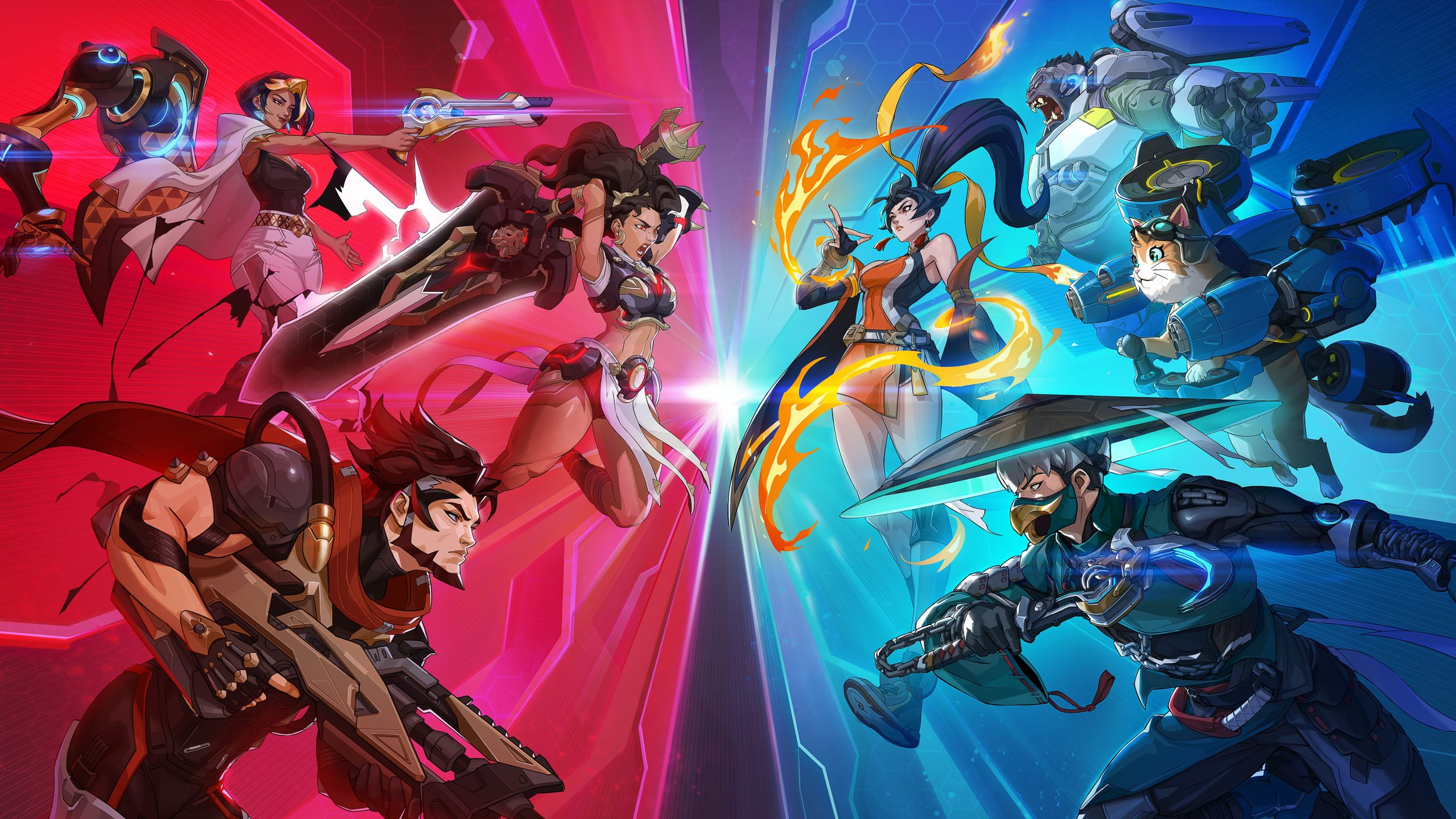
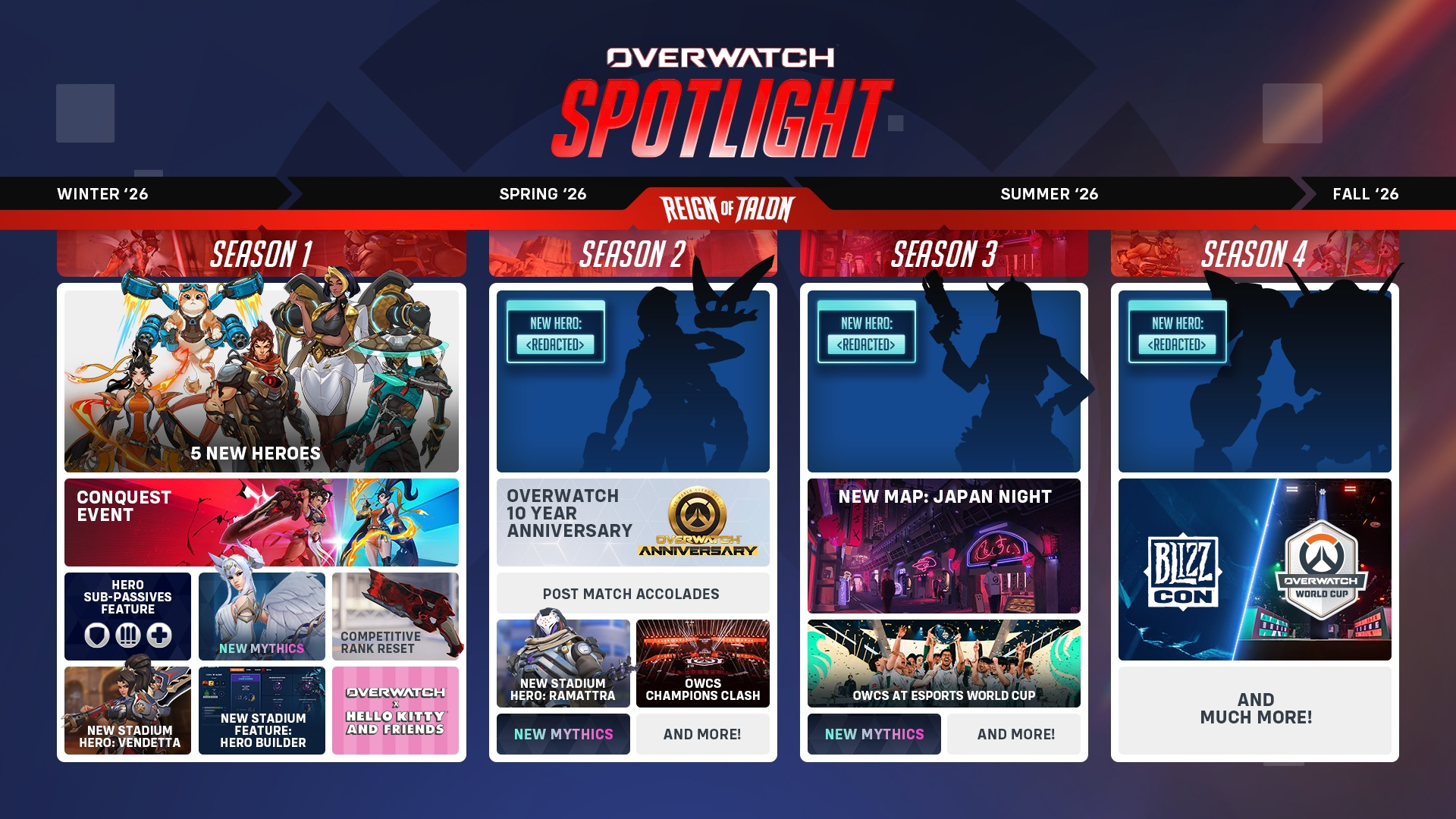
On the content side, Blizzard’s biggest 2026 commitment is 10 new heroes planned across the year, with 5 arriving in Season 1 alone. Those Season 1 heroes are Domina as Tank, Emre as Damage, Mizuki as Support, Anran as Damage, and Jetpack Cat as Support. That kind of injection is aggressive by modern live service standards, and it is clearly designed to reset engagement, refresh the meta, and create a constant stream of new gameplay learning moments for both competitive and casual audiences.
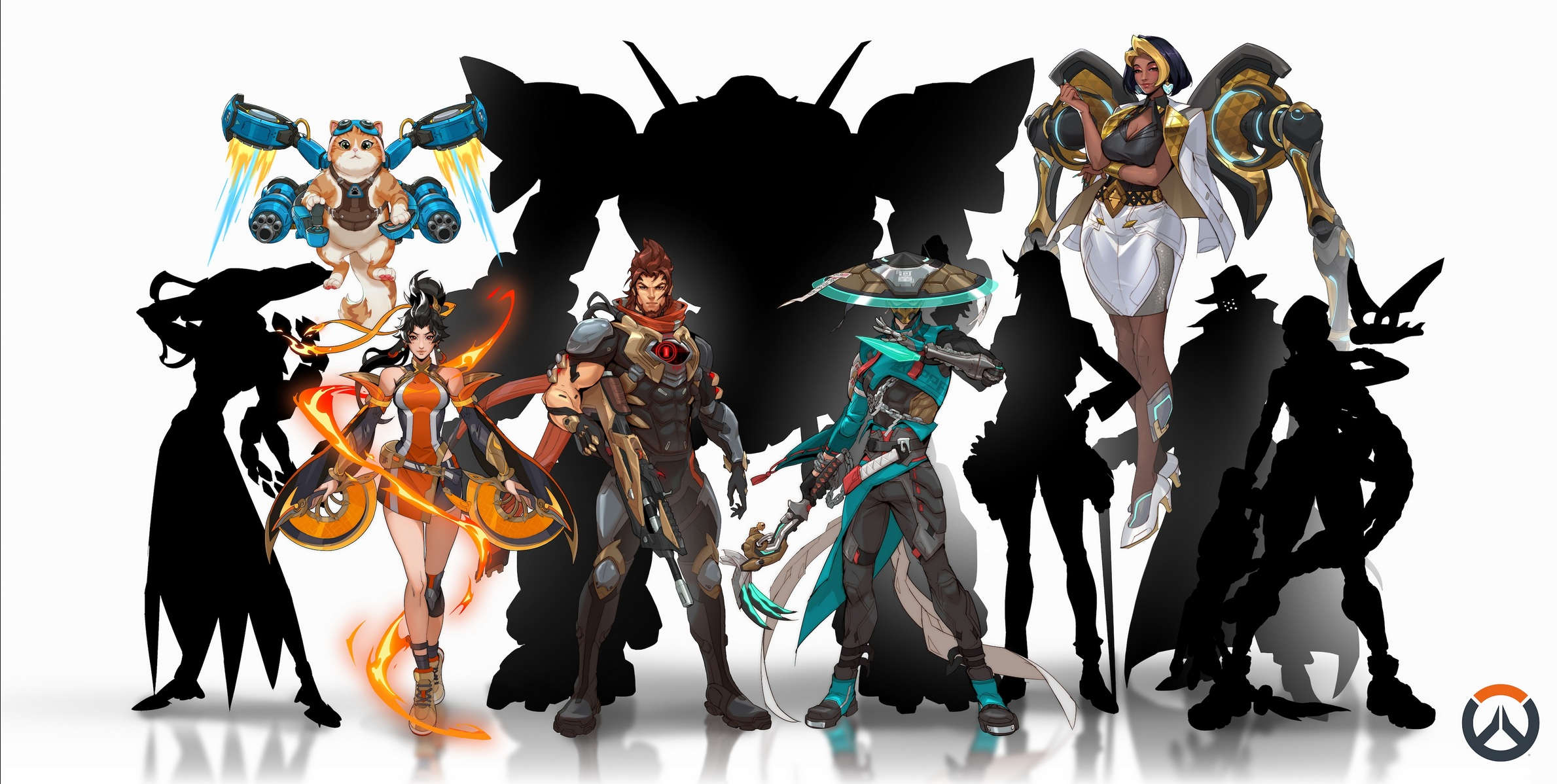
Alongside hero additions, Blizzard is also reworking core role identity by introducing sub classes within Tank, Damage, and Support. This is a foundational design shift because it changes how the game communicates hero function and how balance updates can be targeted. For Tanks, Blizzard is introducing 3 sub classes: Brusier, Initiator, and Stalwart. Brusier Tanks such as Mauga, Orisa, Roadhog, and Zarya receive reduced critical damage and gain movement speed when their health is at critical levels. Initiator Tanks such as D.Va, Doomfist, Winston, and Wrecking Ball reclaim some health while staying airborne. Stalwart Tanks such as Domina, Hazard, Junker Queen, Ramattra, Reinhardt, and Sigma receive reduced knockback and slows. For Damage heroes, Blizzard is splitting the role into 4 sub classes: Sharpshooter, Flanker, Specialist, and Recon. Sharpshooters including Ashe, Cassidy, Hanzo, Sojourn, and Widowmaker reduce movement ability cooldowns with critical hits. Flankers including Anran, Genji, Reaper, Tracer, Vendetta, and Venture receive more health from using a health pack. Specialists including Bastion, Emre, Junkrat, Mei, Solider 76, Symmetra, and Torbjorn briefly gain increased reload speed after a kill. Recon heroes including Echo, Freja, Pharah, and Sombra gain the ability to detect enemies through walls after damaging them when they fall below half health. For Support, Blizzard is introducing 3 sub classes: Tactician, Medic, and Survivor. Tacticians including Ana, Baptiste, Jetpack Cat, Lucio, and Zenyatta gain excess ultimate charge that carries over even after using an ultimate. Medics including Kiriko, Lifeweaver, Mercy, and Moira heal themselves while also healing others with their weapons. Survivors including Brigitte, Illari, Juna, Mizuki, and Wuyang activate passive health regeneration when using movement abilities. In practical gameplay terms, this sub class model gives Blizzard more levers for role wide tuning while also providing players clearer expectations for how a hero should behave inside a composition.
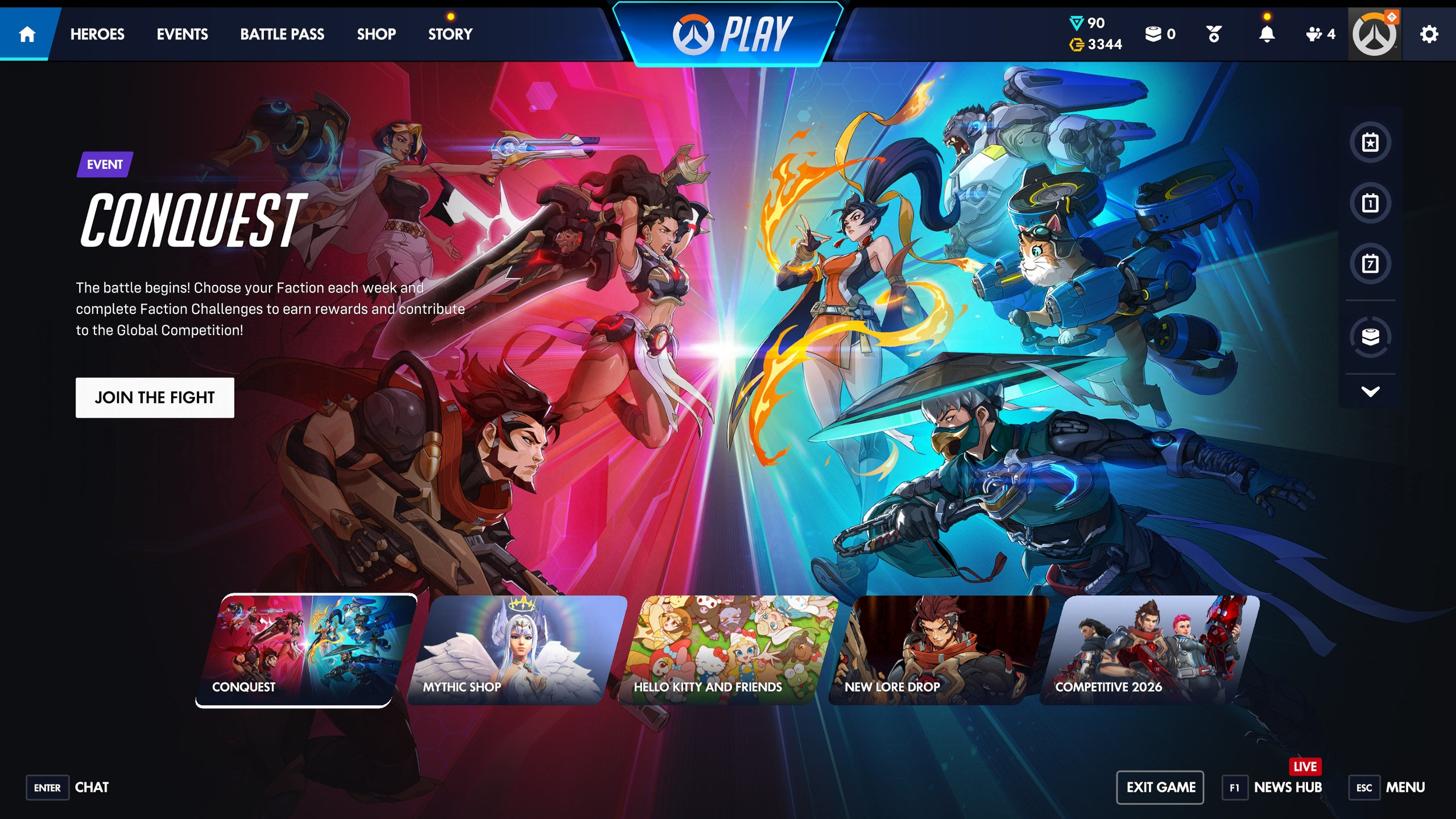
Season 1 also introduces a new Conquest Meta Event, a faction driven structure where players take sides with either Overwatch or Talon, complete missions tied to the lore, and push their faction toward victory based on aggregate mission completion. Rewards from the event go to whichever side completes more missions, and players can switch sides after finishing their current faction’s weekly pass. This is a classic live service engagement design, but it is being framed with lore relevance and a seasonal identity that should help it land better than generic progression grinds.
Blizzard also highlighted a UI and UX overhaul arriving with Season 1, with the goal of restoring more personality and hero centric vibes while in game. For competitive players and long time fans, UI and readability changes can be high impact, especially when paired with significant role system updates, because clarity and pacing matter when learning new hero interactions and sub class rules.
Cosmetics remain part of the content plan, with Season 1 including new mythic skins, collaborations, and other cosmetics. Blizzard specifically teased that the first collaboration of 2026 will bring Hello Kitty into Overwatch, an unexpected crossover that fits the broader industry pattern of using major pop culture partnerships to expand reach and create high conversion cosmetic moments.
Looking ahead, Blizzard’s roadmap indicates Season 2 is planned for Spring 2026, including a new hero, the arrival of the Nintendo Switch 2 version, and likely major celebratory beats tied to Overwatch’s 10 year anniversary. For players, the message is clear: 2026 is being positioned as a reinvention year, with Blizzard betting that a unified Overwatch identity, a heavy hero cadence, story first seasonal structure, and role clarity upgrades can rebuild momentum and keep the game sticky across multiple audiences.
The next Blizzard showcase event will focus on Hearthstone and is scheduled to premiere on 2026 02 09 at 9:30am PT, 12:30pm ET, and 5:30pm BT.
Do you think dropping the 2 helps Overwatch regain momentum, or does Blizzard need bigger gameplay changes beyond branding and a new seasonal structure?
