
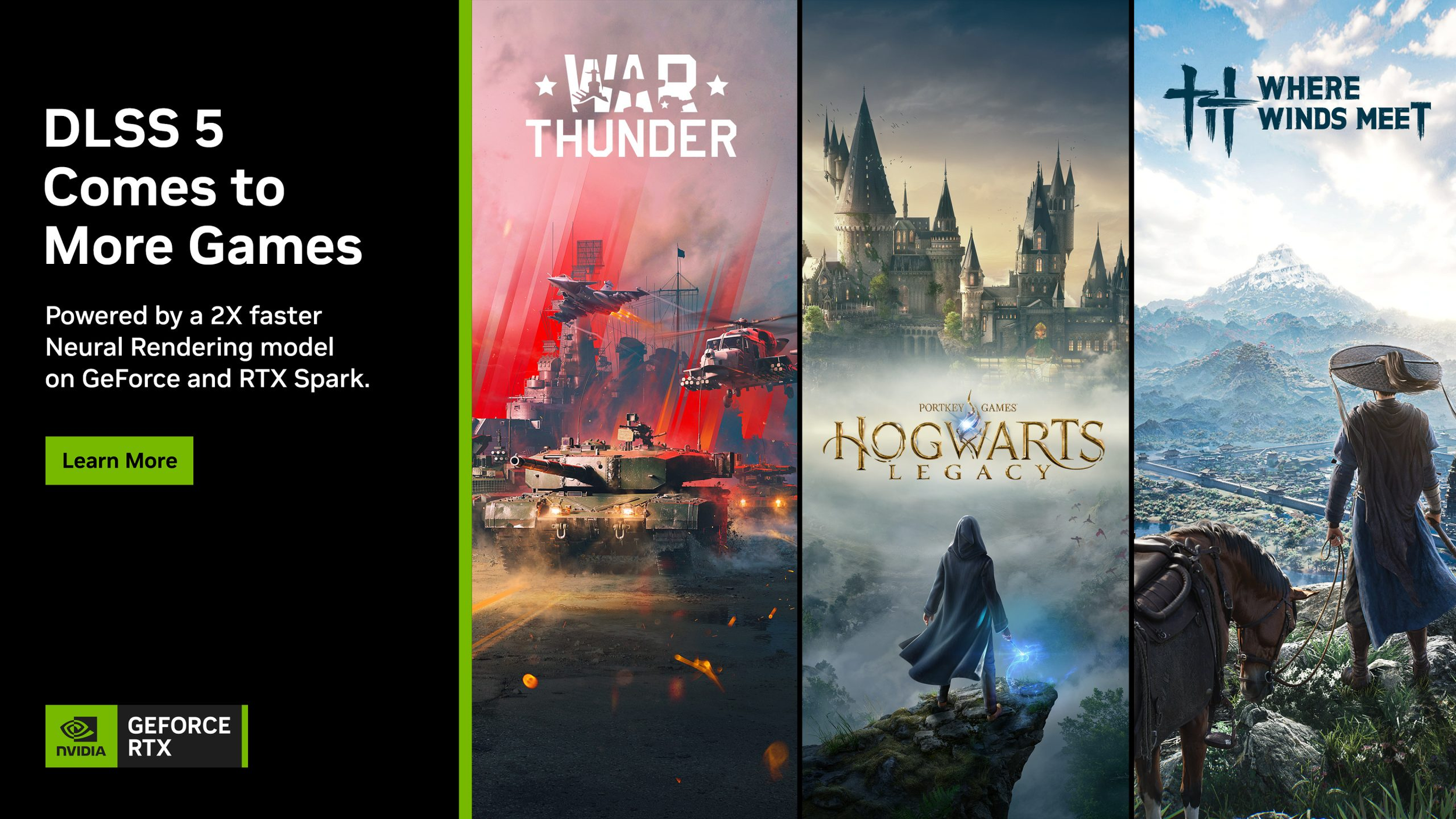
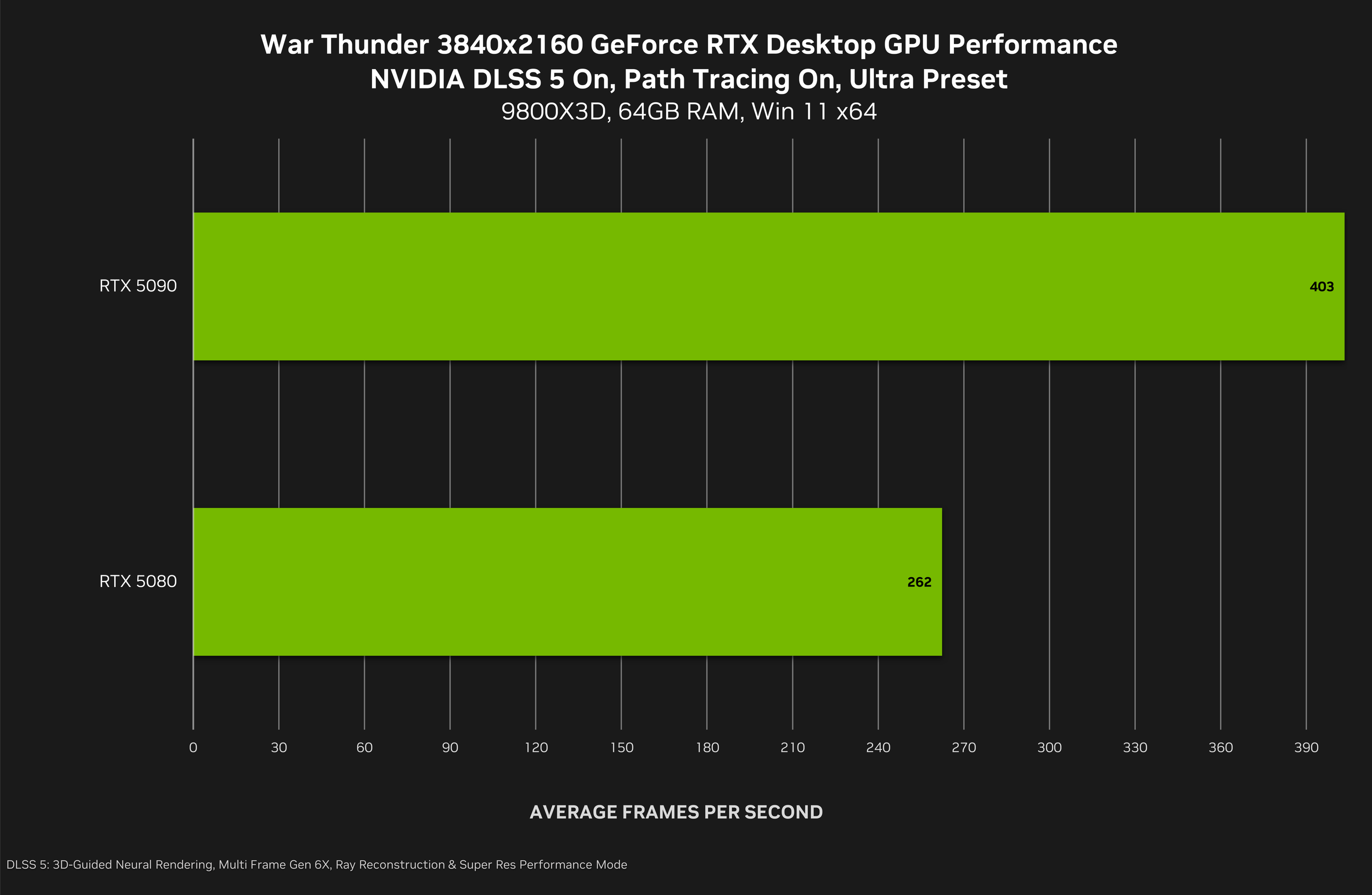
NVIDIA has confirmed that War Thunder will receive DLSS 5 with 3D Guided Neural Rendering in mid November 2026, introducing major visual enhancements alongside performance reaching up to 400 FPS at 4K resolution. The technology will arrive through Gaijin Entertainment's upcoming Eagle's Shadow update, bringing more realistic lighting, improved material detail, and advanced rendering effects to the popular military combat game. According to NVIDIA's official announcement, the impressive performance figures were achieved using DLSS Ray Reconstruction and up to 6X Multi Frame Generation, even with the Ultra graphics preset and path traced global illumination enabled.
Unlike traditional DLSS Super Resolution, which primarily reconstructs images at higher resolutions, DLSS 5 introduces a neural rendering model that analyzes the game's existing frame and motion information to enhance lighting, shading, reflections, and material appearance. In War Thunder, these improvements are particularly noticeable on vehicle armor, camouflage materials, wet surfaces, and environmental lighting. NVIDIA's demonstrations show deeper shadows around tank tracks, more convincing reflections on rain soaked terrain, and improved illumination across naval vessels during combat.
Performance is another major focus. NVIDIA reports up to 400 FPS at 4K and 550 FPS at 1440p in its War Thunder benchmarks, with path tracing and DLSS technologies enabled. However, these figures include AI generated frames and should not be confused with native rendering performance or equivalent input responsiveness. Multi Frame Generation increases the number of displayed frames, while actual responsiveness remains influenced by the underlying rendering rate, frame pacing, and system latency. NVIDIA Reflex is available to help reduce latency, but independent testing will be necessary to evaluate the complete experience.
Gaijin Entertainment also detailed the technical challenges of integrating DLSS 5 into its proprietary Dagor Engine. In an interview with NVIDIA, art director Kirill Stupin explained that the development team needed to reconcile the technology's sRGB input requirements with the engine's linear HDR rendering pipeline. The solution involved modifying the color management process so Neural Rendering could enhance an image that closely matched the player's final view while preserving the existing artistic direction.
This consideration is particularly important for War Thunder, where vehicle models, military markings, surface materials, and environmental visibility contribute to the game's identity. The development team evaluated the results across ground, air, and naval combat to ensure the new rendering technology enhanced realism without unnecessarily changing the appearance of recognizable vehicles.
The Eagle's Shadow update will also introduce dozens of additional aircraft, ground vehicles, and warships, alongside cluster bombs for aircraft and further visual improvements. According to Gaijin's official development announcement, the update is scheduled for mid November, although a precise launch date has not been confirmed.
DLSS 5 will initially target GeForce RTX 50 Series graphics cards and supported RTX Spark systems, with access also planned through GeForce NOW Ultimate. The integration uses NVIDIA's October 2026 neural model, which contains approximately 118 million parameters and delivers twice the processing performance of its previous version while reducing VRAM consumption by 20% at 4K. These improvements were previously detailed in NVIDIA's DLSS 5 optimization update.
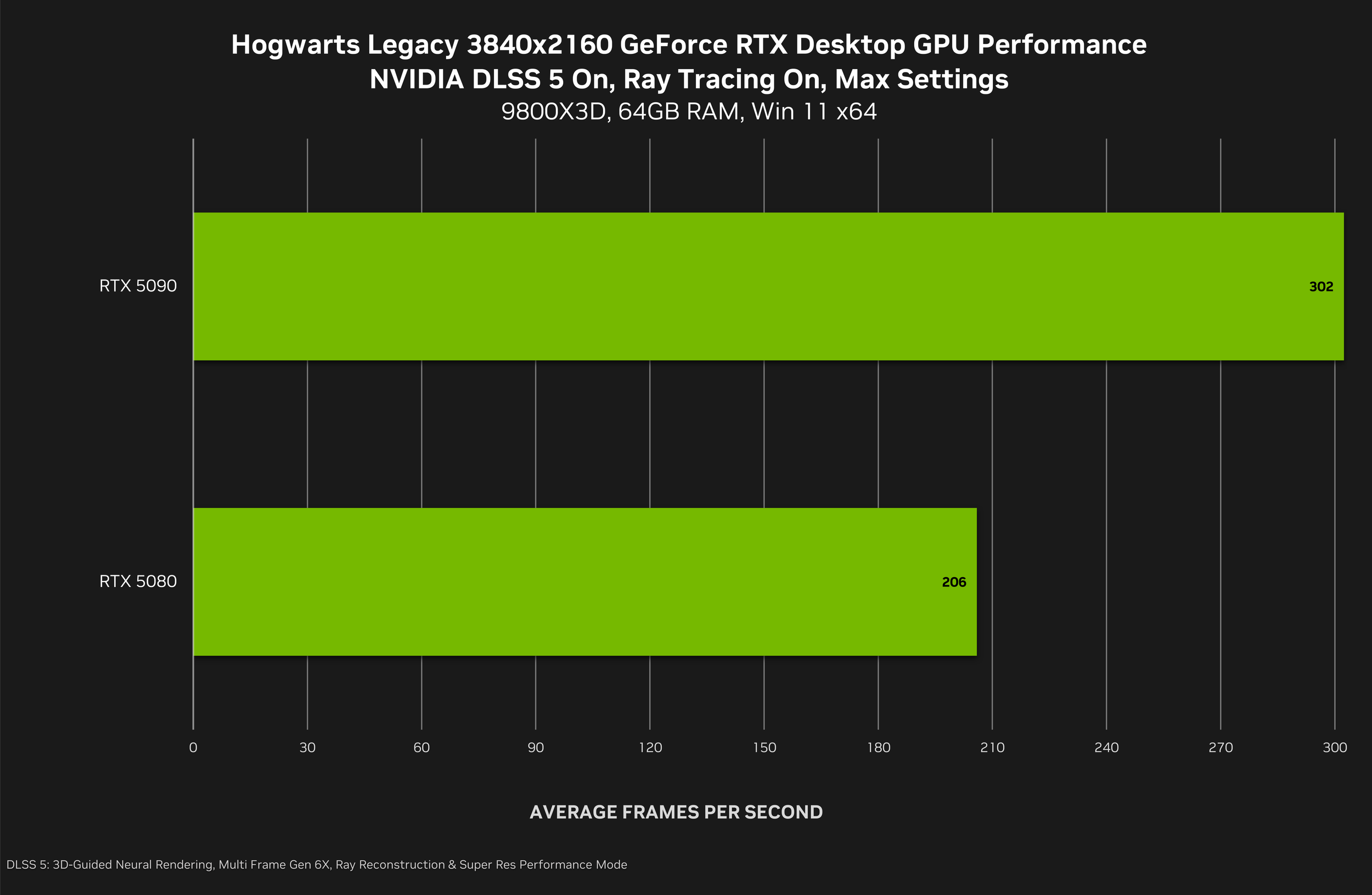
War Thunder joins Hogwarts Legacy and Where Winds Meet as NVIDIA expands DLSS 5 integration throughout November, marking another step toward broader adoption of AI assisted rendering in PC gaming.
War Thunder represents an interesting application of DLSS 5 because the technology is being used to enhance realistic environments and military vehicles rather than dramatically altering character appearances. Improvements to lighting, atmospheric conditions, and surface detail could provide a noticeable visual upgrade while maintaining the game's established presentation.
However, the advertised 400 FPS requires proper context. Generating additional frames can make motion appear significantly smoother, but it does not provide the same responsiveness as rendering 400 independent frames through the game engine. For competitive multiplayer games, consistent frame times and low input latency remain just as important as the displayed FPS counter.
The other consideration is hardware accessibility. NVIDIA's continued optimization of DLSS 5 is encouraging, particularly as the technology becomes less demanding. Nevertheless, its current emphasis on RTX 50 Series hardware leaves many owners of older graphics cards waiting for broader support.
We believe advanced graphics technologies should improve both visual quality and hardware longevity. AI rendering has enormous potential, but meaningful progress should be measured through image consistency, responsiveness, performance efficiency, and accessibility rather than increasingly impressive FPS figures alone.
Would you enable DLSS 5 for more realistic graphics and up to 400 FPS in War Thunder, or would you prioritize native rendering performance and lower input latency for competitive gameplay?
