
UNCANNY Uses DLSS 5 to Remaster Old and Modern Games in Real Time
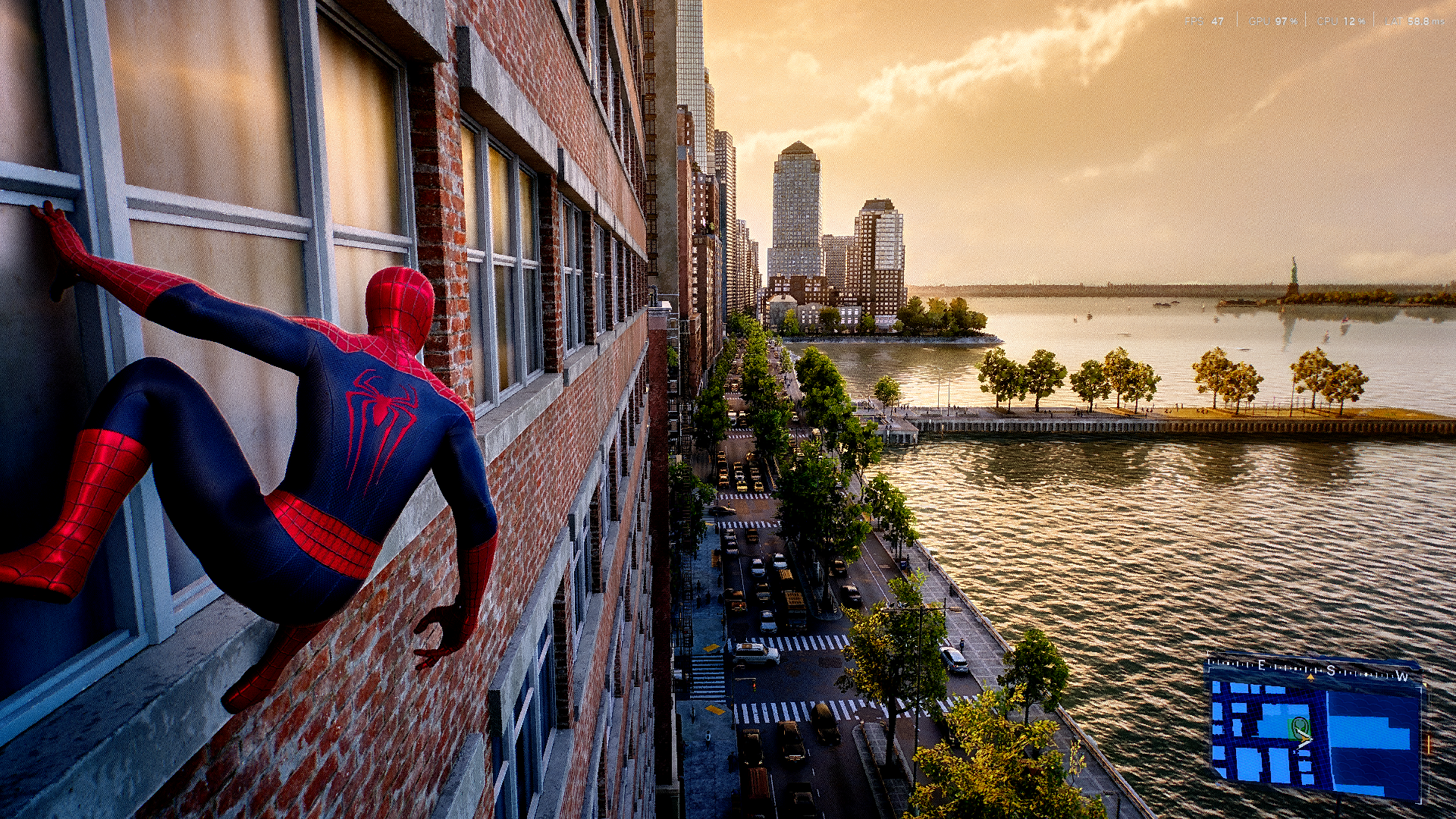
A new community developed graphics project called UNCANNY is experimenting with a very different use for NVIDIA DLSS 5. Instead of integrating Neural Rendering into a single game, the project is building a reusable remastering runtime designed to enhance PC games and emulators in real time.
UNCANNY is being developed by imissanyway, who describes the project as middleware that can attach to existing games rather than requiring a separate remaster mod for every title. The first public alpha is already available through the project's GitHub repository, with PCSX2 serving as its main emulator testing platform alongside modern Windows games.
The important distinction is that UNCANNY is not simply running DLSS 5 over the final image. It has its own reconstruction pipeline with Clean modes ranging from 1 through 3, Motion Guard and Ghosting Guard systems for unstable frames, plus optional DLSS 5 Neural Rendering integration. The first reconstruction stage performs most of the image work, while later stages selectively refine areas that still need improvement rather than repeatedly applying the same complete pass.
The developer is also working on REVENANT, an experimental system intended to reconstruct and eventually replace game assets persistently. REVENANT is currently focused primarily on PCSX2 and remains unfinished, but it points toward a future where the project could potentially modify more than the final rendered frame.
Early comparisons shared by the developer include PlayStation 2 titles such as 007: From Russia with Love and Black, while the runtime has also been demonstrated with modern PC games. Improvements shown so far include cleaner facial detail, reconstructed lighting, stronger interior light shafts, and changes to material appearance. Results vary heavily by game and visual style, and the project remains an early alpha rather than a finished universal remastering solution.
DLSS 5 is particularly interesting in this context because NVIDIA's latest technology no longer focuses only on reconstruction or performance. Its 3D Guided Neural Rendering generates the final displayed appearance using the rendered frame, motion vectors, temporal information, and learned real world appearance data to enhance lighting and materials while remaining anchored to the original scene.
That technology officially debuted on RTX 50 Series GPUs with NBA 2K27. DLSS 5 moved from NVIDIA's early research demonstration into a much faster production renderer, as well as community experiments that have already pushed Neural Rendering into unsupported games.
UNCANNY is currently strongest on DirectX 12, with DirectX 11 under active testing. DirectX 9 and 10 Neural Rendering support remains experimental, while Vulkan and OpenGL have not yet reached DirectX feature parity. The developer also warns that successfully attaching the runtime does not automatically prove Neural Rendering is working correctly in every game.
UNCANNY is an independent project and is not affiliated with or endorsed by NVIDIA.
UNCANNY may be one of the more interesting directions emerging from DLSS 5 because it treats Neural Rendering as part of a broader remastering pipeline rather than a feature built specifically for one modern game.
If the compatibility problems can be solved, a reusable runtime capable of improving reconstruction, motion stability, lighting, materials, and eventually assets could become especially valuable for older PC games and emulation.
It is still very early, but the idea of remastering games dynamically instead of rebuilding every title manually could become one of Neural Rendering's most practical uses.
Would you use a real time neural remastering tool like UNCANNY for classic games, or would you rather keep their original visual style untouched?
