
TSMC’s Advanced Packaging Capacity Is So Constrained That the Company Is Now Outsourcing Orders to Meet Explosive Demand

TSMC’s dominance in advanced semiconductor packaging has reached a breaking point. According to supply chain reporting from UDN, the company’s CoWoS production lines are now so overextended that TSMC is outsourcing part of its incoming orders to Taiwanese packaging specialists ASE Technology and SPIL. The move underscores the unprecedented strain placed on global packaging capacity as AI accelerators and chiplet based designs surge in complexity and volume.
Advanced packaging technologies like CoWoS have become essential for enabling high performance AI hardware. These techniques link multiple chiplets into dense, high bandwidth compute packages that power modern accelerators from NVIDIA, AMD, Google, Apple, MediaTek, Qualcomm, and many others. With demand for AI compute skyrocketing, CoWoS has become just as strategically important as next generation lithography.
TSMC’s CoWoS capacity has been running at peak utilization for months, with 2024 to 2026 demand expected to exceed all previous projections. Despite ongoing expansion efforts in both Taiwan and the United States, TSMC can no longer meet customer requirements through internal manufacturing alone.
This has pushed the company into a rare strategic shift: outsourcing overflow orders to external packaging houses.
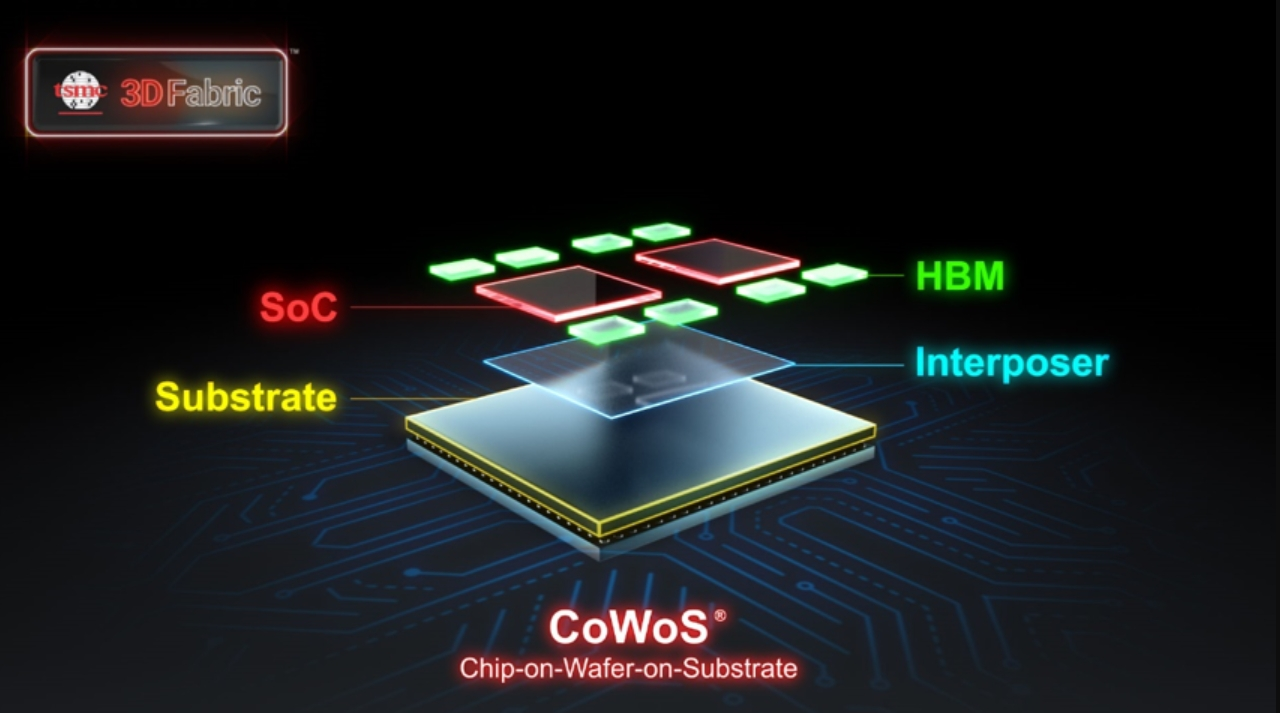
Taiwanese industry leaders ASE Technology and SPIL are positioned to absorb part of the mounting backlog. Both firms have already committed billions to scaling their advanced packaging capabilities, anticipating sustained demand for 2.5D and 3D packaged compute devices.
By leaning on these partners, TSMC can secure additional throughput while avoiding the risk of major clients turning to competitors like Intel Foundry, which has been aggressively marketing its own EMIB and Foveros packaging solutions. Intel’s emergence as a credible competitor in AI era packaging has made capacity preservation even more critical for TSMC.
The industry’s pivot toward chiplet architectures means that advanced packaging is no longer an afterthought. It is now a core competitive battleground. With hyperscalers and semiconductor giants racing to deliver larger models and more efficient accelerators, packaging constraints have become a primary bottleneck in global AI compute growth.
Companies such as NVIDIA, AMD, Google, Apple, and MediaTek rely heavily on TSMC’s CoWoS L and CoWoS S technologies. As these designs continue to scale, no single supplier can absorb the entire industry’s needs.
Outsourcing gives TSMC flexibility, ensures continuity for key customers, and broadens the ecosystem’s overall capacity moving into 2026 and beyond.
The ongoing supply crunch signals a long term reshaping of the semiconductor supply chain. As packaging becomes more complex, capital intensive, and central to AI performance, the industry is likely to adopt a more distributed model rather than relying on one dominant provider.
TSMC’s move to strategically share demand with partners may be a preview of a broader shift in global advanced packaging strategy.
Do you think outsourcing will help TSMC retain its leadership in advanced packaging? Or will Intel and other competitors gain ground? Share your perspective.
