
The Witcher 4 RTX Mega Geometry Foliage Demo Hit 4K at 80 FPS on an RTX 5090 With DLSS Quality
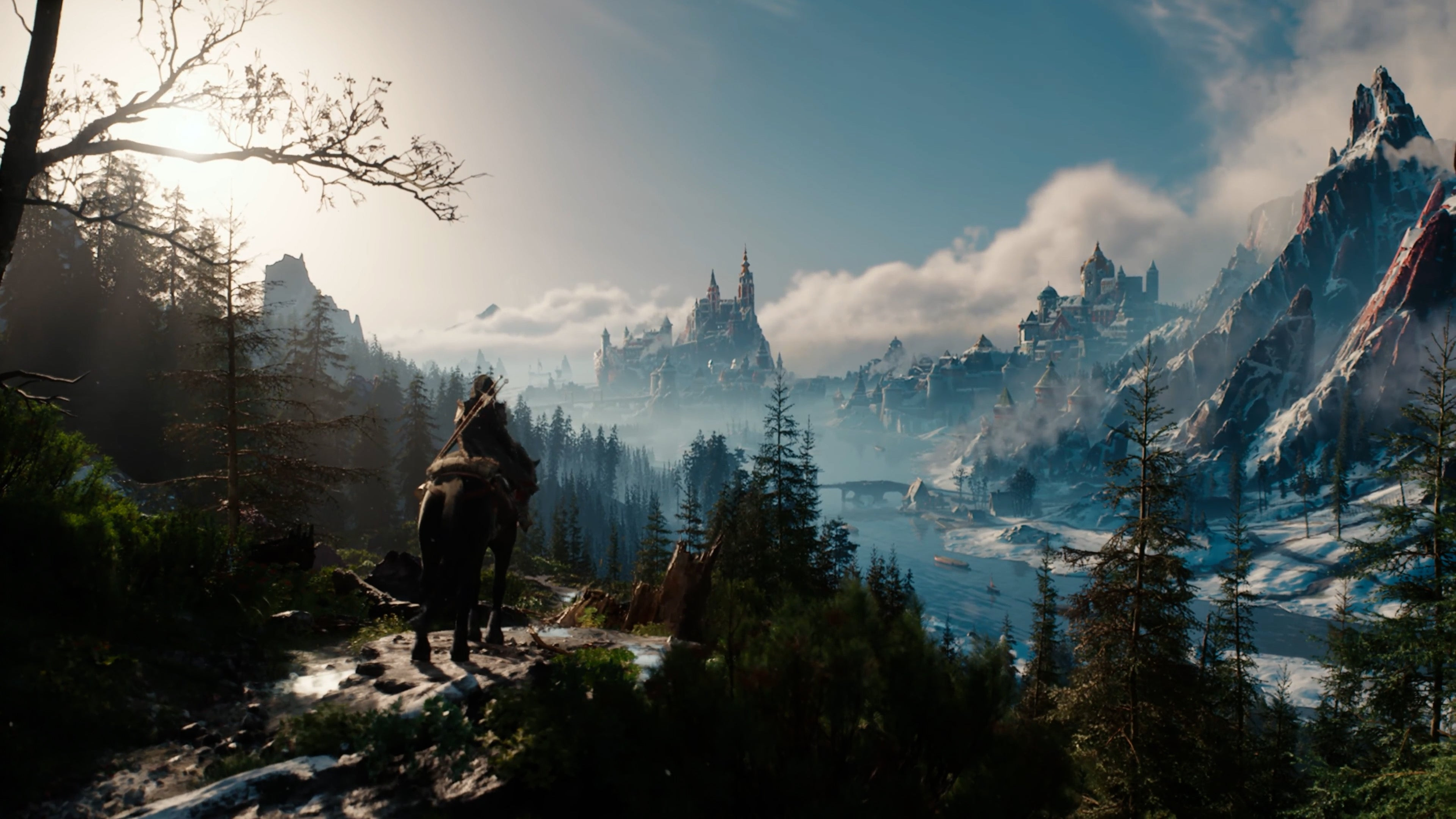
NVIDIA has now released the full replay of its GDC 2026 session through the official session video, and it offers a much clearer look at how The Witcher 4’s RTX Mega Geometry foliage demo actually performed. According to the performance slide shown during the presentation, the demo ran at around 80 frames per second at 4K on an RTX 5090 using DLSS Quality, with the image upscaled from 1440p. The same breakdown also showed 58 frames per second at 1440p on an RTX 4070, again using DLSS Quality from a 960p internal resolution.
What makes the demo especially notable is not just the frame rate, but the scale of the scene NVIDIA used to show off the new foliage pipeline. During the session, NVIDIA engineering director Martin Stich explained that the environment used tree assets supplied by CD Projekt Red and featured roughly 60 million plants from 200 species, around 1 million trees, and a 5 by 5 kilometer terrain held entirely in memory with no streaming. He also said that if the full scene were flattened into a triangle list at maximum detail, it would exceed 5 trillion triangles. NVIDIA had already confirmed at GDC that this new RTX Mega Geometry foliage system is being integrated into The Witcher 4 to enable path tracing across dense natural environments with more realistic lighting and shadows.
The technical angle here is what gives the demo real weight. NVIDIA says the new foliage solution does not require new APIs or new hardware and is instead built on existing RTX Mega Geometry APIs. Larger trees in the demo were assembled from many repeated twig sub objects, and the system relies on a progressive level of detail structure to reduce instance count rather than aggressively stripping geometric complexity. NVIDIA also used Opacity Micro Maps to help manage memory pressure as those merged tree structures scaled across distance. In simple terms, the goal is to keep forest scenes looking fully geometric and richly path traced without collapsing under their own complexity.
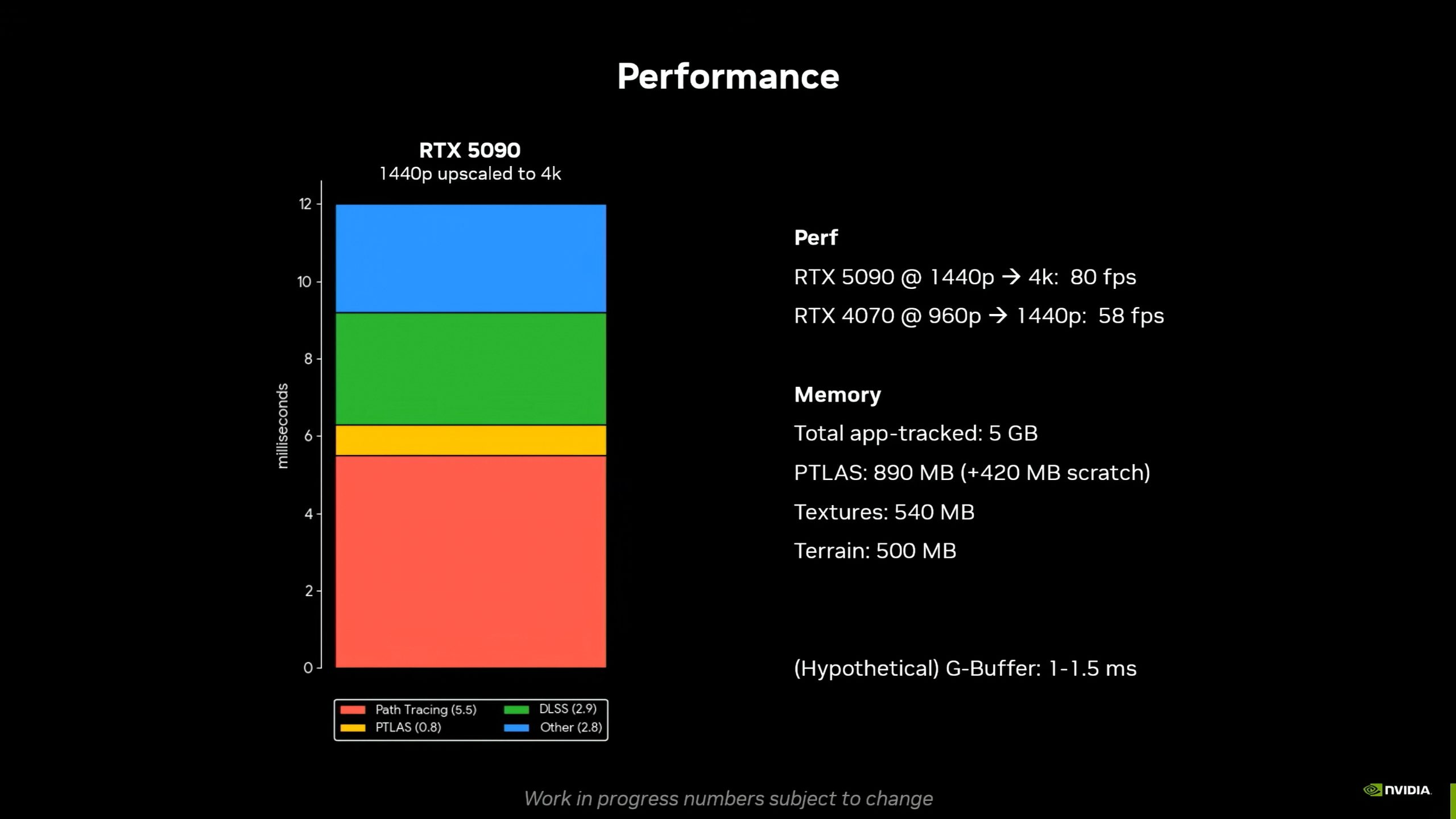
There is still an important caveat around the 80 FPS figure. This was a focused technology demo, not a full shipping gameplay slice with all the systems, logic, and open world overhead that The Witcher 4 will eventually carry. NVIDIA’s own framing around the GDC material positioned it as a showcase for future standards and optimizations in path tracing, which means the numbers should be read as promising, not definitive. Even so, because the assets came from CD Projekt Red and NVIDIA has already confirmed the technology is intended for the final game, the demo still offers one of the strongest early hints yet about the kind of hardware target and rendering ambition players may be looking at.
The bigger takeaway is that NVIDIA and CD Projekt Red are trying to solve one of the hardest visual problems in modern graphics: making dense, animated forests path trace cleanly at high speed. If the final implementation holds up anything close to what was shown in the GDC replay, The Witcher 4 could end up being one of the clearest real world showcases yet for RTX Mega Geometry in a large scale open world RPG.
Do you think this kind of performance makes path traced open world games feel more realistic for next generation PC gaming, or are you still waiting to see how The Witcher 4 performs in a full gameplay build?
