
China’s DDR Memory Hoarders Are Getting Nervous as Retail Prices Slide and Stockpiles Lose Value
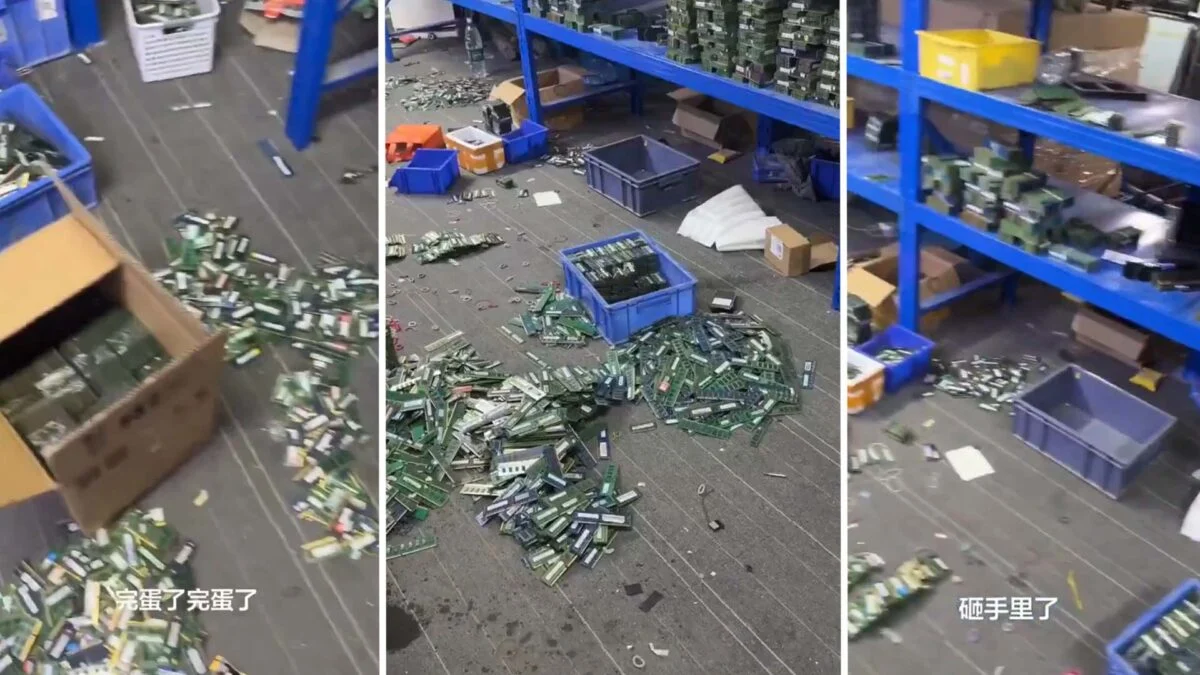
China’s memory resale market is showing clear signs of stress as DDR pricing continues to soften at retail, and one viral clip now captures that panic in unusually direct fashion. Shared by Chinese media account Eng china5, the video appears to show a local RAM seller surrounded by stacked memory inventory while openly worrying that prices have dropped too far for him to unload the stock at a profit. Whether or not that one clip represents the whole market, it lines up with a wider retail correction that analysts are already tracking across China, the United States, and Europe.
Memory prices have plummeted, and speculators in China are already crying out in despair. pic.twitter.com/JwiEHRUXM4
— China pulse 🇨🇳 (@Eng_china5) April 1, 2026
The reason this matters is simple. For months, some traders and small channel sellers appear to have built inventory under the assumption that DDR pricing would keep climbing, allowing them to offload modules later at elevated margins. That strategy works only as long as the price trend stays one way. Once prices begin correcting, the same inventory quickly turns into pressure, especially for anyone holding product bought near the top. TrendForce said on March 31 that the current pullback is concentrated mainly in consumer and retail channels rather than contract markets, which suggests the pain is hitting speculative and downstream inventory holders first.
That distinction is crucial, because it stops this story from turning into a false signal about the entire DRAM business. TrendForce’s market view is that retail DDR5 prices have fallen sharply, but contract pricing has remained comparatively stable and server side HBM and DRAM demand is still holding up. In other words, this is not a clean collapse in memory demand across the board. It is a split market, where enterprise and AI linked demand remains strong while consumer channels are correcting after aggressive pricing and weaker near term build demand. That is why hoarders in the retail channel are feeling the pressure much more visibly than the big supply side narrative might suggest.
The China angle is especially sharp because TrendForce separately reported that the local DDR5 decline was being driven in part by secondary market modules and inventory clearing activity, with some traders cutting prices aggressively to move stock. According to that report, 32GB DDR5 modules that had recently been near RMB 3,000 fell by RMB 500 to RMB 1,050 in a short window, while some fire sale listings reportedly dropped as low as RMB 1,950. That is exactly the kind of sudden repricing that turns stockpiled inventory into a liability.
So while the viral clip makes for dramatic viewing, the broader story is not really about one unlucky seller. It is about what happens when a retail market built partly on fear, shortage psychology, and speculative stocking runs into softer demand and inventory digestion at the same time. Once that happens, sellers rush to protect themselves, more stock hits the market, and pricing pressure feeds on itself. That does not necessarily mean DDR5 is heading back to old lows anytime soon, but it does explain why the tone in the gray and resale channels has shifted so quickly.
For buyers, the situation is more nuanced than the panic suggests. Retail pricing has clearly improved in the short term, and that is good news for gamers and PC builders who were priced out during the earlier spike. But TrendForce is also warning that this may be a short term consumer correction rather than a full reversal of the broader memory cycle. Contract DRAM and AI linked demand still look firm, and supply discipline from major memory makers has not disappeared. So anyone waiting for a dramatic long term collapse in DDR5 pricing should be careful not to assume this retail slide automatically becomes a permanent trend.
That leaves the market in an awkward middle phase. Hoarders and scalpers who bought high are now hoping prices rebound enough to save their positions, while regular consumers are trying to decide whether this is finally the moment to buy. Right now, the strongest evidence suggests that retail buyers are seeing real short term relief, but the structural pressures behind memory pricing have not vanished. For anyone building a system soon, that makes today’s correction look more like an opportunity than a warning.
Do you think DDR5 prices will keep sliding in retail, or is this just a temporary correction before the memory market tightens again?
