
Taiwan Chip Production Shift Is Being Driven by Big Tech CEO Risk Warnings as Dependency on the Island Becomes a Board Level Problem
A new report from The New York Times is sharpening the narrative around why Taiwan’s semiconductor ecosystem is now being treated as a strategic vulnerability, not just an efficiency advantage. In the piece, executives from major fabless companies are described as being shocked in 2023 by briefings that framed a potential disruption of Taiwan’s chip supply chains as a near term possibility, with some warnings pointing to a Chinese invasion scenario as soon as the following year. That shock factor matters because it reframes the last few years of reshoring and diversification as a customer driven pressure campaign, not simply a government subsidy story.
The core takeaway is that the chip production shift is being pulled by fear and concentration risk. When a small number of customers depend on a single region for the majority of their leading edge silicon, geopolitical uncertainty becomes an existential business continuity question. The implication is that fabless firms have effectively pushed TSMC toward accelerating global footprint diversification, because the alternative is continuing to build next generation product roadmaps on top of a single point of failure.
The report also highlights how the United States push to relocate meaningful wafer output collides with semiconductor reality. Politics can demand aggressive targets, but semiconductor manufacturing is not a factory you can replicate by writing checks alone. The thing Taiwan built over decades is not just fabs, it is an integrated ecosystem across science parks, specialized suppliers, talent pipelines, logistics, and a deeply tuned operating cadence that compresses iteration cycles. Trying to reproduce that cluster effect in Arizona is possible, but it is structurally slow, because the supply chain is a network, not a building.
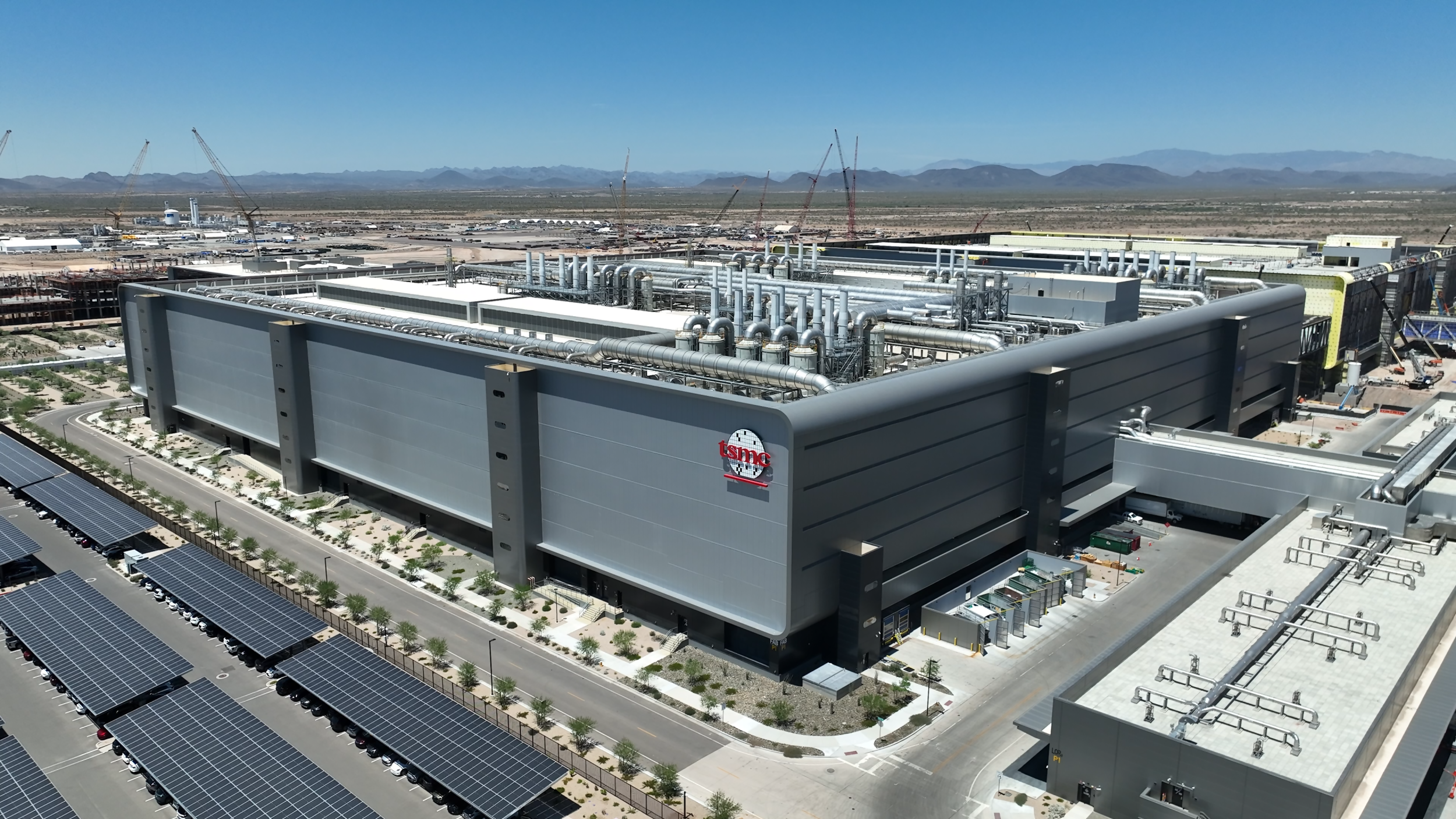
That is where the article’s most important unresolved question appears. Even if TSMC invests heavily in United States capacity, does that translate into resilient, meaningful production at the scale that would actually protect the global tech economy from a Taiwan disruption. The report suggests that even a very aggressive United States buildout will still struggle to match Taiwan’s output within the same decade, because the bottleneck is not only capital. It is equipment availability, process learning, supplier readiness, talent density, and the time required to stabilize yields on advanced nodes.
The uncomfortable scenario planning is what makes this story relevant to gamers and PC hardware buyers too. If Taiwan faced a major disruption by 2027, the immediate consequence would not be a clean swap to Arizona capacity. It would be a forced volume compromise across the entire industry. That means fewer GPUs, fewer CPUs, fewer console SOCs, and a higher likelihood of price spikes and extended product gaps, exactly the kind of turbulence that breaks upgrade cycles and triggers another wave of scarcity driven PC building drama.
Because of that, fabless manufacturers are increasingly being pushed toward a multi sourcing mindset. The report frames Intel and Samsung as the primary alternative foundry pathways under discussion, especially as Intel Foundry positions future nodes like 18A and 14A as competitive options. The strategic question is not whether these alternatives can exist, it is whether they can deliver the combination of volume, yield stability, and consistent customer execution required to carry flagship products at scale. In other words, diversification only works if it is not just technically viable, but operationally repeatable across years, not quarters.
The forward looking conclusion is simple. The supply chain pivot is no longer optional risk management, it is becoming a competitive requirement. The companies that build credible second sources, packaging alternatives, and regional capacity redundancy will ship more consistently through volatility. The ones that do not will be forced into reactive allocation, delayed launches, and unpredictable pricing, which is the worst possible experience for consumers and enterprise buyers alike.
If you were running a major GPU or CPU roadmap, would you prioritize a faster but partial Taiwan risk hedge through United States capacity, or a slower but deeper multi foundry strategy even if it meant short term performance compromises?
