
Suppliers Report Smooth Vera Rubin Ramp So Far as NVIDIA Reuses Key Blackwell Elements
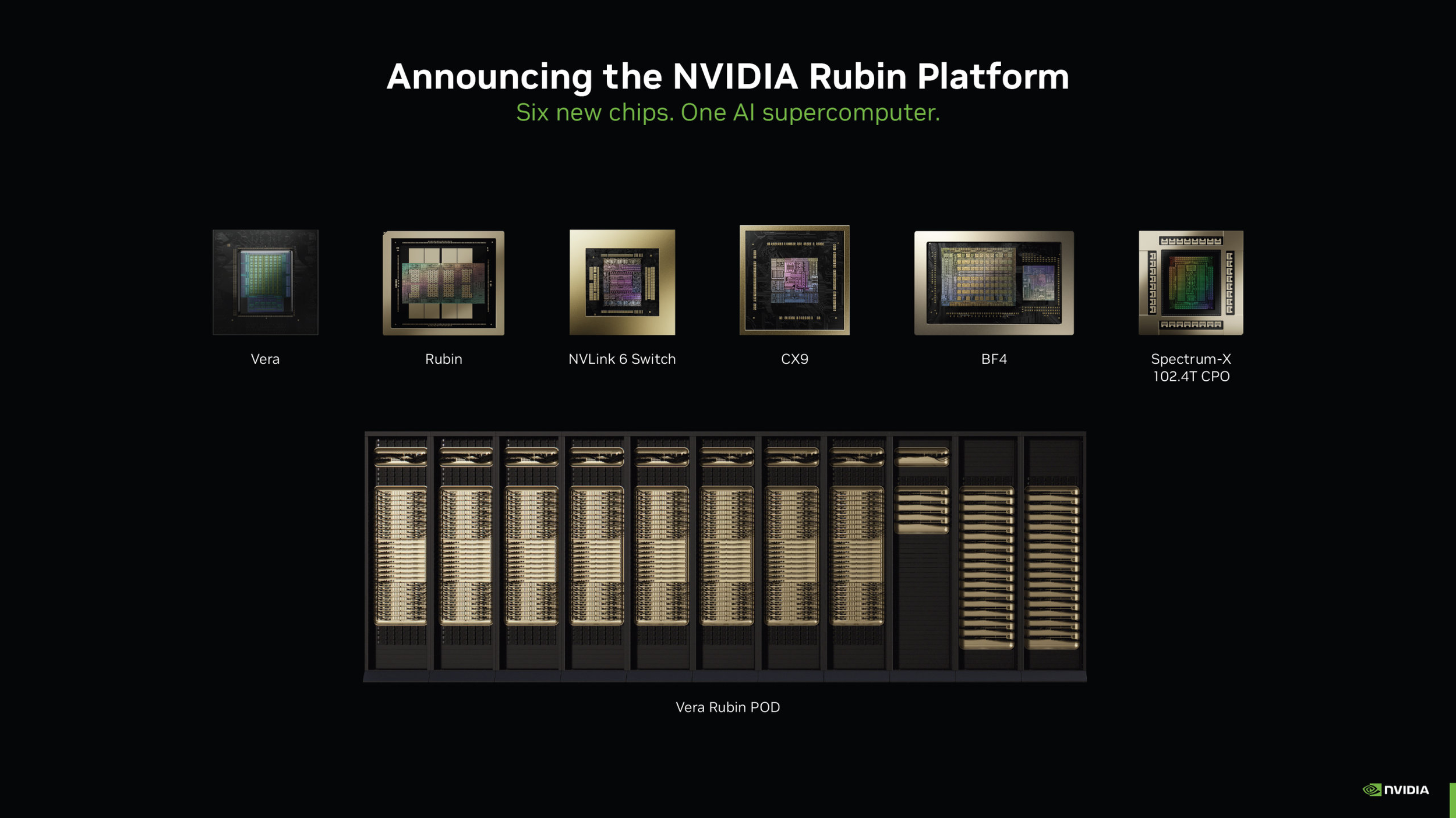
NVIDIA’s Vera Rubin platform is now framed as a 2026 scale up story rather than a distant roadmap slide, after the company stated the Rubin generation has entered full production in Q1 2026 and positioned partner availability for the second half of 2026. That full production messaging immediately raised the practical question that matters to hyperscalers and the broader AI supply chain: when do complete rack level systems land in customer hands, and can the ecosystem actually ramp without the kind of friction that has historically hit brand new architectures.
A new datapoint from the manufacturing reported via Ctee, side suggests the initial ramp is not facing major obstacles for now. Quanta executive vice president Mike Yang indicated that early Rubin units could be delivered to customers by August 2026, targeting full hyperscaler integration by Q4 2026.
The enabling detail here is continuity. According to Yang’s remarks as relayed in the report, several components in Rubin infrastructure remain aligned with the Blackwell generation, which reduces the operational shock of switching production lines. That is a key nuance, because Rubin is not a single chip swap. It is a platform that couples compute, networking, interconnect, and memory bandwidth into an integrated rack scale product, which means supplier readiness is only as strong as the weakest link in packaging, HBM supply, board design, optics, and system level validation.
At CES 2026, NVIDIA emphasized Rubin as a 6 chip platform spanning compute and networking, including the Rubin GPU, the Vera CPU, NVLink 6, ConnectX9, BlueField 4, and Spectrum X 102.4T CPO. The company also highlighted extreme codesign as the operating model, which is effectively NVIDIA saying the hardware and software stack is being treated like a single product that partners and customers integrate as a system, not a pile of parts.
Even if suppliers are comfortable with the early ramp, it would be consistent for NVIDIA to constrain initial volume while it locks thermal behavior, yields, and customer side deployment playbooks, then expand shipments as integration risk falls. Reuters reporting around CES described a flagship rack configuration built around 72 GPUs and 36 CPUs, which aligns with the industry expectation that NVIDIA will push a controlled, repeatable rack blueprint before expanding to larger topologies.
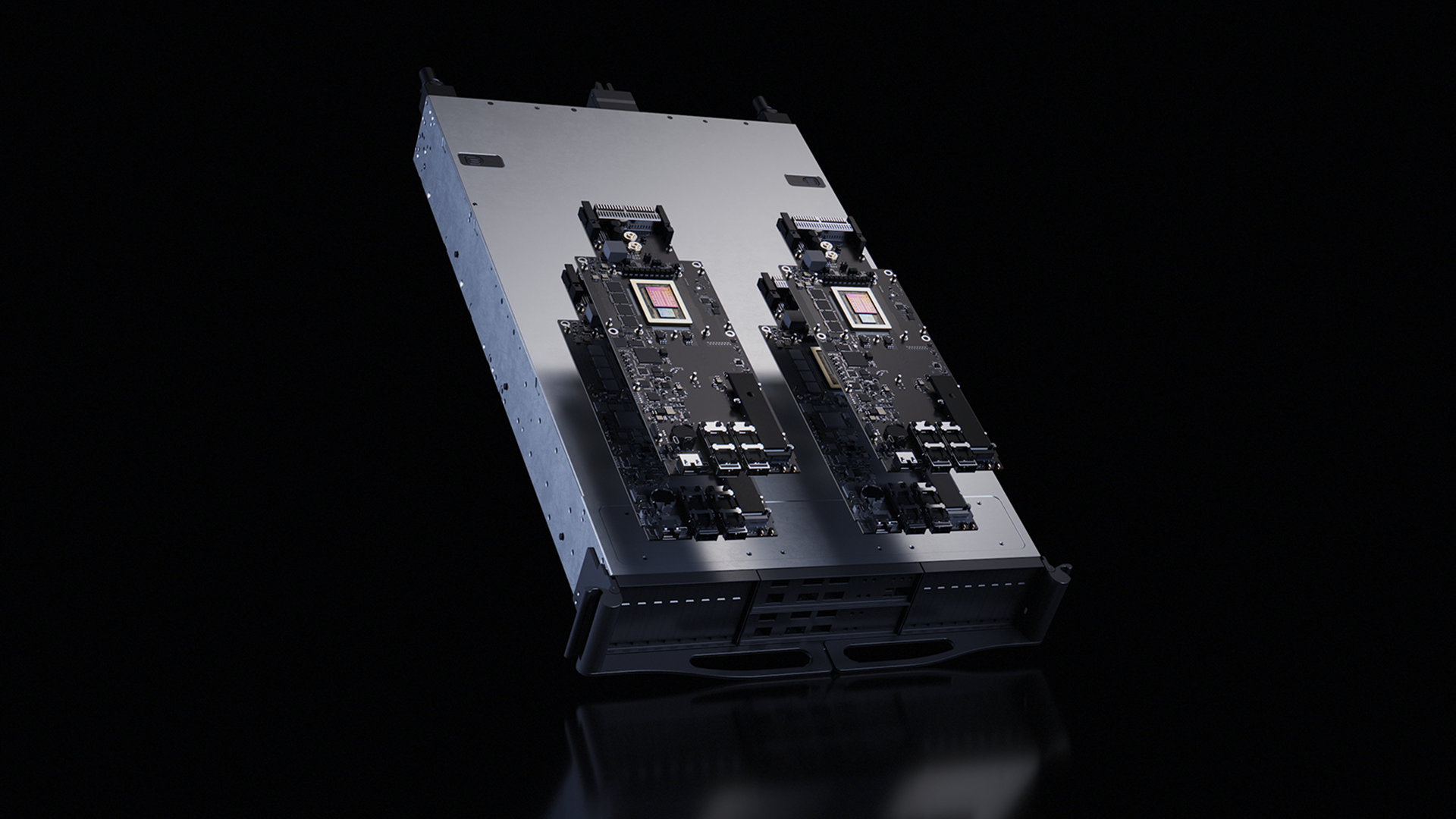
This is where the Blackwell to Blackwell Ultra experience becomes a useful lens. When platforms change at the rack level, the supply chain does not just scale wafers, it scales packaging throughput, optics and networking parts, board complexity, firmware maturity, and manufacturing test coverage. Reusing elements from Blackwell is a straightforward way to protect schedule while still delivering generational gains where Rubin matters most, which is total system throughput per rack and efficiency per deployed cluster.
If you want to track whether this timeline is real, watch for 3 concrete signals in 2026. First, partner systems and rack availability language that shifts from second half of 2026 to specific month windows. Second, evidence that early deployments are graduating from pilot integration to repeat orders, which typically shows up as broader partner availability rather than a single hyperscaler headline. Third, any sign that networking and optics are keeping pace, because those often dictate how fast rack scale designs can be deployed in volume.
If Rubin units really start landing by August 2026 and hyperscalers complete integration by Q4 2026, that sets up a clear runway into 2027 for frontier model training at higher utilization, with early adopters expected to include major cloud and AI infrastructure players.
What do you want to see first: verified rack shipments in August 2026, or performance and efficiency numbers from real hyperscaler deployments once Rubin is fully integrated in Q4 2026?
