
Sony Publicly Lays Out Its AI Game Development Strategy as PlayStation Studios Expand Internal Tools
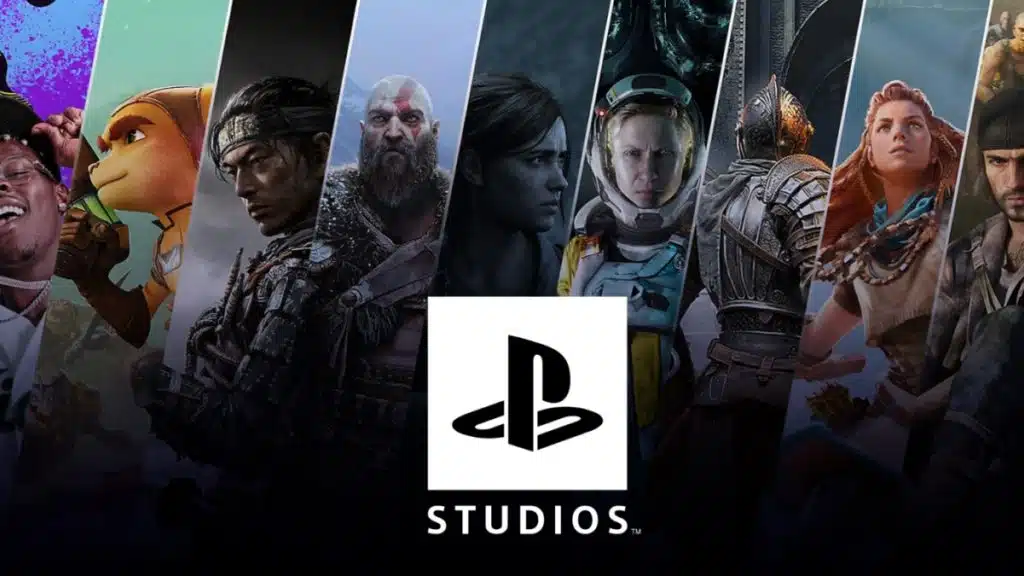
Sony has become one of the biggest game publishers to openly and publicly explain how artificial intelligence is already being used across its creative pipeline, with new comments from company leadership making it clear that PlayStation is not treating AI as a distant experiment, but as an active production tool inside first party development. In reporting shared by Variety, Sony framed its position around a simple message: human creativity remains central, while AI is there to amplify efficiency, iteration, and production scale. That same direction is also reflected in Sony’s own 2026 corporate strategy presentation, where executives described AI as a tool to accelerate workflows, support creators, and expand the volume and diversity of content on the platform.
Sony Group CEO Hiroki Totoki said that “human creativity must remain at the center” and described AI as “an amplifier of human imagination and catalyst for new possibilities.” Sony’s official strategy materials also state that the company has already invested more than $50 million in AI across the Pictures business, while Sony Music is pursuing industry level standards for labeling AI generated content in order to improve transparency and protect intellectual property. The company also confirmed a collaborative initiative with Bandai Namco focused on generative AI in video production, where Sony says the partners have already identified major gains in speed and productivity, while also acknowledging that consistency and controllability remain key weaknesses in current models.
For gaming, the more revealing comments came from Sony Interactive Entertainment CEO Hideaki Nishino. In Sony’s official strategy presentation, Nishino said PlayStation sees AI as “a powerful tool” that can help make it “the best place to play and the best place to publish.” He outlined a broader internal rollout where PlayStation developers are automating repetitive workflows, improving software engineering productivity, and accelerating quality assurance, 3D modeling, and animation with AI assisted tools. That language matters because it goes beyond vague future talk. Sony is now describing AI use as something already embedded in practical studio operations.
One of the clearest examples is an internal PlayStation tool called Mockingbird, which Sony says can generate 3D facial animation from performance capture data in a fraction of the time required by older workflows. According to Sony’s presentation, work that once took hours can now be completed in a fraction of a second, and the company says teams at Naughty Dog, San Diego Studio, and others have already adopted the tool. Sony specifically says the technology has been used in released titles, including Horizon Zero Dawn Remastered. That is a significant line in the sand, because it confirms Sony is not merely prototyping AI internally. It is already shipping games that include AI assisted production workflows.
Sony also highlighted a second tool focused on hair animation. The company says teams can feed video of real hairstyles into an AI system that outputs 3D hair models with hundreds of strands, reducing one of the more labor intensive areas of character production. On its own, that may sound like a narrow use case, but in practice it points to a broader strategy: Sony appears to be focusing first on high cost, repetitive, and technically demanding tasks rather than presenting AI as a substitute for concept artists, writers, or performers. That distinction is likely deliberate, especially as publishers continue to face player and developer skepticism around broader generative AI adoption.
That is where the timing becomes especially interesting. Sony’s public embrace of AI comes only a few months after Larian faced a wave of criticism over generative AI in connection with its future Divinity work. In January 2026, Larian confirmed it would refrain from using generative AI during concept art development after backlash surrounding how the technology was being discussed by the studio. Larian still left the door open to other controlled uses, but the response showed how sensitive players remain when AI gets too close to visibly creative work. Sony’s messaging looks carefully designed to avoid that exact pressure point by emphasizing workflow acceleration, human performers, and creator control.
That makes Sony’s current position important for the wider industry. This is not a smaller studio quietly experimenting with internal tools. It is one of gaming’s largest platform holders publicly telling investors, developers, and players that AI will be part of how PlayStation content is made and scaled going forward. Sony is also explicitly forecasting that AI will increase the overall amount and diversity of content available, while trusting that its own studios and established franchises will stand out in a more crowded market. In other words, Sony is not just adopting AI for cost savings. It is integrating AI into a larger platform strategy tied to production throughput, discovery, and ecosystem growth.
The most important takeaway is that Sony is trying to normalize a middle path. It is not presenting AI as a replacement for artists, nor is it rejecting the technology because of backlash elsewhere in the market. Instead, it is openly arguing that AI can handle repetitive technical work so human teams can spend more time on storytelling, world building, gameplay, and performance. Whether players accept that distinction long term is still an open question, but Sony has now made its stance unmistakably public.
What do you think about Sony’s approach to AI in game development? Does this feel like a practical production upgrade, or the beginning of a much bigger shift for PlayStation studios?
