
Sony Confirms FSR 4 Derived PSSR Upgrade for PS5 Pro Rolling Out Next Month, With Resident Evil Requiem First in Line
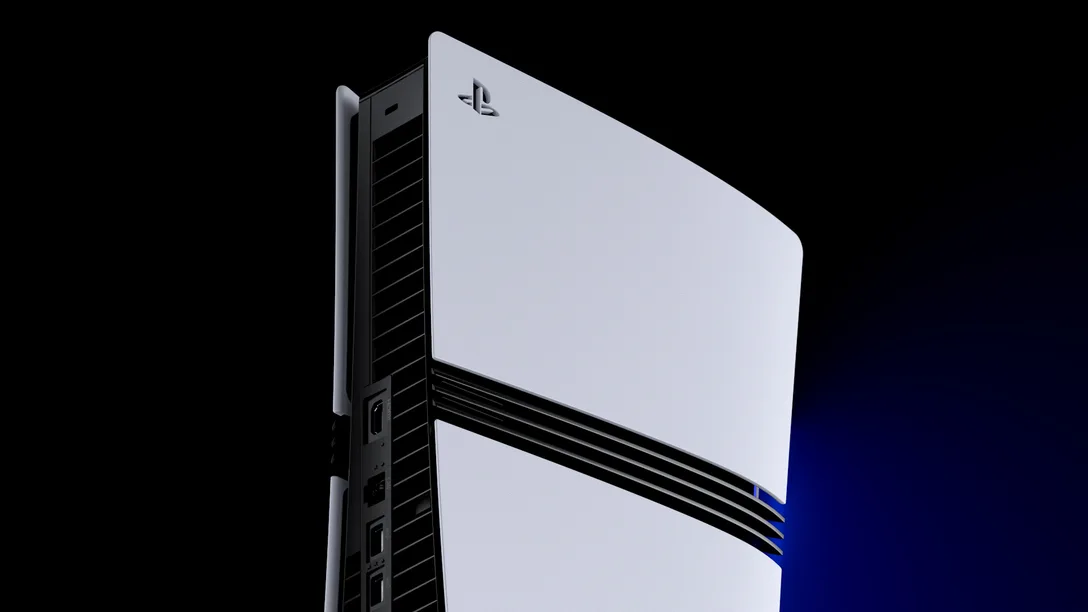
Sony has confirmed that an upgraded version of PSSR, PlayStation Spectral Super Resolution, is ready for PlayStation 5 Pro and will begin rolling out next month, with CAPCOM’s Resident Evil Requiem set to be the first title to implement the new model. The update is positioned as a major quality step forward for Sony’s machine learning upscaling stack, and it is being framed as a direct outcome of Project Amethyst, the ongoing collaboration between Sony and AMD.
CAPCOM’s Masaru Ijuin, Senior Manager in the Engine Development Support Section under the R and D Foundational Technology Department, said the improved PSSR meaningfully boosts how well the game preserves intricate detail that traditionally breaks down during upscaling. The key message is that the new model can process fine textures and complex visual information more convincingly, with CAPCOM explicitly tying that to stronger atmosphere and a new gameplay feel that comes from higher perceived clarity and stability in motion.

Early hands on analysis is already out. Digital Foundry tested the upgraded PSSR inside Resident Evil Requiem and called it a substantial improvement over the first generation upscaler, which often looked less clean and less sharp than expected for an ML based solution. In comparisons against AMD FSR 4 and NVIDIA DLSS 4.5 on PC, Digital Foundry reported that the new PSSR still shows more aliasing in some cases, but it also demonstrated less ghosting and occasionally better sharpness than AMD FSR 4 depending on the scene. They also cautioned that Resident Evil Requiem is not the easiest title for direct upscaler comparisons because its visual identity leans heavily on darkness, depth of field, and film grain, all of which can distort traditional clarity metrics.
One of the most consumer friendly moves is how Sony is shipping the upgrade. The new PSSR is expected to be exposed as a system level option called Enhance PSSR Image Quality, meaning PS5 Pro owners can toggle the updated model at the console level rather than waiting for every game to build a bespoke implementation path. That matters because it can accelerate adoption and standardize results across the PS5 Pro performance and quality pipeline, assuming developers align their render targets and reconstruction inputs appropriately.

PS5 Pro Lead System Architect Mark Cerny also connected the dots publicly, stating that the algorithm and neural network behind the upgraded PSSR stem from Project Amethyst with AMD, and that the collaboration has already delivered visible benefits for PC players through AMD FSR 4. Sony is now bringing the latest co developed technology to PS5 Pro players with an additional 6 months of refinement beyond what shipped on the PC side.
On AMD’s side, Senior Vice President and General Manager of Computing and Graphics Jack Huynh publicly congratulated Sony and teased that these advancements will flow back to AMD FSR 4 for PC over the next few months, signaling that this partnership is not a one way pipeline.
Grateful for the shared vision with @cerny on Project Amethyst.
— Jack Huynh (@jackhuynh) February 27, 2026
🎮 Through deep co-engineering between @PlayStation and @AMD, we’re seeing that vision power the PlayStation 5 Pro, delivering higher resolution, higher frame rates, and beautiful visual fidelity for gamers.
🧠… https://t.co/vzebLidCbE
From a gamer first lens, this is a meaningful platform moment for PS5 Pro. Upscaling quality is now one of the biggest differentiators in how console performance modes feel, especially as developers push heavier ray traced lighting, denser geometry, and higher effect counts. If the upgraded PSSR can consistently reduce ghosting while holding detail and managing shimmering, it becomes a real quality of life upgrade in motion, not just a screenshot win.
Do you want Sony to push PSSR as the default path for PS5 Pro performance modes, or should developers keep offering multiple upscaling and reconstruction options per game?
