
Sony Argues PlayStation Buyers Know Digital Games Are Licenses as Discs End in 2028
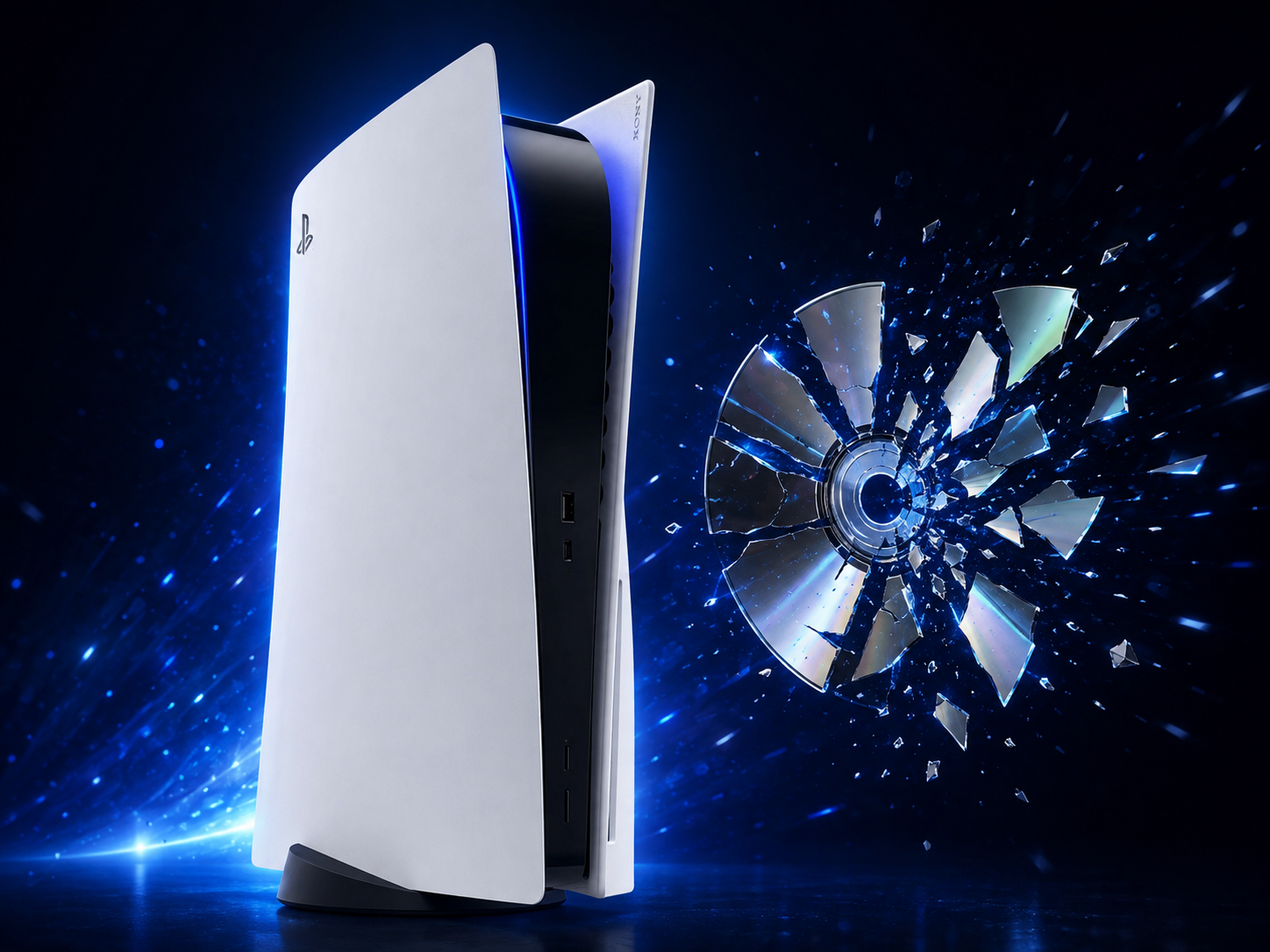
Sony Interactive Entertainment is defending itself against a proposed class action lawsuit over how the PlayStation Store describes digital game purchases, arguing that reasonable consumers should already understand that paying for a downloadable game provides a license rather than ownership of the underlying software. The dispute arrives at a particularly sensitive moment for PlayStation, with Sony already confirming that physical discs for all new PlayStation releases will disappear beginning in January 2028.
The lawsuit, Heycock et al v. Sony Corporation of America et al, was filed on June 18, 2026 in the United States District Court for the Northern District of California by Edward Heycock, Andrew Garcia, Jason Mendoza and John Salinas. The plaintiffs argue that Sony violates California consumer protection law by using terms such as Buy Now and Confirm Purchase while allegedly failing to make sufficiently clear at the point of sale that customers are receiving a limited license rather than unrestricted ownership. The case remains a proposed class action and no class has been certified. Court records confirm case number 3:2026cv06016 and Judge Vince Chhabria as the presiding judge.
At the center of the dispute is California Business and Professions Code Section 17500.6, created through AB 2426 and effective since January 1, 2025. The law covers digital games and other digital goods and restricts sellers from using terms such as buy or purchase unless consumers either affirmatively acknowledge they are receiving a license or receive a clear and conspicuous statement explaining that the transaction grants a license, together with access to its conditions. The disclosure must also be distinct from other transaction terms.
Sony argues its current PlayStation Store process already satisfies those requirements. According to reporting based on Sony's August 21 court filing, the company says customers receive a notice during checkout acknowledging that purchasing a digital product amounts to a license governed by the Software Product License Agreement. Sony also points toward its wider PlayStation legal terms, which explicitly explain that customers can use purchased products according to their licenses but do not own the underlying products.
"Reasonable consumers would not be misled."
— Quote by: Sony Interactive Entertainment legal filing.
Sony's current PlayStation Terms of Service are unusually explicit on this point. They state that when customers purchase a product through the PlayStation Store, they obtain a personal license for private and noncommercial use and do not own the product itself. The license is generally nontransferable unless applicable local law requires otherwise. Sony's terms also explain that words including buy, purchase and ownership do not imply a transfer of intellectual property rights.
Sony's attorneys have gone further by challenging whether consumers could reasonably believe digital purchases represent traditional ownership in the first place. The company reportedly used multiple purchases of Resident Evil Requiem as an example, arguing that digital software is inherently reproducible and therefore does not operate like ownership of an individual physical object. The plaintiffs disagree, arguing that the legal question is not whether Sony retains ownership of the game's intellectual property, but whether consumers receive sufficiently clear disclosure about the limited and potentially revocable nature of what the PlayStation Store calls a purchase.
That distinction is important. Buying a physical game disc has never meant acquiring ownership of Resident Evil, Final Fantasy or another game's copyright. Players purchase the physical copy and obtain permission to use the software it contains under applicable licensing terms. However, the physical object itself can generally be possessed, resold, loaned and transferred independently of the player's PlayStation account. A digitally purchased PlayStation license does not provide those same freedoms.
Sony's move toward digital distribution makes the debate considerably more significant. The company officially announced through the PlayStation Blog that production of physical discs for every new PlayStation game will end starting in January 2028. Games released on disc before the deadline will remain unaffected, but newly released titles after that point will be distributed through the PlayStation Store and retailers in digital formats only.
Sony says the transition reflects consumer behavior, with digital software already representing the overwhelming majority of PlayStation game sales. The economics are increasingly clear as well. United States physical game spending fell to a record July low of $85 million, while PlayStation represented around 32% of the remaining physical software market. The decline explains why Sony sees digital distribution as the future, but it also makes the rules governing digital ownership considerably more important for consumers.
The timing also follows earlier concern surrounding PlayStation digital licensing. Sony previously clarified that newly purchased PS4 and PS5 games only require a one time online license verification, after an apparent 30 day timer created fears that purchased games would require continuous internet authentication. Sony said that once the initial validation is complete, no recurring check is required for continued offline access.
Game preservation remains the larger unresolved issue. Hideo Kojima recently warned that losing local access could become an even greater problem if gaming eventually moves toward cloud services, where players possess neither physical media nor locally stored game data. Sony's 2028 transition does not mean downloaded PlayStation games will immediately become cloud dependent, but it eliminates physical media as the standard alternative for new releases.
The court has not determined whether Sony violated California law, and the plaintiffs' allegations remain unproven. Sony is challenging the lawsuit and maintains that both its checkout disclosure and existing licensing agreements sufficiently communicate what customers receive. The case therefore centers less on whether PlayStation games are licensed, which Sony's terms clearly establish, and more on whether that fact is communicated as clearly as California law now requires.
The uncomfortable part of this lawsuit is not discovering that digital games are licensed. Software licensing has existed for decades. The more important issue is whether the language used when selling a $70 game communicates the practical limitations of that transaction with the same clarity as the Buy button communicates payment.
That debate becomes far more important once PlayStation eliminates new physical discs in 2028. Today, players who dislike digital licensing can still choose a physical version for many games. Once that choice disappears, almost every new PlayStation purchase will depend on accounts, licenses and platform infrastructure controlled by Sony and publishers.
Sony has a commercially understandable reason to move toward digital distribution, particularly when physical sales continue declining. But if digital becomes the only standard format, transparency, transferability, preservation and long term access become more important, not less.
When you pay full price for a digital PlayStation game, do you consider yourself the owner of that copy, or do you accept that you are purchasing a license to access it?
