
Silicon Power Industrial Launches DDR5 7200 CUDIMM And CSODIMM Modules Aimed At AI And Edge Platforms
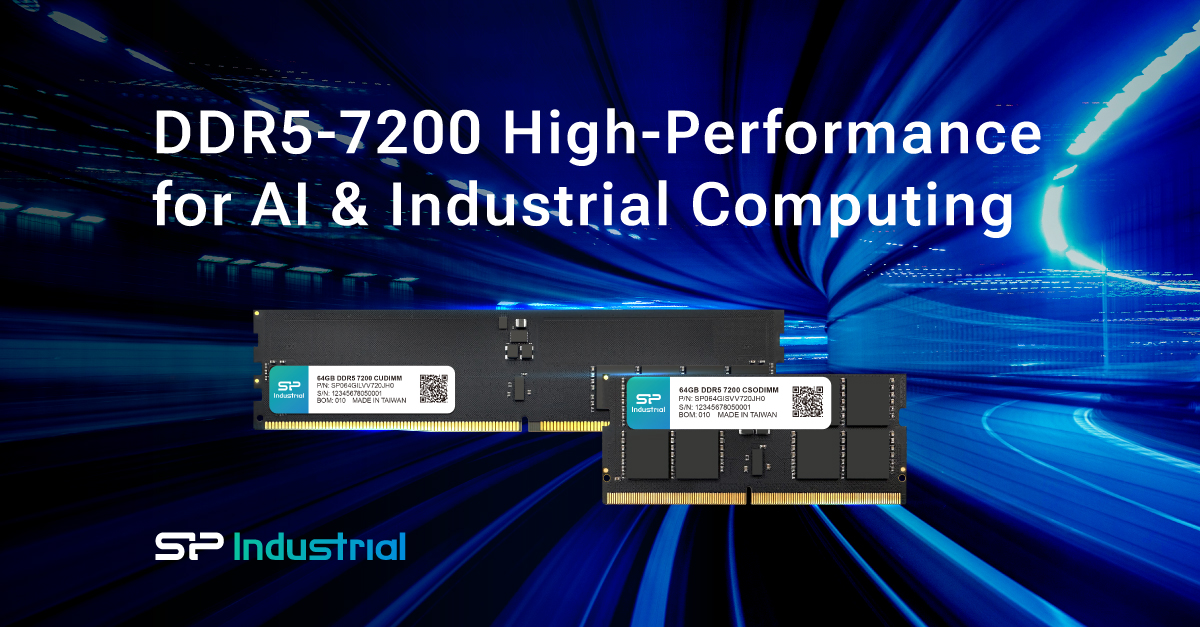
Silicon Power Industrial has expanded its industrial grade DDR5 portfolio with new DDR5 7200 memory modules in CUDIMM and CSODIMM form factors, positioning the lineup for AI oriented platforms, edge compute, and high performance industrial systems where bandwidth, signal stability, and lifecycle reliability tend to be the key decision drivers.
At a specification level, the new modules target 7200 MT per second bandwidth with 64GB capacity per module and 1.1V operation, aligning with JEDEC standard DDR5 architecture goals of higher throughput with tighter power efficiency. Silicon Power Industrial is also leaning into the stability narrative, calling out optimizations around clock, command, and control signal integrity to support consistent behavior in dense, demanding system designs that run sustained data heavy workloads.
For reliability hardening, the modules include on die ECC support for stronger data integrity, plus integrated TVS diode protection intended to help shield deployments from electrical transients that can show up in industrial environments. Silicon Power Industrial also specifies an extended operating temperature range that stretches from 20°C below 0°C up to 95°C, reinforcing the message that these modules are engineered for long term, mission critical deployment profiles rather than short burst consumer usage.
From a workload perspective, Silicon Power Industrial frames the DDR5 7200 CUDIMM and CSODIMM modules around real world AI and edge scenarios where memory bandwidth consistency directly shapes system responsiveness. The company specifically positions the modules for edge AI and vision pipelines that need reliable real time throughput, smart surveillance and video management stacks handling multiple high resolution streams, and AI inference accelerator environments where stability and sustained bandwidth can materially impact end to end performance. The 64GB per module capacity is also presented as a practical scaling lever for space constrained systems, enabling higher memory footprints without forcing overly complex multi module configurations.
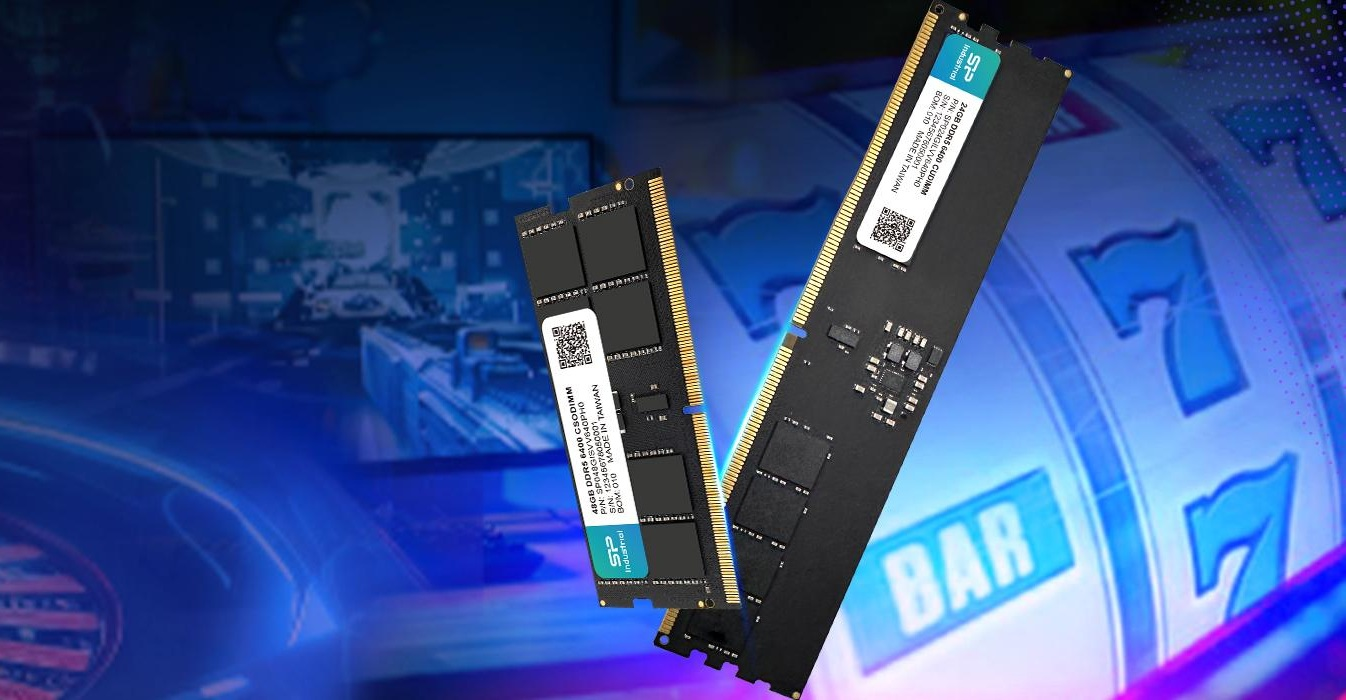
On compatibility, Silicon Power Industrial is splitting the lineup across the 2 form factors to address a wide platform surface area. The CUDIMM variant is presented as a 288 pin option for desktop and industrial PC class systems, while CSODIMM is the 262 pin option aimed at notebooks and edge devices, giving OEMs and system integrators flexibility to standardize performance targets across different chassis sizes and thermal envelopes while still meeting platform constraints.
Validation and deployment considerations are where buyers can reduce integration risk. For any 7200 MT per second class DDR5 rollout, system teams should validate platform support at the CPU memory controller level, confirm firmware maturity for high speed training and long duration stability, and run sustained workload tests that reflect the intended deployment profile rather than synthetic short runs. In industrial environments, it is also worth stress testing under expected electrical noise and thermal conditions to ensure protection features and thermal behavior align with the target chassis and power delivery design.
What matters next is how quickly this class of high speed, high density DDR5 becomes mainstream in edge AI boxes and industrial compute nodes, especially as inference workloads push higher resolution sensors and more concurrent pipelines.
What edge AI workload would you want to benchmark first on 64GB DDR5 7200 per module, vision inference, multi stream video analytics, or something else entirely?
