
SEGA Brings Virtua Fighter Crossroads and Future Games to NVIDIA RTX Spark
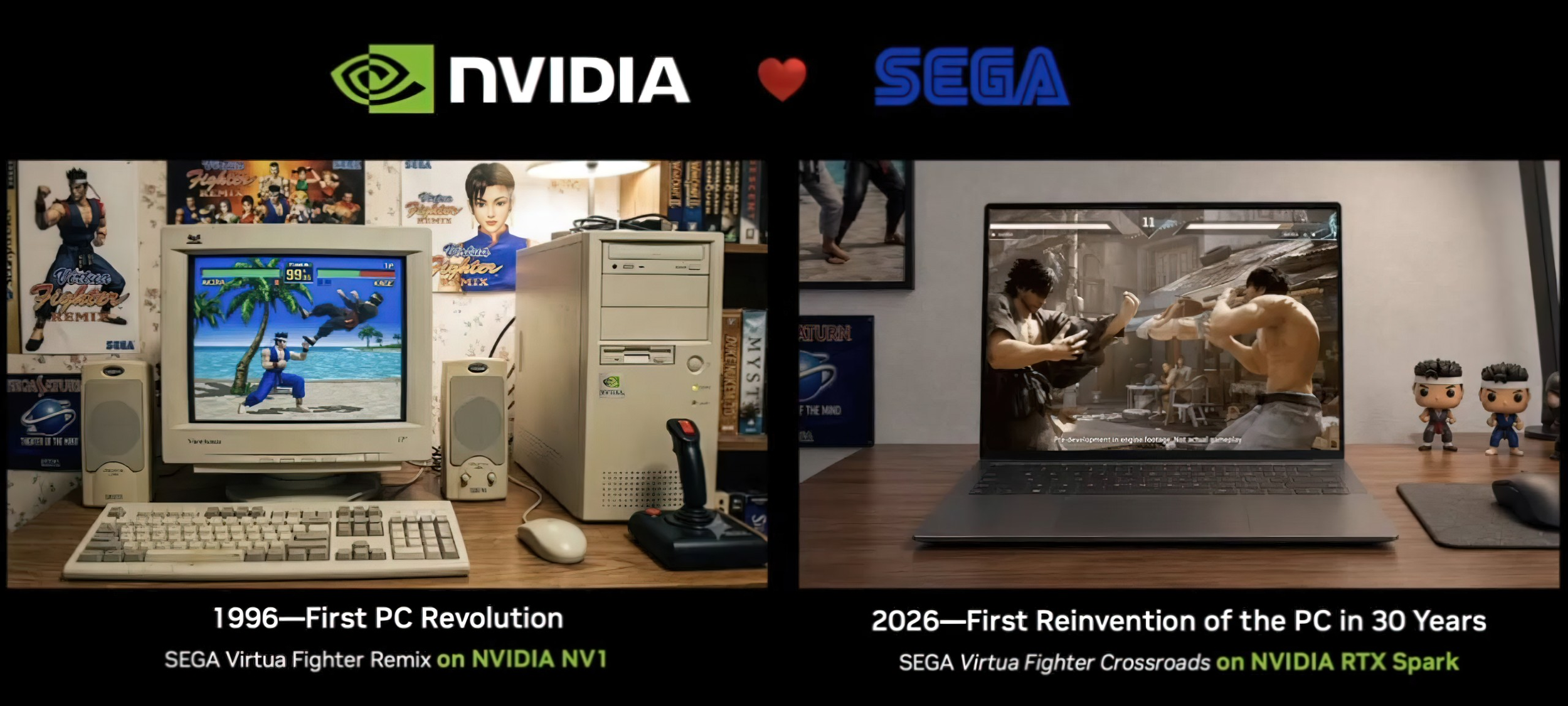
NVIDIA and SEGA are celebrating more than 30 years of collaboration by bringing Virtua Fighter Crossroads and additional future SEGA titles to NVIDIA RTX Spark, connecting one of the graphics industry’s earliest partnerships with a new generation of Windows computers designed for gaming, creation, and local artificial intelligence.
The announcement was made at GiGO Akihabara 3 in Tokyo, the location previously known as the SEGA Akihabara Arcade. NVIDIA founder and CEO Jensen Huang appeared alongside SEGA CEO Haruki Satomi, SEGA Chief Operating Officer Shuji Utsumi, Virtua Fighter creator Yu Suzuki, and former SEGA President Shoichiro Irimajiri. NVIDIA confirmed that supported SEGA games will use technologies including ray tracing, DLSS, and other artificial intelligence powered graphics features.
Virtua Fighter Crossroads will be among the first announced SEGA titles supporting the platform. The upcoming fighting game is scheduled for 2027 and introduces a narrative focused single player experience where victories, defeats, and player decisions can influence the direction of the story. The game is also coming to conventional PC and console platforms.
The partnership traces its origins to NVIDIA’s first commercial graphics accelerator, the NV1, released in 1995 through products such as the Diamond Edge 3D. The chip combined 2D and 3D graphics acceleration with quadratic texture mapping, an unconventional rendering approach that differed from the triangle based techniques that would eventually dominate the industry. SEGA adapted the original Virtua Fighter for PC, making it the first 3D game to operate using NVIDIA graphics technology.
Virtua Fighter 30th Anniversary Special Message
— VIRTUA FIGHTER CROSSROADS (@VFCROSSROADS) July 15, 2026
As part of today's event in Akihabara celebrating 30 years of partnership between SEGA and NVIDIA, we're resharing a special video message from NVIDIA CEO Jensen Huang and Virtua Fighter creator Yu Suzuki.
Don't miss this… pic.twitter.com/kBYioB3JNB
NVIDIA CEO Jensen Huang previously explained during his Joe Rogan interview that several of the NV1’s architectural decisions placed the company on the wrong technical path. NVIDIA used curved surfaces and forward texture mapping while the wider industry moved toward triangle primitives, inverse texture mapping, and Z buffer based rendering. Microsoft’s Direct3D standard reinforced that direction, quickly reducing the commercial relevance of NVIDIA’s original architecture.
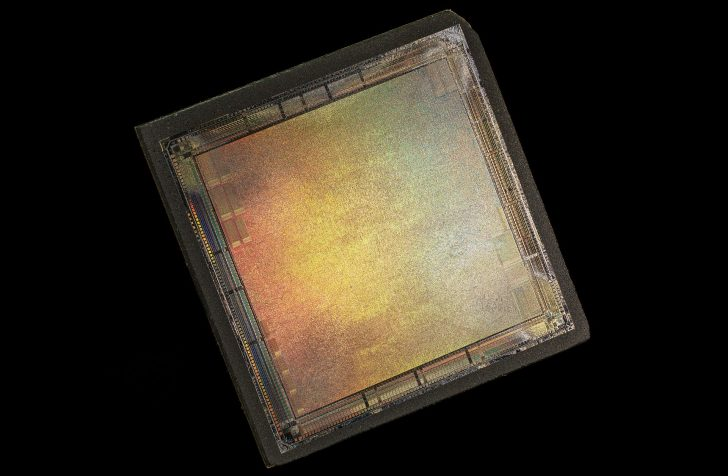
The NV1 was removed from the market, while the planned NV2 project for SEGA hardware was cancelled before completion. However, the relationship ultimately helped NVIDIA survive its difficult early period. SEGA provided NVIDIA with a reported $5 million investment under Shoichiro Irimajiri, giving the company additional resources to redirect its engineering work toward the RIVA 128. NVIDIA later introduced the GeForce 256 in 1999, the first product it officially marketed as a graphics processing unit.
NVIDIA RTX Spark represents a substantially different computing platform. Announced during Computex 2026, the system combines a Blackwell RTX graphics processor with 6,144 CUDA cores and a 20 core NVIDIA Grace processor connected through NVLink C2C. It offers up to 1 petaflop of artificial intelligence performance and as much as 128 GB of unified memory for personal agents, gaming, creative applications, and local artificial intelligence workloads.
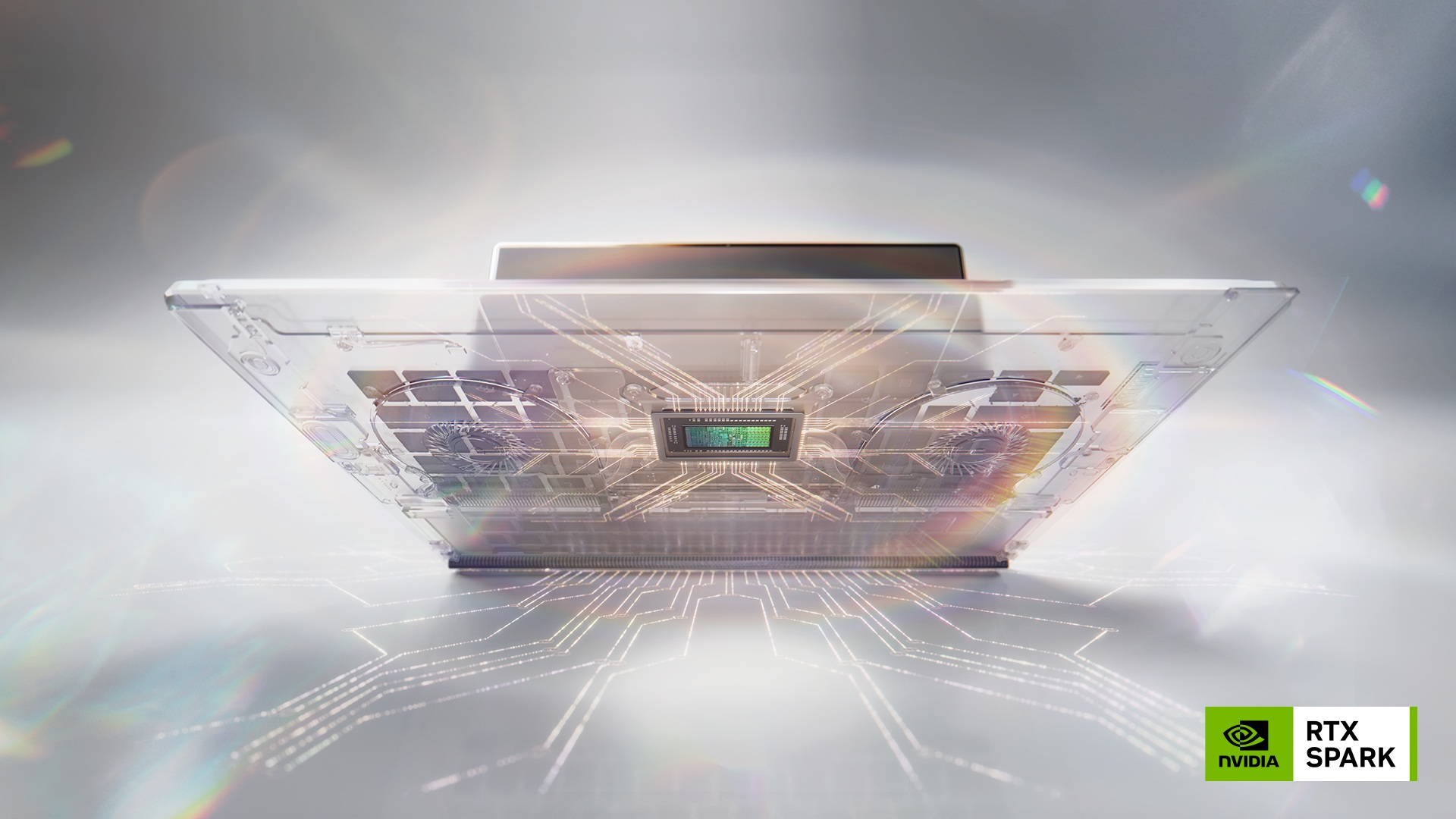
RTX Spark will appear inside slim Windows laptops and compact desktop computers from manufacturers including Acer, ASUS, Dell, GIGABYTE, HP, Lenovo, and MSI. Its unified memory design allows the processor and graphics resources to access the same large memory pool.
NVIDIA has not yet revealed which additional SEGA franchises will support RTX Spark. The company only stated that future and legendary SEGA games will join the expanding ecosystem, leaving possibilities open across properties such as Sonic the Hedgehog, Like a Dragon, Persona, Total War, and other titles from the publisher’s catalog.
The SEGA partnership gives RTX Spark something more valuable than another hardware demonstration. It provides the platform with gaming history and recognizable software at a time when NVIDIA must prove that its new processor can operate as more than an artificial intelligence workstation.
Virtua Fighter helped introduce NVIDIA graphics to PC players during the NV1 era, even though the technology behind that first product ultimately failed. Bringing Virtua Fighter Crossroads to RTX Spark creates a fitting full circle moment while demonstrating how far NVIDIA has moved from experimental 3D acceleration to unified processors combining gaming, artificial intelligence, graphics, and general computing.
The larger question is whether RTX Spark can establish a meaningful Windows gaming ecosystem. Strong SEGA support, broad developer adoption, and reliable compatibility with existing PC libraries will be essential if NVIDIA wants the platform to compete with established x86 gaming computers.
Which classic SEGA franchise would you most like to see rebuilt with ray tracing and NVIDIA DLSS on RTX Spark?
