
Samsung Begins Mass Production of PM1763 PCIe 6.0 SSD for AI and HPC Servers
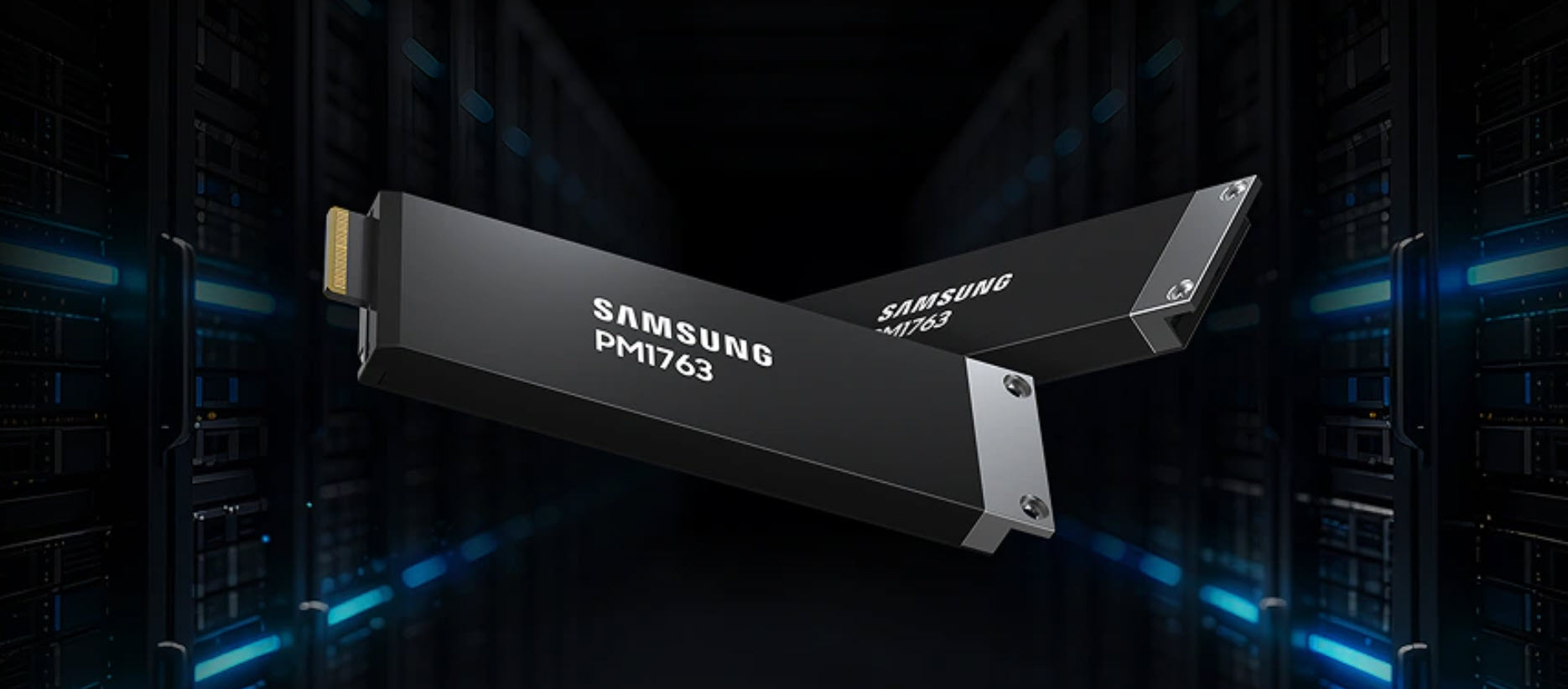
Samsung has officially started mass production of the PM1763 enterprise SSD, its new PCIe 6.0 storage solution built for next generation AI and HPC server environments. The announcement, shared through the Samsung Global Newsroom, positions PM1763 as a critical storage layer for modern AI infrastructure, where training, inference, model loading, and high speed data movement are becoming major system level bottlenecks.
PM1763 uses Samsung’s 9th generation V NAND and a newly developed 4 nanometer controller, giving the drive a major leap in performance and power efficiency compared with the previous PM1753 generation. Samsung says the 16 TB version can reach up to 28,400 MB/s sequential read speed and up to 21,900 MB/s sequential write speed, delivering more than 2 times the performance of its predecessor. That level of throughput allows a 40 GB large language model to be transferred in around 1.4 seconds, reducing latency between processors, accelerators, and storage systems in AI servers.
The drive is available in 4 TB, 8 TB, and 16 TB configurations according to Samsung’s mass production announcement, while the company’s PM1763 product page also lists broader platform flexibility across E1.S, E3.S, and U.2 form factors. Samsung notes that the U.2 version supports PCIe 5.0, while the main PM1763 platform is built around PCIe 6.0 and NVMe 2.1 for next generation enterprise infrastructure. This makes the drive a direct fit for hyperscale data centers that need high throughput storage without sacrificing reliability, telemetry, or integration flexibility.
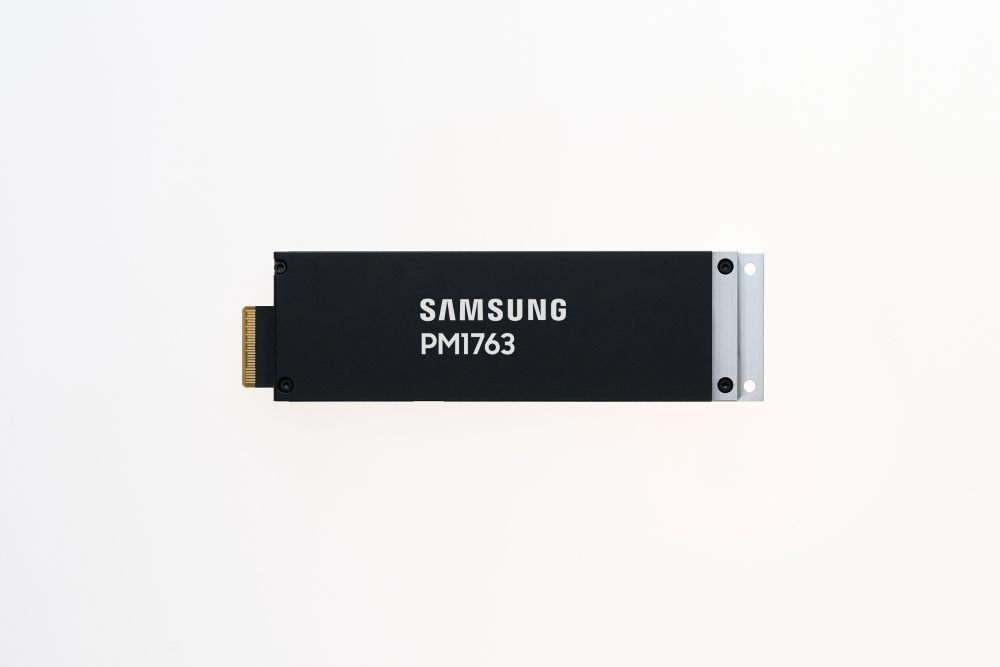
The cooling story is just as important as the raw speed. PM1763 is optimized for liquid cooled server environments through direct to chip cooling technology, allowing the drive to sustain peak performance during heavy AI workloads and long operating cycles. This matters because next generation AI racks are becoming far denser, with GPUs, CPUs, networking, memory, and storage all competing inside the same thermal and power envelope. Samsung says power efficiency is improved by more than 1.8 times compared with PM1753, helping reduce operational costs in data centers where every watt now has strategic value.
Security has also been upgraded for AI and virtualized infrastructure. PM1763 supports post quantum cryptography, SPDM 1.4, CNSA 2.0, and TDISP based link encryption, giving the drive stronger protection for systems where sensitive AI workloads, multi tenant cloud environments, and virtualized data paths need more robust device level security. As AI servers become shared cloud infrastructure rather than isolated training boxes, storage security will become a bigger part of platform qualification.
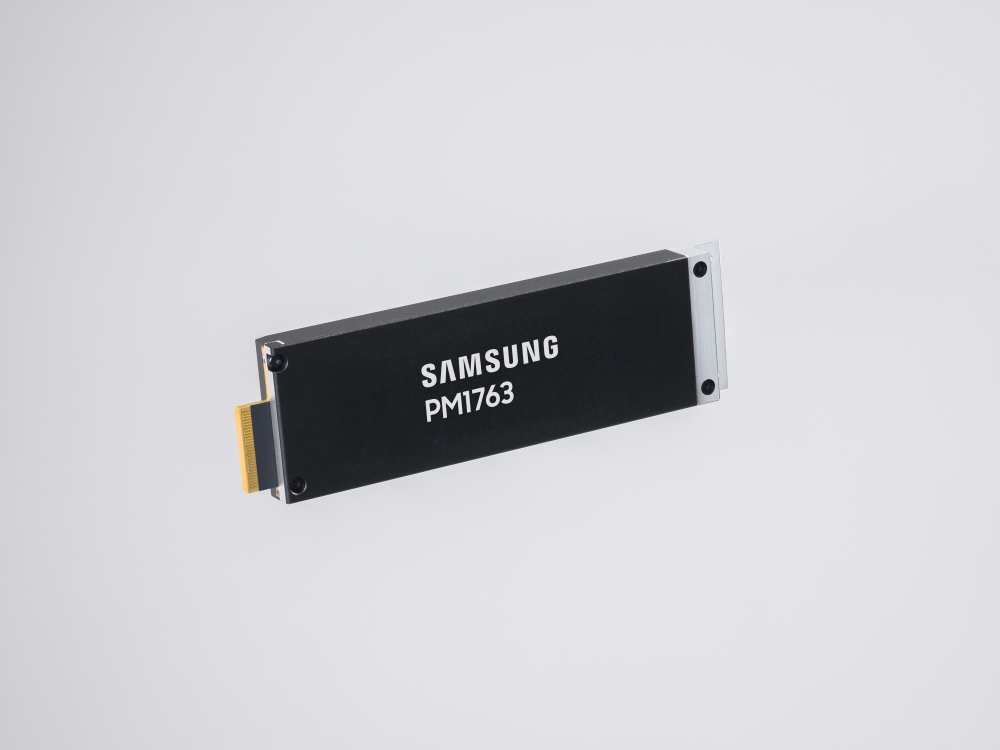
Samsung’s PM1763 shows where AI infrastructure is going. The industry conversation often focuses on GPUs and HBM, but future AI factories will need every layer of the system to move faster. Storage, memory, CPUs, networking, cooling, security, and rack management all need to scale together, or expensive accelerators will spend too much time waiting for data.
The 28,400 MB/s read speed is impressive, but the more important point is balance. PM1763 is not built for gaming desktops or consumer upgrade hype. It is designed for AI servers where large model files, training data, checkpointing, inference pipelines, and multi tenant workloads need fast and reliable storage under extreme operating conditions. The move to PCIe 6.0, liquid cooling support, improved efficiency, and stronger security makes the SSD part of the same platform level shift we are seeing with Vera Rubin class systems.
For Samsung, this is also a strong strategic play. HBM remains the headline memory product for AI accelerators, but enterprise SSDs are becoming increasingly important as AI data sets grow and infrastructure moves toward rack scale deployment. If PM1763 becomes a key storage option for next generation AI platforms, Samsung strengthens its position beyond HBM and DRAM, giving it a wider role in the AI hardware stack.
Do you think PCIe 6.0 enterprise SSDs like Samsung PM1763 will become just as important as HBM in next generation AI servers?
