
Ubisoft Reworks Black Flag Resynced’s Parkour, Stealth, and Combat With Clear Influence From Assassin’s Creed Shadows
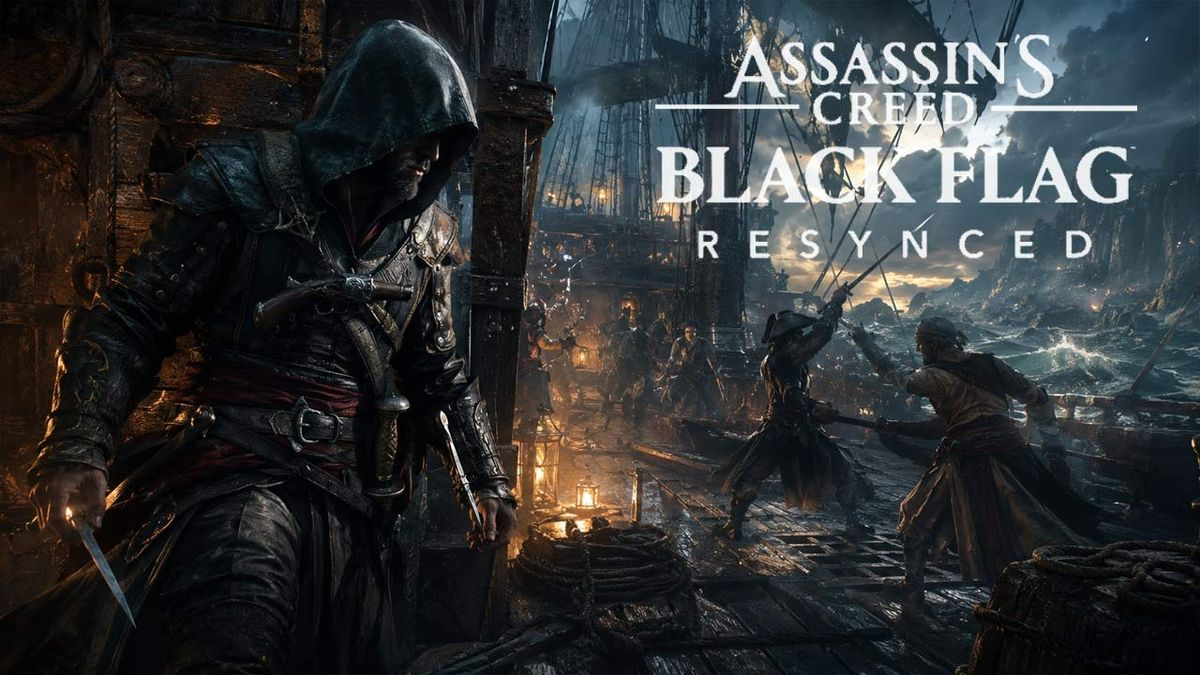
Ubisoft is making it increasingly clear that Assassin’s Creed Black Flag Resynced is not being treated like a simple visual refresh. With its latest official deep dive, the publisher has shifted attention away from raw side by side graphics comparisons and toward the systems that define how the remake actually feels in motion. Parkour, stealth, and combat have all been rebuilt with modern franchise learnings in mind, and Ubisoft explicitly says those upgrades draw on the latest advancements across the series, including technology and design ideas developed for Assassin’s Creed Shadows. The game is still set to launch on July 9, 2026 for PlayStation 5, Xbox Series X|S, and PC.
The biggest takeaway is that Ubisoft is not trying to reinvent Edward Kenway into a completely different kind of Assassin’s Creed protagonist. Instead, the remake appears focused on preserving the identity of the original Black Flag while making every major action feel smoother, faster, and more responsive. Ubisoft Creative Director Paul Fu said the team spent significant time iterating on Edward’s responsiveness and pace based on early community playtest feedback, with improvements such as refined landing animations for quicker recovery after drops, more responsive jumps, and a quick speed boost after wall runs. That approach sounds practical rather than flashy, but in a game built around fluid traversal, these kinds of upgrades can make a dramatic difference in how natural movement feels from minute to minute.
Ubisoft has also highlighted Advanced Parkour gameplay, which uses the latest Anvil Engine tech to give players more control over Edward’s traversal options. Based on Ubisoft’s official description, this is one of the clearest areas where Shadows’ influence shows up, not because Black Flag Resynced is becoming Shadows, but because Ubisoft is importing modern movement responsiveness into one of the franchise’s most beloved older entries.
Stealth is seeing a similarly meaningful overhaul. Ubisoft confirmed that Eagle Vision now includes the Observe feature, which allows players to highlight enemy positions, quest objectives, and clues. That is a direct modern quality of life improvement that should make infiltration and target tracking feel more readable without fundamentally changing the game’s stealth identity. Just as importantly, Edward can now crouch at any time, and Ubisoft says this actively modifies his visibility meter and reduces movement stimuli, making stealth kills easier while stalking through bushes and rooftops. That may sound like a basic feature by modern standards, but its addition is a major structural change for a remake of Black Flag, because crouching simply was not part of the original stealth vocabulary in the same way.
Those stealth focused additions can be seen in Ubisoft’s official clips for Observe and Eagle Vision and crouch based stealth. For players who enjoyed the increased stealth readability in Shadows, these changes should feel familiar in a positive way. At the same time, Ubisoft has stressed elsewhere that Black Flag Resynced is still not shifting into the RPG heavy direction seen in some of the more recent series entries, which suggests the team is being selective about what it borrows and what it leaves behind.
Combat is where the modernization may be most noticeable. Ubisoft says the new system is built around the idea of triggering takedowns, opening enemies up to Hidden Blade Takedowns, Perfect Parry Takedowns, Wall Takedowns, and Ground Takedowns. On top of that, the remake adds Perfect Dodge attacks, Heavy Attacks that vary depending on the equipped weapon, and the return of Gun Kata. This combination suggests a combat system that still respects the pirate assassin fantasy of the original while demanding more precision and creating more visually distinct finishers and weapon interactions.
Ubisoft’s combat showcases are spread across several official clips, including core takedown focused combat, Perfect Dodge and weapon based attacks, and the return of Gun Kata. Taken together, these updates make it hard to argue that Resynced is only a nostalgia play. Ubisoft appears to be rebuilding the game’s core action layer in a way that better matches what modern players expect from a big budget action adventure release.
What makes this especially interesting for longtime Assassin’s Creed fans is the broader signal it sends about Ubisoft’s remake strategy. Black Flag Resynced is officially the first remake in the franchise, and based on the scope of these gameplay changes, Ubisoft seems determined to prove that the label actually means something. The goal does not appear to be replacing the original, but to modernize it with enough care that returning players can recognize the old rhythm while feeling the benefits of 12 more years of design evolution. That is a difficult balance to strike, but on paper at least, Ubisoft seems to understand the assignment.
If these changes land well, Black Flag Resynced could become more than a fan service release. It could set the template for how Ubisoft approaches future Assassin’s Creed remakes, especially if other older titles are eventually rebuilt with the same level of mechanical attention. For now, though, the focus is on Edward Kenway’s return, and Ubisoft’s latest reveal gives fans a better reason than ever to believe this remake is being handled with real intent rather than simple brand recycling.
Are these Shadows inspired upgrades exactly what Black Flag needed, or would you rather Ubisoft had kept the original gameplay feel more intact for the remake?
