

Sony Interactive Entertainment is exploring a new technology that could allow future PlayStation controllers to switch between graphics quality and performance modes with a dedicated button, while automatically adjusting rendering settings during gameplay. A patent published on November 19, 2026, describes a system called Adaptive Visual Quality, capable of analyzing consecutive frames and modifying graphical settings dynamically to balance image quality and performance. Although the technology could potentially appear on PlayStation 6, Sony has not confirmed its implementation in any upcoming console or controller.
The Sony patent US 2026/0364447 A1, filed on July 22, 2026, outlines a graphics management system that measures differences between consecutive frames, including changes in brightness and color. These measurements generate a numerical score between 0.0 and 1.0, representing how much the displayed image has changed. The system then compares the score with predefined thresholds and selects appropriate rendering settings for the following frame, potentially modifying texture resolution, filtering, shader complexity, and anti aliasing without requiring manual intervention.
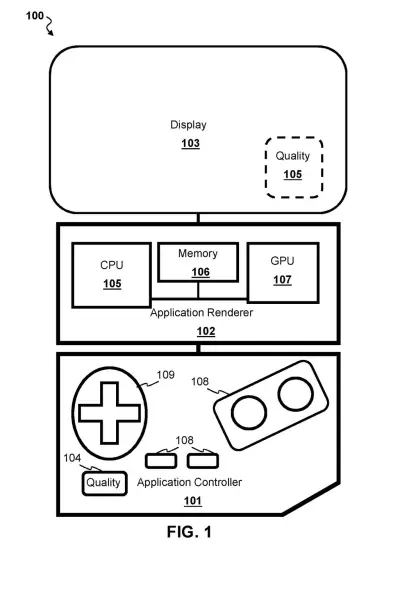
Unlike conventional Dynamic Resolution Scaling, which primarily adjusts internal rendering resolution to maintain performance, Sony's proposed system could modify several graphical parameters depending on the visual activity of a scene. During relatively static sequences, such as dialogue or exploration, the game could prioritize image quality, while demanding action sequences could trigger less expensive rendering settings. However, differences between consecutive frames do not necessarily represent GPU workload, meaning developers would still need to carefully configure the system to prevent unnecessary visual changes or performance inconsistencies.
Another significant feature is the proposed dedicated graphics button on the controller, allowing players to manually switch between predefined quality modes without navigating game menus. Rather than instantly changing every rendering parameter, the technology could gradually transition between settings to reduce visible interruptions. Sony had previously explored similar functionality in its earlier graphics mode switching patent, published in January 2025, indicating that the company has been researching this concept for several years.
The technology could also complement Sony's existing PlayStation Spectral Super Resolution system. As demonstrated through previous PSSR research into automatic performance optimization, the company continues investigating ways to improve image quality while reducing rendering overhead. Combining reconstruction technologies with more flexible graphics settings could help future consoles maintain consistent frame rates without requiring developers to rely exclusively on fixed Quality and Performance modes.
However, the patent does not confirm that PlayStation 6 will feature a dedicated graphics button, automatic frame by frame optimization, or specific performance targets such as 4K at 120 FPS. No hardware specifications, commercial implementation details, or performance benchmarks have been announced.
Sony's proposed Adaptive Visual Quality system represents an interesting evolution of console graphics optimization, particularly because it introduces more flexibility into a platform traditionally dependent on fixed rendering presets.
Allowing players to switch graphics modes directly from their controller would be a welcome improvement, while automatic optimization could help developers deliver smoother performance during demanding scenes. However, graphics settings should never become completely inaccessible to the player simply because a system can adjust them automatically.
For PC gamers, similar technology could provide useful improvements if implemented across different GPUs and game engines. Dynamic graphics optimization is not exclusive to consoles, and a system that efficiently adjusts visual complexity without introducing stuttering or noticeable image quality fluctuations could benefit lower powered gaming PCs and handheld devices.
The real priority should remain consistent frame pacing, clear image quality, and meaningful player control rather than relying on increasingly aggressive rendering compromises to achieve higher advertised resolutions.
Would you prefer a PlayStation 6 controller with a dedicated graphics settings button, or should Sony focus on automatic optimization that maintains stable frame rates without requiring manual adjustments?
