
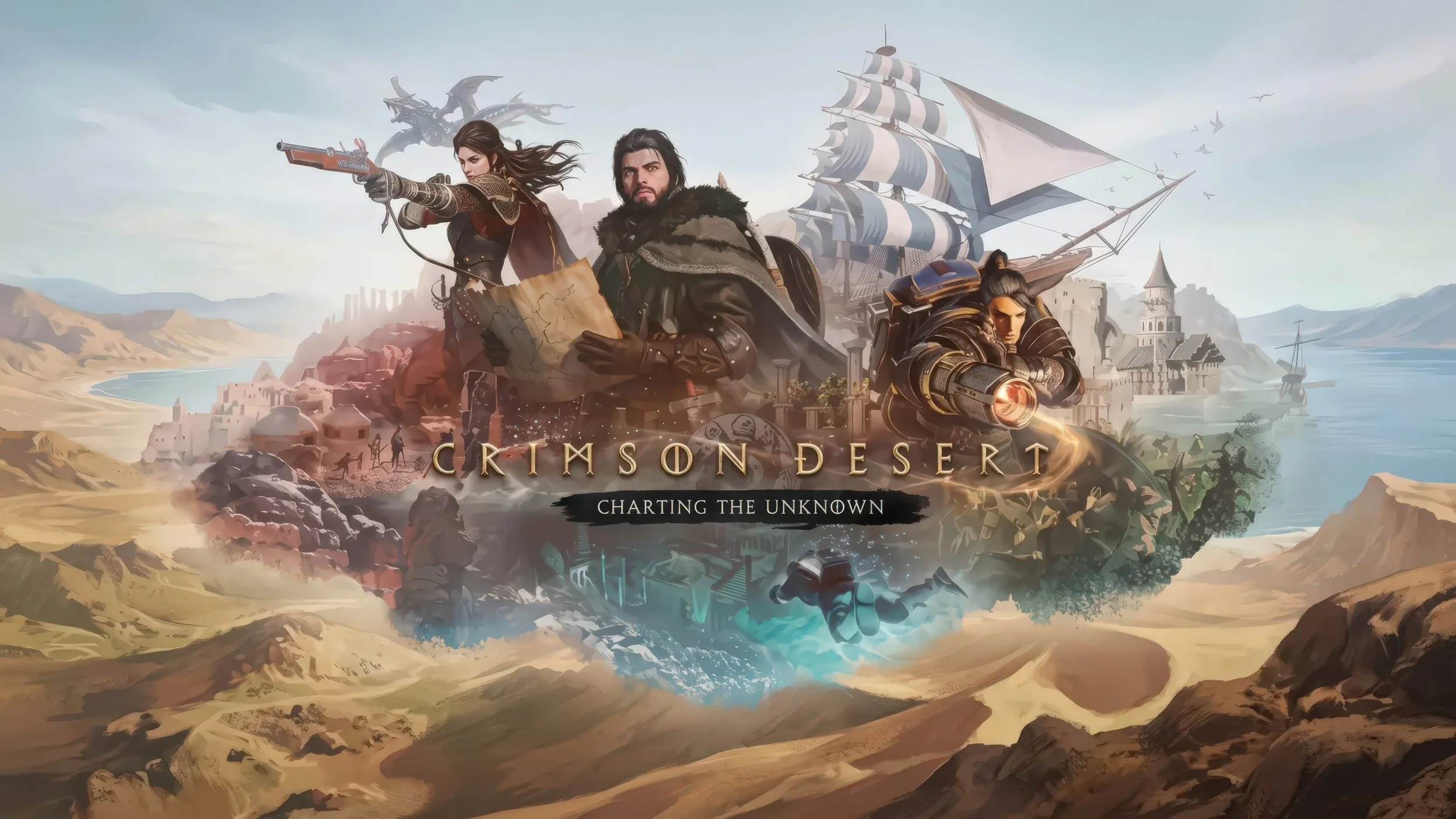
Pearl Abyss is integrating artificial intelligence deeper into its game development process, allowing developers to test and validate gameplay concepts before committing resources to full production. The studio behind Crimson Desert and Black Desert aims to accelerate development through its proprietary BlackSpace Engine while maintaining human control over gameplay design and content creation.
According to Pearl Abyss's Q3 2026 Earnings Letter, the company is expanding AI integration across its development pipeline, including repetitive task automation, content creation assistance, testing optimization, and early gameplay concept validation. Previously, developers needed to manually implement game systems before evaluating their effectiveness. The new approach allows AI to assess multiple design concepts earlier, potentially reducing wasted development time and improving resource allocation.
Pearl Abyss emphasized that AI is intended to assist developers rather than replace them, with creative decisions and actual gameplay implementation remaining under human supervision.
"We view AI not as a substitute for human developers, but as a tool to elevate development efficiency and quality."
— Quote by: Pearl Abyss.
The company credits its growing development efficiency to the completed BlackSpace Engine technology and research accumulated during Crimson Desert's production, including its Enhanced Edition and Charting the Unknown expansion. These improvements are now supporting development of DokeV, the upcoming open world creature collecting adventure targeting the second half of 2028.
However, the announcement follows controversy surrounding AI generated artwork discovered in Crimson Desert shortly after launch. Pearl Abyss previously apologized after acknowledging that experimental AI generated visual assets were unintentionally included in the finished game. The affected artwork was subsequently replaced, with the studio promising stronger quality controls and greater transparency regarding AI usage.
Beyond AI development, Pearl Abyss also revealed plans to eventually introduce a user generated content ecosystem powered by BlackSpace Engine, allowing players and creators to develop and share their own content. However, this remains a long term objective, with no confirmed launch window or plans to license the engine commercially.
Pearl Abyss's approach demonstrates a more practical application of AI in game development, using technology to accelerate testing and eliminate repetitive work rather than replacing developers and artists. Validating gameplay concepts before implementation could reduce production costs while allowing teams to experiment with more ambitious mechanics.
However, automation should never compromise creativity, gameplay quality, or employment opportunities. Crimson Desert's earlier AI artwork controversy also demonstrates why human supervision and transparent development practices remain essential. AI should empower developers to create better games, not become an excuse to reduce production costs at the expense of players or creative professionals.
The possibility of opening BlackSpace Engine to user generated content is equally promising, particularly if Pearl Abyss provides accessible tools that allow communities to expand its games for years.
Do you support developers using AI to test gameplay concepts and accelerate production, or are you concerned that increasing automation could eventually replace traditional game development roles?
