
PC GPU Market Enters Rough Sailing as Shipments Drop 3.3% and JPR Warns 2026 Could Slide Further

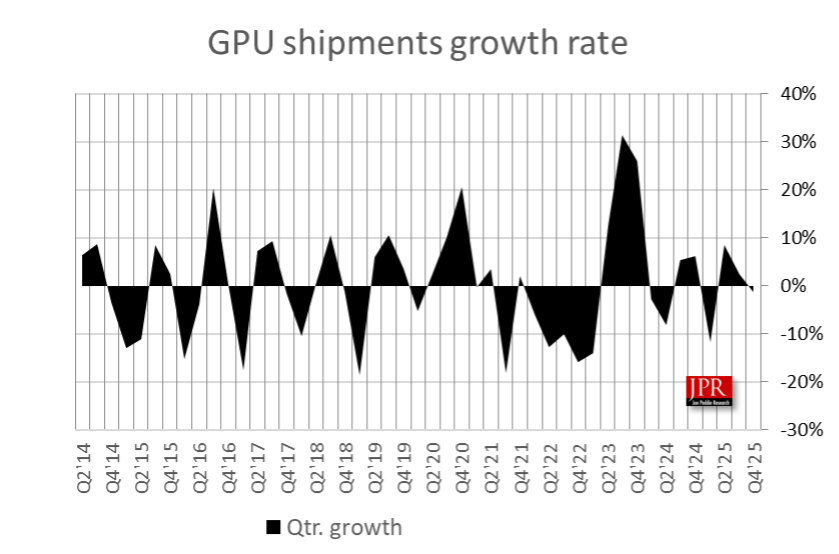
The consumer PC GPU market is starting 2026 on unstable footing, and new data from Jon Peddie Research suggests the turbulence may not be a short term wobble. In a fresh JPR report, overall PC GPU shipments fell 3.3% year over year, with notebooks taking a harder hit, as memory availability tightens and broader supply chain uncertainty continues to ripple through the hardware pipeline.
JPR describes the environment as rough sailing, pointing to a mix of factors that create a compounded drag on the category, including tariff volatility, short memory availability with rising prices, and geopolitical instability. The firm adds that Nvidia is the only supplier forecasting a strong next quarter and that forecast is tied to AI, while JPR and other forecasters believe the PC market could see as much as a 10% decline in 2026. In corporate terms, that is a signal that consumer hardware is no longer the primary growth engine, and vendors are aligning their forward strategy accordingly. Source: Jon Peddie Research.
The report also highlights a notable market share reshuffle. Intel and Nvidia both reportedly saw declines, down 1.2% and 1.4% respectively, while AMD managed to post a 2.6% quarterly gain. That does not automatically mean AMD is winning the generation outright, but it does suggest AMD has found near term traction while competitors face headwinds tied to product timing, channel constraints, or allocation strategy. Source: Jon Peddie Research.
JPR notes that quarterly GPU shipments are now below the 10 year average of 4.7%, implying the industry is throttling production. That slowdown can be read as risk management. When demand signals soften and component pricing is unstable, vendors typically reduce exposure by limiting channel fill, keeping inventory lean, and prioritizing higher certainty revenue streams. Source: Jon Peddie Research.
The core structural problem underneath all of this is memory. As DRAM demand rises, GPU suppliers have strong incentives to prioritize enterprise and AI adjacent demand where margins and contractual commitments are higher. When memory allocation shifts away from consumer products, it can show up as fewer units in retail, delayed mainstream launches, and higher board partner pricing that is justified as cost pressure rather than opportunistic markup. If this allocation squeeze continues, the gaming GPU market could face a double hit in 2026: fewer cards available, and less predictable timing on the products that do arrive.
For gamers, this is the part that matters operationally. A shrinking shipment trend combined with constrained memory supply typically translates into a tougher buying environment, especially for new launches that already carry hype driven demand spikes. If the industry truly slides toward a 10% PC decline in 2026 as JPR suggests, expect manufacturers to lean even harder into segments that deliver reliable returns, which can leave the mainstream enthusiast upgrade cycle feeling slower, pricier, and more fragmented.
If retail availability stays tight through 2026, would you rather hold your current GPU longer, or pivot to a midrange upgrade the moment prices stabilize even if it is not the exact model you wanted?
