
LG Display Unveils 3rd Gen Tandem OLED and a 27 Inch 5K OLED Panel at SID 2026
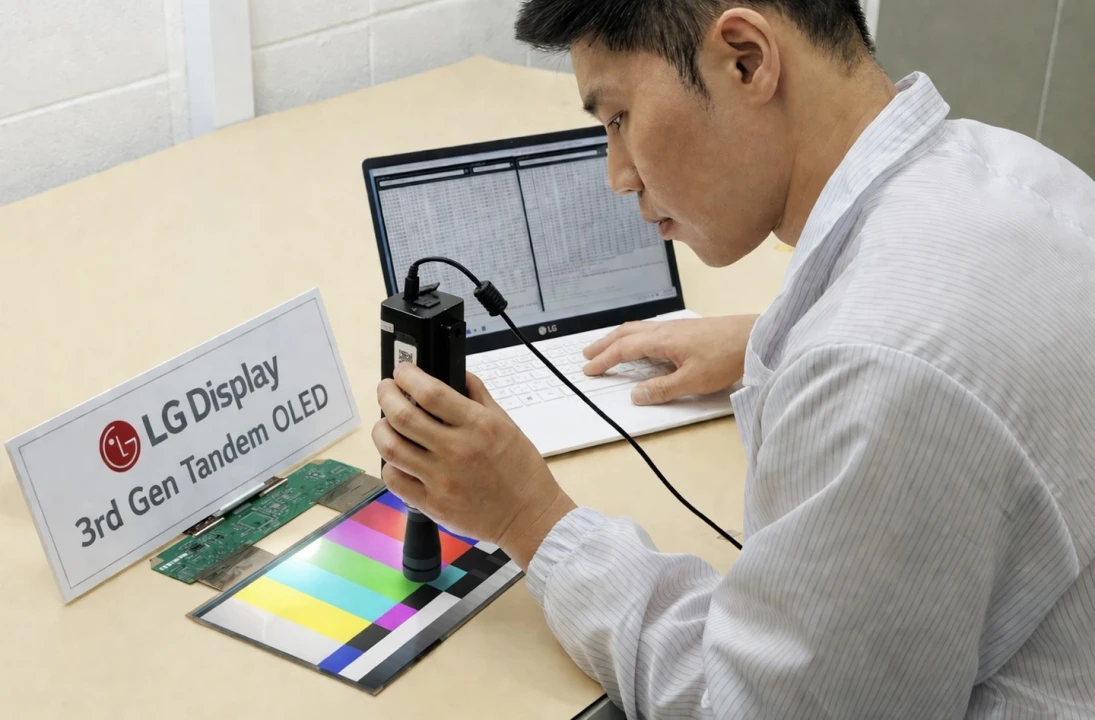
LG Display is using SID Display Week 2026 to push OLED further into its next stage, showing off a new 3rd generation Tandem OLED architecture alongside a sharp new 5K OLED monitor panel that highlights where premium display technology is heading next. The company’s biggest message this year is clear: better efficiency, stronger durability, and broader expansion into automotive, AI PC, and future form factors are now just as important as raw visual quality. According to LG Display and cover by ITHome, its new 3rd generation Tandem OLED reduces power consumption by 18% while delivering more than double the lifespan of the previous generation.
That efficiency and durability improvement matters because it directly addresses 2 of OLED’s long standing pressure points, especially in products that need sustained usage and higher brightness for longer periods. LG Display says the first application for the new 3rd generation Tandem OLED will be automotive panels, where the technology can reach up to 1,200 nits of brightness and exceed 15,000 hours of lifespan at room temperature. In practical terms, that makes the panel especially well suited for in vehicle displays, where brightness consistency and long term endurance are critical.
LG Display also says mass production of these automotive panels will begin this year, with the technology expected to expand later into IT devices and other consumer applications. That is an important strategic point because it shows the company is not treating Tandem OLED as a niche demonstration. Instead, it is positioning the technology as a scalable platform that can move from cars into broader device categories over time.
Beyond automotive, LG Display used the event to show how wide its OLED roadmap is becoming. The company presented a P OLED solution for humanoid robots, a 57 inch automotive pillar to pillar display designed for immersive in car experiences, and a 16 inch Tandem OLED panel aimed at AI PCs. LG says that 16 inch panel is thinner, lighter, and more power efficient than conventional OLED panels, and that it can extend laptop battery life by an additional 2.3 hours. For the fast growing AI PC category, that kind of gain could become one of the more commercially relevant advantages.
One of the most eye catching monitor announcements was the new 5K OLED panel. Here, an important detail needs to be stated precisely: LG Display officially says this is a 27 inch OLED panel with 5K resolution at 220 PPI, not a 32 inch panel at 221 PPI. The panel uses a newly designed RGB stripe structure that improves the aperture ratio, which LG says enhances color clarity and precision while reducing issues such as color bleeding and fringing. That is a notable move because higher pixel density has been one of the clearest areas where next generation OLED monitors can still push forward in a meaningful way for creators and enthusiasts.
LG Display also showed a 32 inch slidable OLED concept, which points to another future growth lane for the company in flexible and expandable display products. While concept devices do not always turn into shipping products, they help outline how LG wants OLED to remain relevant not only in premium monitors and cars, but also in emerging categories where new form factors can become part of the value proposition.
Taken together, LG Display’s SID 2026 showcase is less about one flashy panel and more about ecosystem positioning. The company is trying to prove that OLED can evolve into a more practical, more durable, and more efficient technology base for the next generation of devices. For gamers and creators, the 27 inch 5K OLED panel will likely attract the most attention. For the broader market, however, the bigger story may be the 3rd generation Tandem OLED stack, because that is the technology that could have the widest long term impact across cars, laptops, and other premium displays.
What do you think matters more for the next wave of OLED panels: sharper resolution, better battery efficiency, or longer lifespan for real world daily use?
