
Open Source Low_Latency_Layer Aims to Bring NVIDIA Reflex and AMD Anti Lag 2 Style Latency Reduction to Linux Gaming
Linux gaming continues to close one of its most important performance gaps with Windows, as a new open source Vulkan layer called Low_Latency_Layer aims to bring broader latency reduction support to AMD, Intel, and NVIDIA hardware. The project is designed to reduce click to photon latency by implementing both AMD and NVIDIA latency reduction technologies through a hardware agnostic Vulkan layer, creating a more flexible path for competitive gaming on Linux.
According to Phoronix, Low_Latency_Layer is an implicit Vulkan layer that can enable AMD Anti Lag 2 and NVIDIA Reflex style functionality across different GPU vendors. This is particularly important because latency reduction technologies have historically been stronger and more accessible on Windows, while Linux users have often depended on driver progress, Proton improvements, Mesa updates, and game specific support.
For competitive players, input latency is more than a technical number. It directly affects aiming, reaction speed, movement precision, and how responsive a game feels during high pressure moments. Technologies such as NVIDIA Reflex and AMD Anti Lag 2 are designed to improve synchronization between the game engine, CPU, and GPU, reducing the delay between a player’s input and the final image appearing on screen. In esports titles and fast shooters, even a few milliseconds can shape the experience.
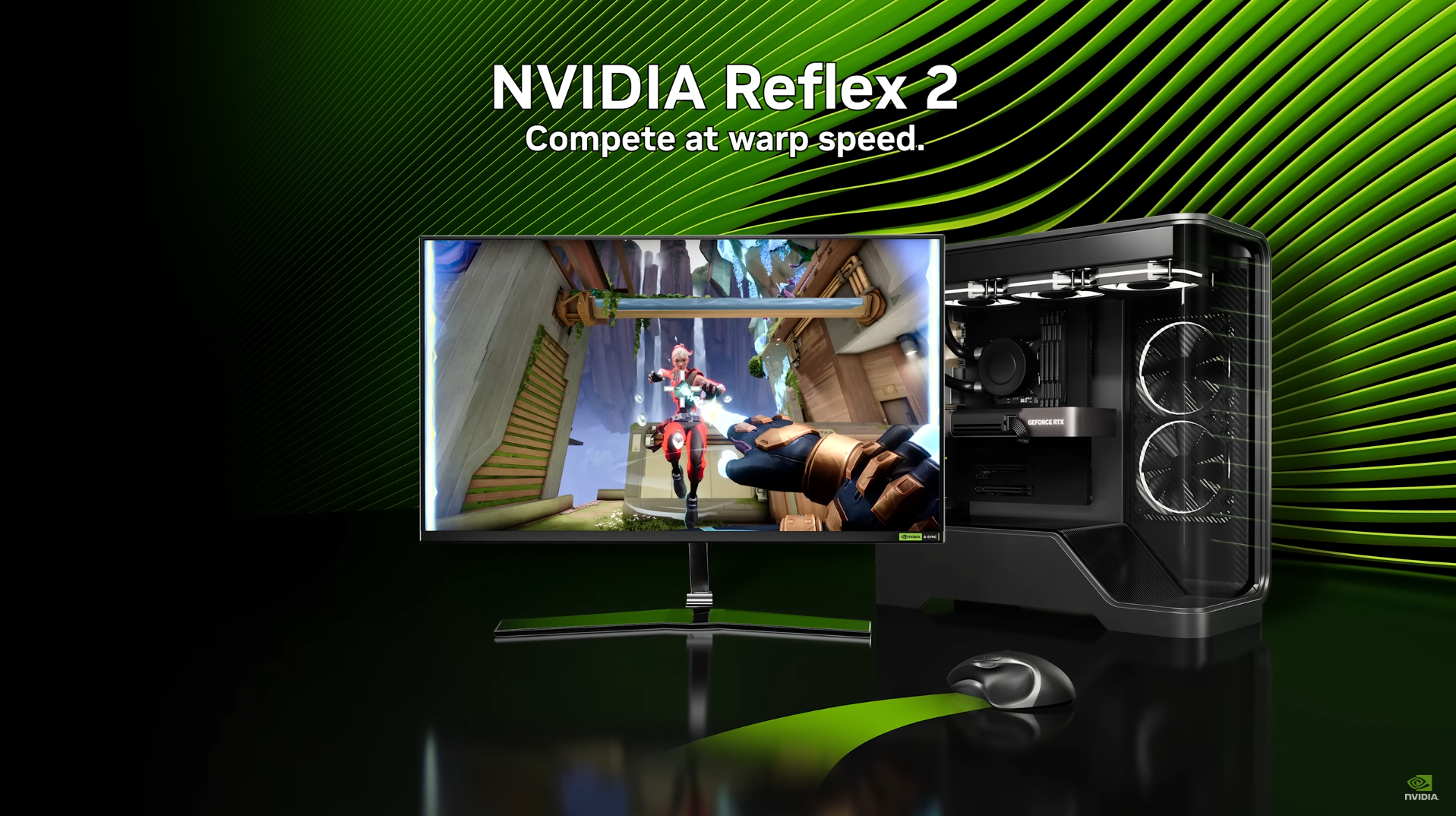
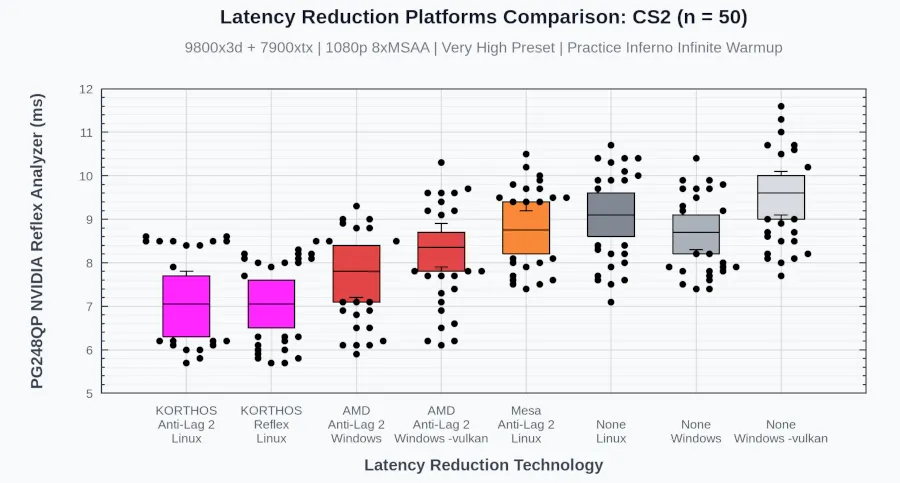
The developer behind the project, Nicolas James, reportedly started the work after frustration with the state of Anti Lag 2 on Linux. Mesa’s Anti Lag 2 implementation had stability concerns and was disabled by default, while testing showed that it did not deliver the same level of improvement as AMD’s proprietary Windows implementation. This led to the idea of intercepting NVIDIA’s VK_NV_low_latency2 extension through a Vulkan layer, allowing similar functionality to be exposed even when the game is not running on NVIDIA hardware.
On GitHub, the project explains that it provides hardware agnostic implementations of both VK_NV_low_latency2 and VK_AMD_anti_lag device extensions. When paired with dxvk nvapi, the layer can forward relevant calls and reduce the need for official driver level support. This is one of the project’s most important points because more games support NVIDIA Reflex than AMD Anti Lag, giving AMD and Intel GPU owners a new way to benefit from Reflex enabled titles on Linux.
The project is especially interesting for Steam Play and Proton users. For Proton based games, users must enable NVAPI support together with the layer configuration. The project also notes that Reflex Boost mode is supported, but it currently behaves the same as Reflex On, meaning both modes are treated identically inside the layer.
Testing has included several major games, including Counter Strike 2, Cyberpunk 2077, Marvel Rivals, Overwatch 2, The Finals, and Resident Evil Requiem. The project’s own benchmark data suggests that its latency results can match or even outperform proprietary Windows implementations on the same hardware in some scenarios, although users should still treat early project data carefully until broader independent testing becomes available.
This could become especially useful for AMD GPU owners in games that support NVIDIA Reflex but do not support AMD Anti Lag 2. In that case, Low_Latency_Layer may offer a practical way to access a Reflex style path on Radeon hardware. Intel Arc users may also benefit, especially as Intel graphics support on Linux has improved significantly over the past few years and more users are testing Arc cards across Proton and native Linux gaming environments.
The broader impact is clear. Linux gaming has already made major progress through Proton, Vulkan, DXVK, VKD3D Proton, Mesa, and stronger vendor driver support. However, lower latency gaming remains one of the areas where Windows has traditionally kept an advantage, especially for competitive titles and high refresh rate setups. Low_Latency_Layer does not solve every limitation, but it gives Linux gamers another tool to reduce input delay across more hardware combinations.
There are still practical limitations. This is an open source project in early development, and users should expect configuration requirements, game by game behavior, and possible compatibility issues. The GitHub page lists build requirements such as CMake, Vulkan headers, and Vulkan utility libraries, and the project is currently licensed under the MIT License.
For Linux users who enjoy competitive shooters, this project could become a meaningful step forward. Instead of waiting for every game, GPU vendor, and driver stack to align perfectly, Low_Latency_Layer creates a vendor neutral approach that may bring lower latency gaming to more players. If development continues and independent benchmarks confirm the early results, this could become an important addition to the modern Linux gaming stack.
For the PC gaming ecosystem, this is another sign that Linux is no longer just catching up in basic compatibility. It is now moving toward feature parity in areas that matter to serious players, including input response, frame pacing, high refresh rate support, and GPU feature access. With Steam Deck, desktop Linux, and Proton continuing to mature, projects like Low_Latency_Layer could help make Linux gaming feel faster, cleaner, and more competitive.
Would you try Low_Latency_Layer on your Linux gaming setup, or do you think low latency technologies still need official driver support from NVIDIA, AMD, and Intel?
