
NVIDIA Rushes Vera Rubin Bandwidth Upgrades as AMD Instinct MI455X Turns Up Competitive Pressure
NVIDIA’s next generation Vera Rubin platform is shaping up to be far more aggressive than its early public positioning, and the latest chatter suggests Team Green is actively tuning key specs to defend its hyperscaler dominance as AMD’s Instinct MI455X enters the conversation as a credible challenger.
According to SemiAnalysis, updated Vera Rubin NVL72 specifications now point to memory bandwidth reaching 22.2 TB/s, a substantial jump versus the earlier Rubin numbers discussed around GTC 2025. The signal here is straightforward: as agentic and inference heavy workloads become the headline priority for 2026 scale out deployments, memory bandwidth is no longer a nice to have, it is a primary competitive lever.
IMPORTANT: At CES 2026 this week, NVIDIA revised their VR200 NVL72 Spec to overtake by 10% the Memory Bandwidth Advantage from AMD's MI455X. AMD MI455X is 19.6TB/s while Jensen announced in March 2025 Rubin will be 13TB/s and then in September 2025 Ian Buck announced that Rubin… pic.twitter.com/kyzkV4cSPO
— SemiAnalysis (@SemiAnalysis_) January 19, 2026
The most interesting part is how NVIDIA reportedly gets from roughly 13 TB/s class territory to nearly 22.2 TB/s. The narrative centers on HBM4 operating beyond baseline JEDEC expectations, with NVIDIA allegedly pushing suppliers toward pin speeds up to 11 Gbps. This is an unusually direct knob to turn, and it reflects a pragmatic strategy: NVIDIA’s Rubin approach is described as using a narrower 8 stack interface, so boosting pin speed becomes the fastest route to headline bandwidth gains without needing to fundamentally widen the design.
On the other side of the ring, AMD’s approach is framed as winning early bandwidth optics through higher stack counts, with references to 12 high HBM4 stacks driving an estimated 19.6 TB/s figure. If those numbers hold at product reality, it sets up a clean positioning battle: AMD aiming to compete through scale of memory configuration, NVIDIA aiming to outpace through speed and tuning. The competitive takeaway is that both vendors are aligning on the same thesis: bandwidth is a front line KPI for the next wave of AI infrastructure, especially where long context inference and agentic pipelines can become memory throughput constrained.
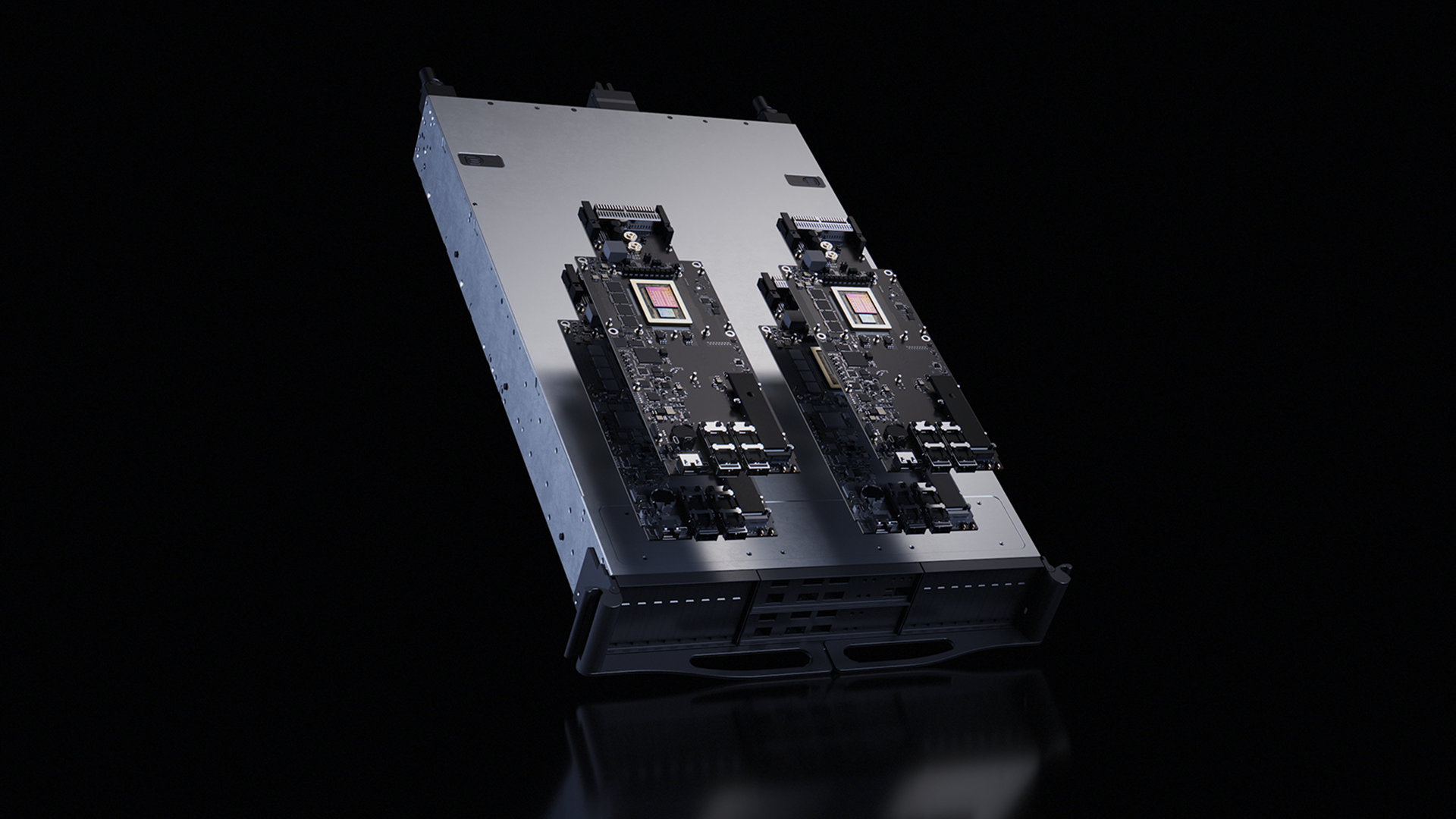
Performance headlines are great for market momentum, but buyers and builders should prioritize verifiable platform behavior. The first thing to watch is sustained bandwidth under real workloads, not peak theoretical bandwidth. The second is stability and yield when operating HBM4 at elevated pin speeds, because pushing memory faster can expose power, thermals, error correction behavior, and binning realities. The third is platform level efficiency, meaning bandwidth per watt, because hyperscalers will not accept a bandwidth win that blows up rack level power envelopes. Finally, adoption will depend on the total ecosystem package, including networking, software maturity, and availability timelines, not only the raw GPU spec sheet.
If SemiAnalysis is directionally right, this is a classic competitive move: NVIDIA is signaling it will not allow AMD to own a single clean headline advantage going into the next procurement cycle. The more strategic question is whether this turns into real share movement once both platforms are mainstream, or if it simply escalates the performance arms race while NVIDIA maintains its entrenched deployment footprint.
Do you think hyperscalers will reward AMD for competitive bandwidth and packaging scale, or will NVIDIA’s Rubin tuning plus ecosystem lock in keep the market from shifting meaningfully in 2026?
