
NVIDIA RTX 5080 Cards With 32GB GDDR7 Reportedly Appear In China As AI Demand Drives High VRAM Modded GPUs
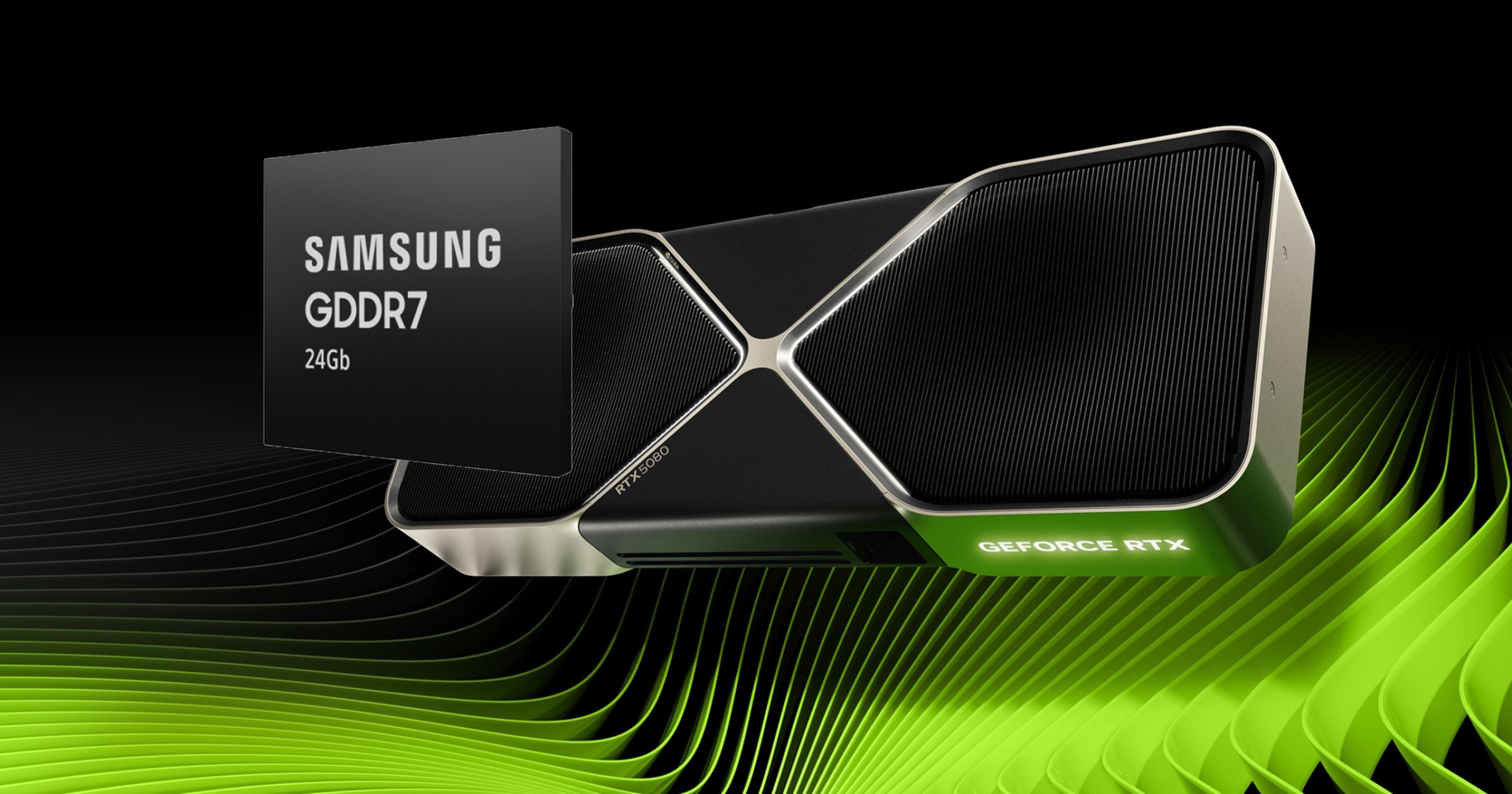
China’s AI market continues to find creative ways to unlock more usable compute, and the latest example being circulated is a modified GeForce RTX 5080 that doubles its VRAM capacity from 16GB to 32GB, positioning it as a far more practical option for inference and lighter training workloads where memory capacity often becomes the hard limiter before raw shader performance.
According to a post shared by UNIKO’s Hardware on X, RTX 5080 units are allegedly being sold in China with 32GB of GDDR7 onboard, packaged in a workstation oriented configuration that appears to be popular with local buyers. The report frames these as consumer GPUs adapted for AI use, following the same general playbook seen previously with modified GeForce RTX 4090 cards used for local AI setups.
Technically, moving an RTX 5080 to 32GB VRAM implies memory hardware changes that go beyond a typical firmware tweak. The discussion highlights the use of 3GB GDDR7 memory modules to reach 32GB total capacity, a configuration enthusiasts have speculated could appear in an eventual higher tier refresh, but the claim here is that China’s modding ecosystem is already executing the upgrade path ahead of any official product cycle.
Another notable detail is the cooling approach. The same source references a turbo style design, commonly used to describe blower fan coolers designed to exhaust heat out of the chassis more directly. For dense workstation racks, compact AI boxes, and multi GPU environments, blower style cooling can be a more scalable thermal strategy than open air designs, especially when the workload is sustained and memory thermals become just as important as core thermals.
From a market dynamics standpoint, this is a predictable response to two converging realities. First, AI workloads are fundamentally VRAM hungry, and capacity improvements can unlock bigger models, larger batch sizes, longer context windows, and higher throughput stability even when the GPU compute itself remains unchanged. Second, when access to dedicated data center accelerators is limited, consumer GPUs become the base layer for experimentation and production, and modification becomes the fastest route to bridging the gap between gaming specs and AI requirements.
The real business risk sits in durability and consistency. Modded VRAM configurations often come with adjusted power limits, altered thermal profiles, and potentially variable quality control depending on who performs the modification and how memory validation is done. Even if performance is attractive on paper, long run stability under sustained AI load is where these builds either earn credibility or become a maintenance nightmare. That said, for many AI buyers operating under urgent deployment pressure, the priority tends to be acquiring workable compute capacity now, even if long term reliability is a calculated tradeoff.
If these 32GB RTX 5080 units scale in volume and become widely adopted, the secondary impact could be tighter supply and higher pricing for baseline retail RTX 5080 inventory, especially in regions where demand already outpaces shipments. In other words, the AI pull continues to reshape what gamers can buy and at what price, even when the product in question is positioned as a consumer graphics card.
If you had the choice, would you rather buy a stock 16GB GPU with official warranty, or a modded 32GB version with higher AI upside but higher risk, and what workload would justify that tradeoff for you?
