
NVIDIA RTX 5060 RTX 5060 Ti 8 GB and RTX 5070 12 GB Expected to Drive 75% of RTX 50 Series Shipments This Quarter
A new report from Board Channels is circulating around a refreshed supply strategy for NVIDIA’s GeForce RTX 50 series, framing VRAM cost pressure as the key driver behind how allocation is being prioritized this quarter.
According to the report, NVIDIA is expected to concentrate the bulk of shipment volume into 3 mainstream SKUs: GeForce RTX 5060 8 GB, RTX 5060 Ti 8 GB, and RTX 5070 12 GB. The claim is that these 3 cards alone will account for roughly 75% of total RTX 50 series shipments this quarter, while higher VRAM configurations make up the remaining 25%.
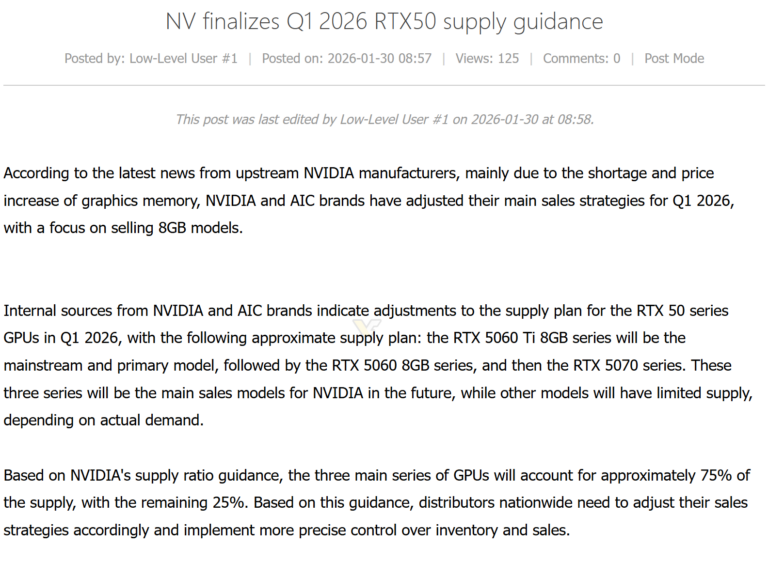
The strategic logic is straightforward. If VRAM pricing is tightening and availability is uneven, then 8 GB models become the easiest lever for maintaining channel fill, stabilizing board partner output, and keeping shelves stocked at volume, even if enthusiast demand continues to skew toward higher memory capacities. In practical terms, the report implies reduced supply focus on the RTX 5060 Ti 16 GB and RTX 5070 Ti 16 GB, while higher tier parts like RTX 5080 16 GB and RTX 5090 remain inherently constrained by their premium positioning and bill of materials.
The RTX 5070 12 GB is the most interesting inclusion in the reported top 3, because it effectively becomes the bridge product that keeps NVIDIA’s stack from feeling hollow in the center. With ongoing chatter about constrained RTX 5070 Ti availability in multiple regions, maintaining a consistent RTX 5070 supply gives NVIDIA a functional buffer between the RTX 5060 Ti 8 GB and the higher cost RTX 5080 class.
From a competitive standpoint, the report also frames this as a positioning response to AMD’s upper midrange push, especially where 16 GB VRAM models have stronger consumer appeal. While the RTX 5070 is not a clean 1 to 1 matchup against every Radeon SKU being discussed, a healthy supply of a 12 GB card can still function as a pricing and availability wedge in the channel, particularly if 16 GB alternatives trend upward in street pricing.
One important operational note is that the original Board Channels thread was not reachable from my side due to a fetch timeout at the time of writing, so the above should be treated as a channel report rather than a confirmed official NVIDIA statement. That said, multiple downstream reports and pricing trackers are already pointing to memory supply pressure and uneven availability across certain RTX 50 series models, which is broadly consistent with the direction described here.
If this allocation pattern holds, the near term implication for players is simple: 8 GB models could remain the most consistently available RTX 50 options, while higher VRAM SKUs may continue to fluctuate in both stock and pricing. For buyers targeting 1440p with modern texture heavy titles and longer upgrade cycles, that creates a more complicated value equation, because availability becomes a first order factor, not just performance.
If you are shopping this quarter, would you rather take an easier to find 8 GB card at a reasonable price, or hold the line for 12 GB to 16 GB even if supply stays volatile?
