
NVIDIA Positions Itself as the Core Driver of the AI Revolution While Responding to Growing ASIC Momentum Led by Google TPUs
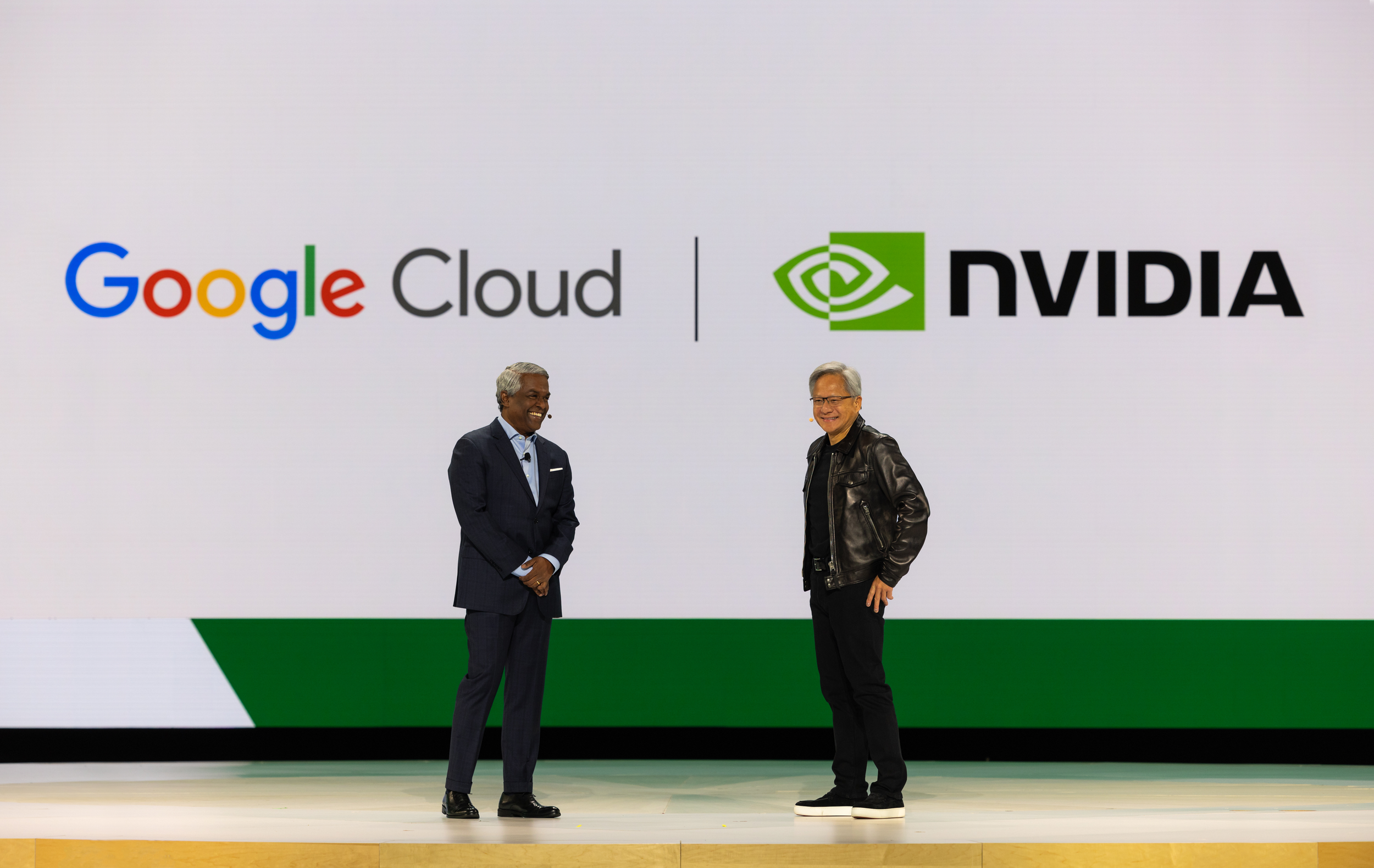
NVIDIA has delivered a clear and confident statement as Google TPUs gain strong attention across the global AI infrastructure ecosystem. With Google’s custom accelerators being adopted externally by companies such as Meta and Anthropic, industry observers have begun to suggest that specialized ASIC hardware could meaningfully challenge NVIDIA’s long established leadership in accelerated computing. NVIDIA has now responded to this evolving narrative, reinforcing both its continued collaboration with Google and its strategic advantage across the full AI technology stack.
A report from The Information revealed that Meta is preparing to purchase several billions of dollars worth of Google TPUs for future AI workloads. The report further projected that external TPU adoption could eventually represent ten percent of NVIDIA’s AI revenue, highlighting a rapidly shifting competitive landscape. Google’s approach, built on nearly a decade of TPU development, is centered on vertically integrated hardware and software pipelines that provide strong performance advantages in inference workloads.
In a statement provided to Wccftech, NVIDIA acknowledged the impressive progress made by Google while clearly defining the strategic differences between GPU based computing and ASIC focused acceleration.
“We are delighted by Google’s success. They have made great advances in AI and we continue to supply to Google. NVIDIA is a generation ahead of the industry. It is the only platform that runs every AI model and does it everywhere computing is done. NVIDIA offers greater performance, versatility and fungibility than ASICs that are designed for specific AI frameworks or functions.”
NVIDIA’s response frames ASICs as highly specialized solutions that excel within a narrow operational scope. In contrast, the firm emphasizes the flexibility and completeness of its own platform which is built on the CUDA software ecosystem, a diverse architecture optimized for both training and inference, and deep support for all major model families. This unified approach allows NVIDIA to maintain a leadership position as AI research, model architectures and deployment requirements evolve.
While Google’s TPUs demonstrate considerable efficiency and throughput advantages in targeted inference scenarios, it is equally notable that Google remains one of NVIDIA’s major GPU customers. This underscores the reality that large scale AI operations continue to rely on a combination of general purpose accelerators and specialized hardware, with NVIDIA positioned at the center of global infrastructure demands.
As massive inference deployments begin to shape the next wave of AI expansion, competition between specialized ASIC solutions and universal GPU platforms is expected to intensify. NVIDIA continues to express confidence in its long term roadmap, supported by its software stack and multigenerational hardware advancements. At the same time, Google is quickly extending TPU availability to external partners, signaling an increasingly competitive and diversified market.
The next evolution of AI compute performance and cost efficiency will likely be defined by how each platform adapts to new model architectures, production scale requirements and global deployment challenges.
What do you think will shape the next big shift in AI compute, specialized ASIC acceleration or NVIDIA’s full stack GPU ecosystem? Let us know your thoughts below.
