
NVIDIA RTX 5090 Power Adapter Melts Into the GPU, Refuses to Detach
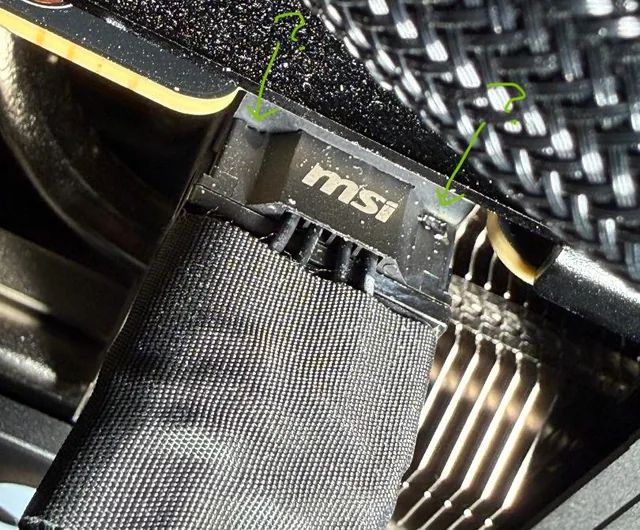
NVIDIA’s GeForce RTX 5090 continues to attract attention for the wrong reasons as another severe power connector failure has emerged, raising concerns about the durability of the flagship Blackwell GPU’s power delivery design. Despite transitioning from the problematic 12VHPWR connector to the improved 12V 2x6 standard, real world incidents are still occurring, and this latest case may be one of the most extreme to date.
According to a report shared by a Reddit user, their Windows system suddenly stopped detecting the graphics card during normal workloads. After rechecking the system, they discovered significant burn damage around the adapter connected to an MSI RTX 5090. The melting was so severe that the cable appeared fused to the GPU power socket, to the point where it could not be pulled out even with moderate force. Community members were quick to caution the user not to attempt removal, as applying pressure could further damage the card or the connector.
What makes this case even more frustrating is that this was already the second failure experienced by the same user. The first RTX 5090 unit reportedly suffered from artifacting issues. This time, however, the connector failure appears far more serious. The adapter in question is MSI’s official bundled cable, indicating that no third party or unverified hardware was involved.
The user now plans to pursue an RMA through MSI, although it remains unclear how manufacturers will treat such incidents, especially since there is currently no industry regulation or clear warranty path regarding melted connectors on next generation power standards.
While power connector failures may still be isolated incidents, they have remained a recurring concern with high wattage GPUs. Basic precautions can reduce risk, such as ensuring a firm and fully seated connection and prioritizing native 12V 2x6 power supplies from reputable vendors. Even then, as the RTX 5090 demonstrates, the sheer thermal and electrical load of modern flagship graphics cards means there will always be a degree of risk.
This event adds yet another data point to the ongoing conversation around high performance GPU power delivery and whether current connector designs are keeping pace with the rapid increases in power draw.
Have you encountered issues with next generation power connectors on high end GPUs? Share your experience below.
