
NVIDIA Launches RTX PRO 5000 Blackwell With 72 GB GDDR7, Delivering 50% More VRAM for AI and Professional Workloads
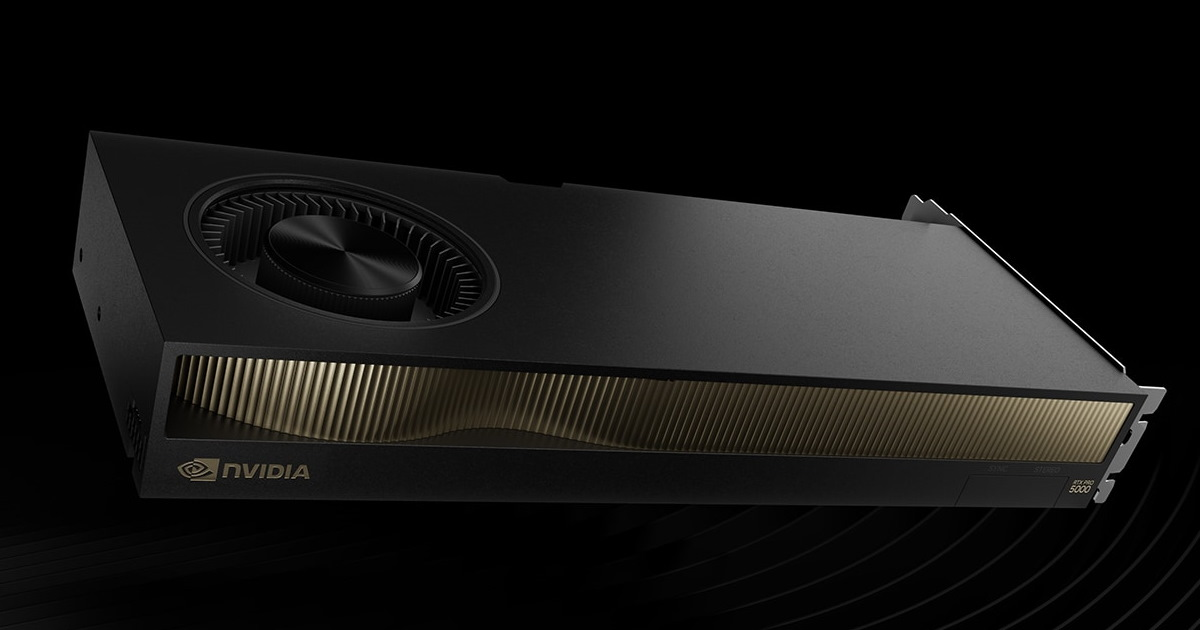
NVIDIA has officially expanded its professional GPU lineup with the introduction of the RTX PRO 5000 Blackwell 72 GB, addressing one of the most notable gaps in its current workstation portfolio. During the initial rollout of the RTX PRO Blackwell family, NVIDIA positioned the RTX PRO 6000 as the flagship with a massive 96 GB of GDDR7 memory, while the RTX PRO 5000 Blackwell sat one tier below with 48 GB. Although additional models targeted entry level prosumers, the significant VRAM gap between tiers remained a concern for AI and professional users with growing memory demands.
With the arrival of the new RTX PRO 5000 Blackwell 72 GB, NVIDIA effectively closes that gap. The new variant retains the same core specifications as the existing 48 GB model and is powered by the GB202 GPU core. It features 14,080 CUDA cores, delivers 2,142 AI TOPS, and operates on a 384 bit memory interface offering up to 1.34 TB per second of bandwidth. The card carries a 300 W TDP and comes in an air cooled dual slot design, maintaining workstation friendly thermal and form factor characteristics. The key differentiator is memory capacity, which now jumps by a full 50 percent.
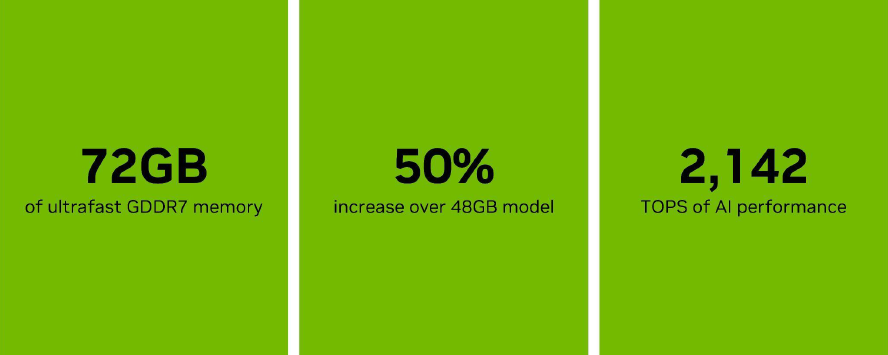
To achieve the 72 GB configuration, NVIDIA utilizes 24 GDDR7 memory modules instead of the 16 used on the 48 GB version. Memory speeds remain unchanged at 28 Gbps across the same 384 bit bus, ensuring identical bandwidth while dramatically increasing usable memory headroom. This move highlights NVIDIA’s flexibility in scaling VRAM capacity within the professional and prosumer segments and may also signal similar strategies for future high VRAM consumer GPUs, particularly as expectations rise around the RTX 50 SUPER family.
According to NVIDIA, the RTX PRO 5000 Blackwell 72 GB is purpose built to meet accelerating demand across Agentic AI, large language models, and advanced professional workflows. The expanded memory pool enables users to run larger LLMs, handle more complex AI agents, and reduce reliance on multi GPU memory partitioning. Combined with its 2,142 AI TOPS rating, the GPU is positioned to alleviate bottlenecks in AI inference, neural rendering, simulation, and data intensive workloads.
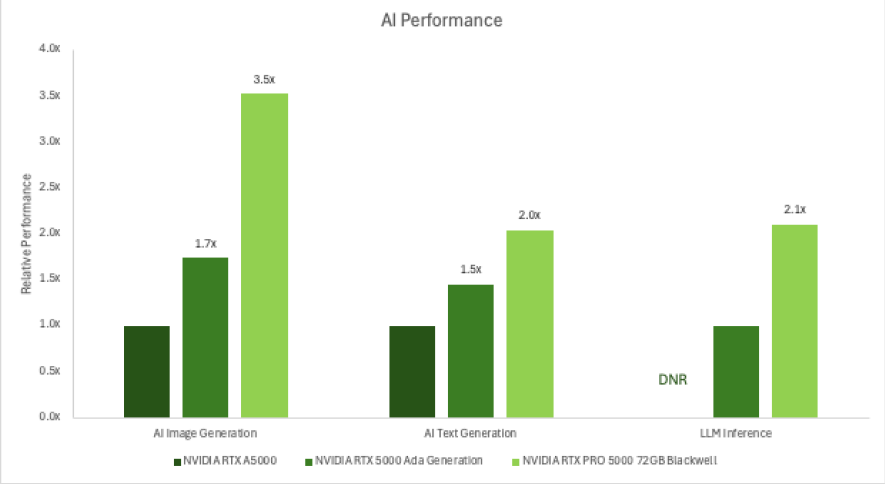
Performance improvements over the previous generation are substantial. NVIDIA states that the RTX PRO 5000 Blackwell 72 GB delivers up to a 3.5 times gain in image generation and a 2 times gain in text generation compared to the prior generation. In LLM inference workloads, the card achieves a 2.1 times performance uplift. Professional applications including Arnold, Chaos V Ray, and Blender, along with real time GPU renderers such as D5 Render and Redshift, see rendering and processing time reductions of up to 4.7 times, significantly improving throughput for content creation and visualization pipelines.
The NVIDIA RTX PRO 5000 Blackwell GPU is now available in both 72 GB and 48 GB configurations through leading workstation partners including Ingram Micro and Leadtek. Pricing for the new 72 GB model has not yet been officially disclosed, and NVIDIA has indicated that further details will be shared once final partner pricing is confirmed.
With AI workloads rapidly scaling in complexity and memory requirements, NVIDIA’s move to offer a higher VRAM RTX PRO 5000 variant strengthens its workstation lineup and reinforces Blackwell’s role as a foundational architecture for next generation professional computing.
Do you see the 72 GB RTX PRO 5000 as the new sweet spot for AI and workstation users, or is the jump to the RTX PRO 6000 still the better long term investment?
