
NVIDIA GeForce RTX 5050 9 GB Leak Points to GB206, 2560 Cores, GDDR7, and 130W Power
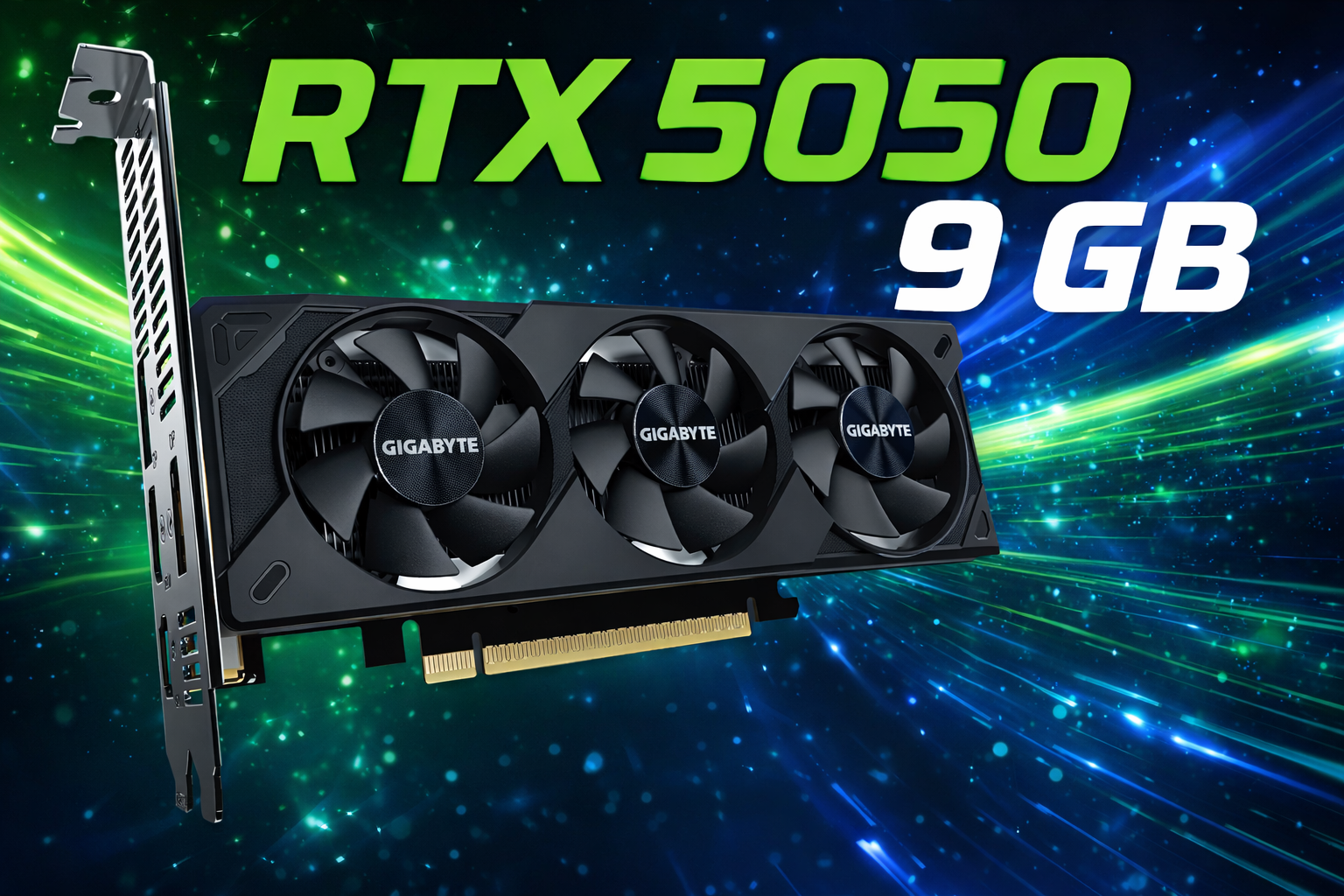
A fresh leak suggests NVIDIA is preparing a second GeForce RTX 5050 variant, this time with 9 GB of memory and a different GPU package than the existing desktop card. According to leaker Kopite7kimi, the rumored card would use the GB206 150 GPU on a PG152 SKU40 board, while keeping the same 2560 CUDA core count associated with the current RTX 5050 desktop model. That makes this look less like a full class upgrade and more like a targeted memory and board level revision.
— 포시포시 (@harukaze5719) March 10, 2026
The most interesting shift is the memory configuration. The leak points to a 9 GB GDDR7 setup on a 96 bit bus, which is unusual on paper but easier to understand once compared with the existing RTX 5050. NVIDIA’s current official RTX 5050 desktop card ships with 8 GB of GDDR6, 2560 CUDA cores, and a 130W power target at a 249$ starting price. Reports around the new variant suggest NVIDIA may be trading bus width for newer 28 Gbps GDDR7 modules, which would push bandwidth slightly above the current card despite the narrower interface.
If the leaked figures hold, the new card would land at 336 GB/s of memory bandwidth versus 320 GB/s on the current RTX 5050, while also increasing capacity by 12.5%. In practical terms, that means the rumored 9 GB model would offer a small bandwidth uplift and a modest VRAM bump without changing the broader performance tier of the product. The leaked reports also continue to point to the same 130W board power level as the existing model, which further supports the idea that NVIDIA is not trying to create a dramatically faster product here.
The move to GB206 is also notable because the current desktop RTX 5050 is tied to GB207 in existing coverage and official launch reporting. That has led to speculation that NVIDIA may be aligning the 9 GB model more closely with board designs used higher in the stack, potentially making it easier for partners to reuse layouts already built around newer memory support. That part remains inference, not official confirmation, but it is one of the more believable explanations for why NVIDIA would change the GPU package without increasing the CUDA count.
NVIDIA GeForce RTX 5050 GPU SKUs:
| Specification | NVIDIA GeForce RTX 5050 9GB | NVIDIA GeForce RTX 5050 8GB |
|---|---|---|
| GPU Name | Blackwell GB206-150 | Blackwell GB207-300 |
| GPU SMs | 20 | 20 |
| GPU Cores | 2560 | 2560 |
| Clock Speeds |
2317 MHz Base 2572 MHz Boost |
2317 MHz Base 2572 MHz Boost |
| Memory Capacity | 9GB GDDR6 | 8GB GDDR6 |
| Memory Bus | 96-bit | 128-bit |
| Memory Speed | 28 Gbps | 20 Gbps |
| Bandwidth | 336 GB/s | 320 GB/s |
| Power Interface | 8-pin | 8-pin |
| TBP | 130W | 130W |
| Launch | Mid 2026 | 1 July 2025 |
| Price | $249 (expected) | $249 |
As for timing, recent reporting around the earlier 9 GB rumor wave suggests NVIDIA may be aiming this card around Computex 2026, though nothing official has been announced. Pricing is also still speculative. Since the current RTX 5050 officially starts at 249$, some reports expect the 9 GB version to stay near that level, but memory market pressure could easily complicate that strategy if the card actually ships with newer GDDR7 modules.
Right now, the safest takeaway is that this looks like a tactical SKU rather than a true new tier. If NVIDIA brings the RTX 5050 9 GB to market, the value proposition will likely depend less on raw GPU power and more on whether slightly higher bandwidth, 1 GB of extra VRAM, and a similar price are enough to make the card more appealing in the entry level segment.
Would you take a 9 GB GDDR7 RTX 5050 over the current 8 GB model if performance stayed close but pricing remained near 249$?
