
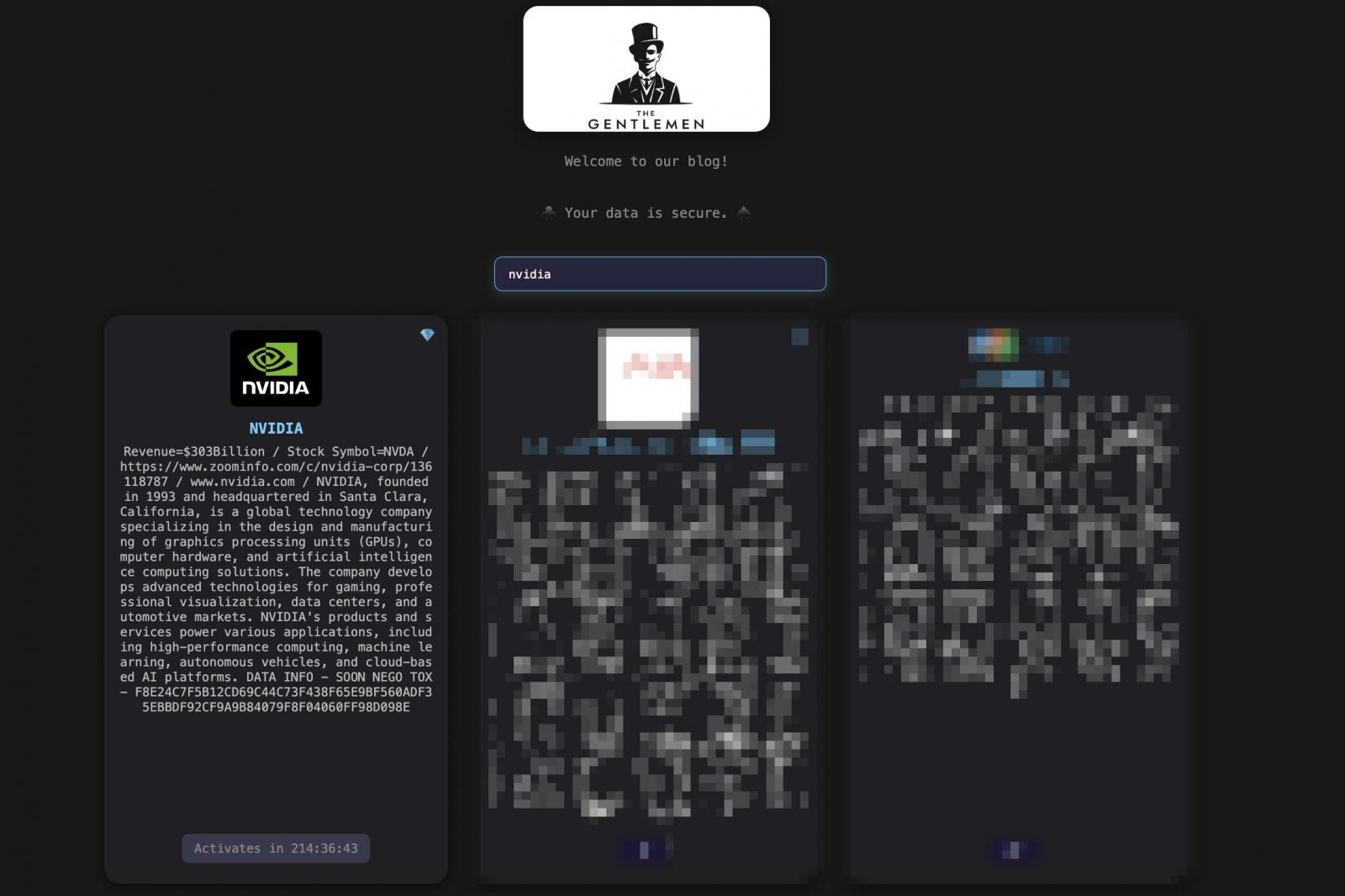
NVIDIA is investigating a potential cybersecurity incident after the ransomware group known as The Gentlemen claimed to have compromised company information, threatening to publish allegedly stolen data on November 28, 2026. The attackers added the semiconductor giant to their dark web leak platform on November 18, initiating a countdown intended to pressure the company into negotiations. However, NVIDIA maintains that it has found no evidence of unauthorized access to its internal systems, suggesting the incident could involve an external business partner rather than its own infrastructure.
In a statement provided to cybersecurity reporters, NVIDIA confirmed that an investigation is underway but emphasized that its systems and networks have not shown indications of compromise.
"We have found no indication that NVIDIA systems or networks were affected. We continue to monitor the situation."
— Quote by: NVIDIA spokesperson
The Gentlemen ransomware group has not published sample files, technical evidence, or information confirming the type or volume of data allegedly stolen. Its listing reportedly contains publicly available corporate information alongside the November 28 countdown and a contact address for negotiations. Consequently, there is currently no independent confirmation that NVIDIA's proprietary GPU architectures, semiconductor designs, internal documentation, or customer information have been compromised.
The group operates through a ransomware service model, allowing affiliated attackers to conduct intrusions using its malicious software and extortion infrastructure. According to Microsoft Threat Intelligence's technical investigation, The Gentlemen is associated with the financially motivated threat actor Storm 2697 and employs a double extortion strategy involving data theft, file encryption, and threats of public disclosure. Its malware uses XChaCha20 encryption with Curve25519 cryptography and incorporates network propagation capabilities designed to spread across compromised Windows environments.
These technical capabilities make the group a potentially serious threat to corporate infrastructure, although there is no evidence that its ransomware has been deployed within NVIDIA's networks. The distinction is important because an extortion listing alone does not establish that a company has suffered a successful cyberattack.
The potential involvement of an external partner raises broader concerns about cybersecurity across the semiconductor supply chain. NVIDIA works with numerous manufacturing partners, cloud providers, software developers, and enterprise customers, creating an extensive network of organizations that may handle sensitive technical or business information. Even when a company's internal security remains intact, compromised suppliers can expose shared documents, employee records, or other confidential material.
A similar concern recently emerged following the confirmed employee data exposure at TSMC, where information associated with an external cloud service provider was compromised while the semiconductor manufacturer reported that its internal systems remained secure. Although the incidents are unrelated, they demonstrate why cybersecurity protections must extend beyond a company's direct infrastructure.
NVIDIA has also experienced previous security incidents, including the 2022 Lapsus$ attack and a separate breach involving a regional GeForce NOW Alliance partner in May 2026. These events involved different circumstances and should not be considered evidence supporting the latest allegations.
For now, the November 28 deadline remains an unverified threat from the attackers. NVIDIA has not identified the potentially affected partner, disclosed the existence of stolen information, or confirmed any disruption to its products and services. Whether The Gentlemen possesses legitimate company data will depend on evidence emerging from the investigation or subsequent disclosures.
The allegations against NVIDIA highlight a growing cybersecurity challenge facing the technology industry. Advanced semiconductor companies depend on complex international networks of suppliers, manufacturers, and service providers, making information security increasingly difficult to maintain across every organization involved.
However, a ransomware group's claim should never be treated as confirmation of a successful breach. Cybercriminal organizations frequently use publicity and deadlines to increase pressure on targeted companies, and the absence of technical evidence makes independent verification essential.
The more significant concern is the security of external partnerships. Sensitive information can remain vulnerable even when a company's primary infrastructure is properly protected. Semiconductor manufacturers and technology providers must enforce stronger access controls, independent security audits, and clear requirements for handling shared information.
For PC gamers, developers, and local AI enthusiasts, there is currently no verified evidence that this incident has compromised NVIDIA graphics drivers, consumer GPUs, CUDA software, or GeForce NOW accounts. Nevertheless, hardware manufacturers should maintain transparent communication whenever security incidents could potentially affect their customers.
The November 28 deadline will be an important point in determining whether these allegations have substance or represent another attempt to pressure a major technology company through unverified claims.
Do you believe major technology companies should face stronger cybersecurity requirements for their suppliers and external partners, or are existing security standards sufficient to protect sensitive semiconductor information?
