

NVIDIA's leadership crisis is taking another unexpected turn as US authorities acknowledge uncertainty surrounding the espionage allegations against Alice Huang, while new investigations expose questionable AI GPU financing arrangements under former CEO Jensen Huang. The developments have fueled accusations of a coordinated effort to remove NVIDIA's founder, although no evidence currently establishes that his departure resulted from an organized corporate or political operation.
According to Reuters, US Attorney General Todd Blanche confirmed on November 12 that the Department of Justice and FBI had not determined whether Alice Huang, a former executive at Singapore based Megaspeed International, was working for Chinese intelligence. The admission contrasts with earlier reporting suggesting American intelligence agencies had identified her as an operative connected to China's Ministry of State Security. CNN subsequently reported disagreements among intelligence officials regarding the strength of the evidence, while China continues denying the allegations.
"There's no conclusions reached by the Department of Justice, or by me, or by Director Patel, around who she is or is not."
Quote by: Todd Blanche, US Attorney General.
The uncertainty has triggered speculation that Huang's removal may have been politically motivated, particularly given his support for maintaining NVIDIA's commercial presence in China. Technology executives and investors, including David Sacks and Elon Musk, have questioned the circumstances surrounding his departure. However, the absence of a confirmed espionage finding does not establish that the intelligence concerns were fabricated or that NVIDIA's board participated in a coordinated effort to remove him.
Meanwhile, a separate Bloomberg investigation identified restricted NVIDIA AI accelerators at a Shanghai data center associated with companies previously connected to Alice Huang. Regulatory filings reportedly show that a subsidiary of Shanghai Longteng Intelligent Computing pledged 193 servers valued at approximately $73 million as collateral in January 2025. These included 22 Dell servers equipped with NVIDIA H800 processors and 52 Supermicro systems containing H100 or H200 accelerators.
Alice Huang founded Longteng in 2016 but reportedly relinquished her shares in 2017. The documents do not establish whether she personally arranged the transactions or participated in illegal exports. Nevertheless, the findings strengthen concerns about NVIDIA's international distribution network and the movement of restricted AI hardware through third party suppliers.
Further questions have emerged about NVIDIA's internal management following a Reuters investigation into communications between Jensen Huang and senior executives. Internal messages reviewed by Reuters indicate that Huang described his interactions with Alice Huang and Megaspeed as routine business dealings when questioned by General Counsel Tim Teter and Chief Marketing Officer Alison Wagonfeld in October 2026. He also reportedly considered legal action against The New York Times over its earlier coverage, although no lawsuit was filed. These disclosures have intensified corporate governance concerns surrounding his resignation.
Beyond the personal controversy, The Wall Street Journal has reported significant disagreements between Huang and then CFO Colette Kress over NVIDIA's financial support for AI companies purchasing its hardware. NVIDIA allegedly provided financing and guarantees to smaller cloud operators and AI startups, helping customers acquire GPUs while maintaining demand for its own semiconductor production.
One proposed arrangement involved approximately $250 billion in financial guarantees supporting an OpenAI infrastructure project. Kress reportedly reduced the proposed commitment by roughly half while pushing for stricter financial oversight. Huang also expressed concerns that major cloud providers were developing custom AI accelerators while NVIDIA faced substantial commitments for semiconductor wafers and memory from its suppliers.
These revelations have raised questions about whether NVIDIA's financing strategy artificially sustained demand for AI accelerators. However, the reporting does not establish that NVIDIA deliberately engineered consumer GPU or RAM shortages, nor does it demonstrate a direct relationship between enterprise financing agreements and GeForce retail prices.
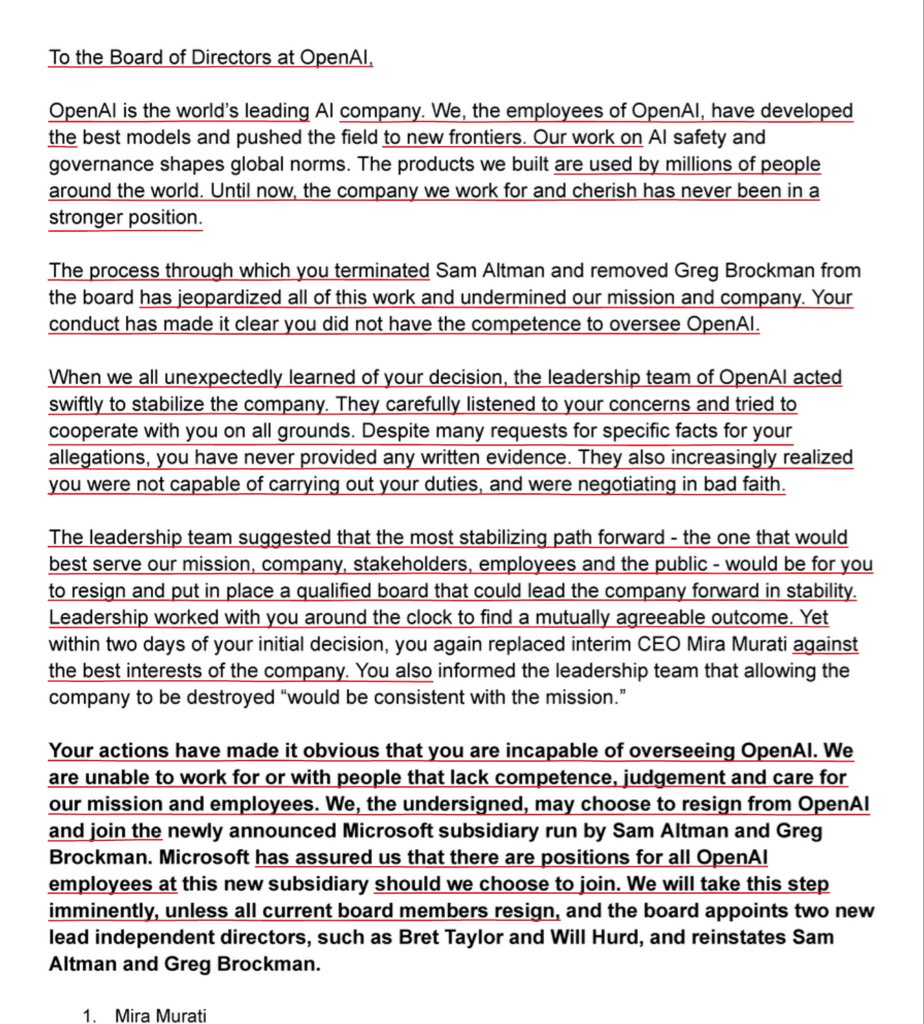
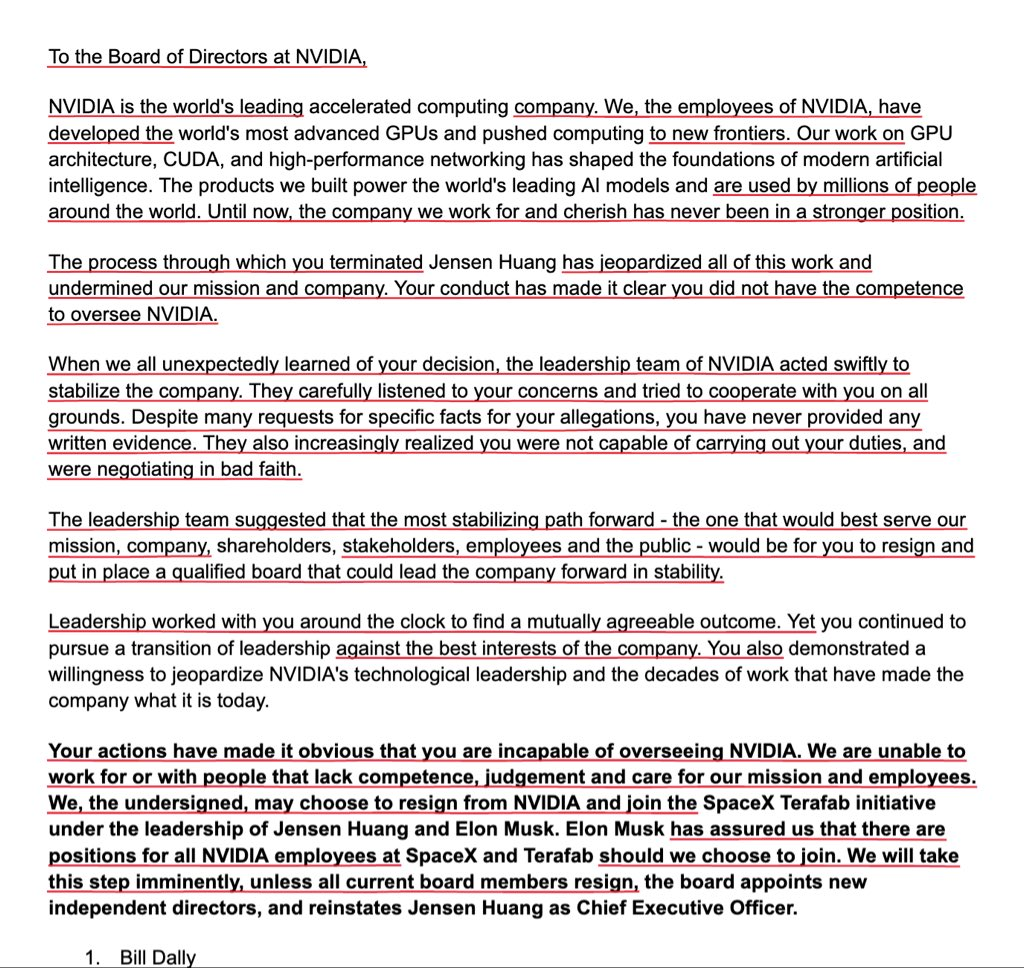
The leadership controversy has also generated misinformation. A viral letter allegedly signed by senior NVIDIA executives demanded Huang's reinstatement and threatened mass resignations, but NVIDIA Vice President Bryan Catanzaro publicly rejected the document as fabricated. The letter closely resembled the employee protest circulated during OpenAI's 2023 leadership crisis.
Nevertheless, genuine employee support for Huang remains evident. WIRED reported that an internal discussion attracted more than 1,600 comments, many supporting his return. NVIDIA has not announced plans to reinstate him.
Following Huang's resignation after 33 years, Colette Kress remains interim CEO while the board searches for a permanent replacement. The company's independent investigation continues, with no confirmed finding that confidential NVIDIA technology or American national security interests were compromised.
NVIDIA's leadership crisis raises broader questions extending beyond Jensen Huang's personal conduct. The reported financial arrangements supporting AI infrastructure deserve particular scrutiny, especially as gamers, independent developers, and PC builders continue facing expensive GPUs and memory. If manufacturers are financing customers to sustain enterprise hardware demand, the industry needs greater transparency about actual supply, utilization, and pricing.
However, claims that NVIDIA deliberately manufactured shortages or that Huang was removed through a coordinated operation require stronger evidence. The priority should be accountability, transparent investigations, and protecting competition without restricting consumers' access to affordable computing hardware. NVIDIA's next leadership team must demonstrate that serving the AI market does not mean abandoning the PC gaming community that helped establish the company.
Do you believe NVIDIA's leadership crisis is primarily about corporate governance, or should investigators focus more closely on its AI financing arrangements and the potential impact on GPU prices?
