
NVIDIA And Google Reportedly Push 800V DC Power As AI Datacenters Hit Grid Limits
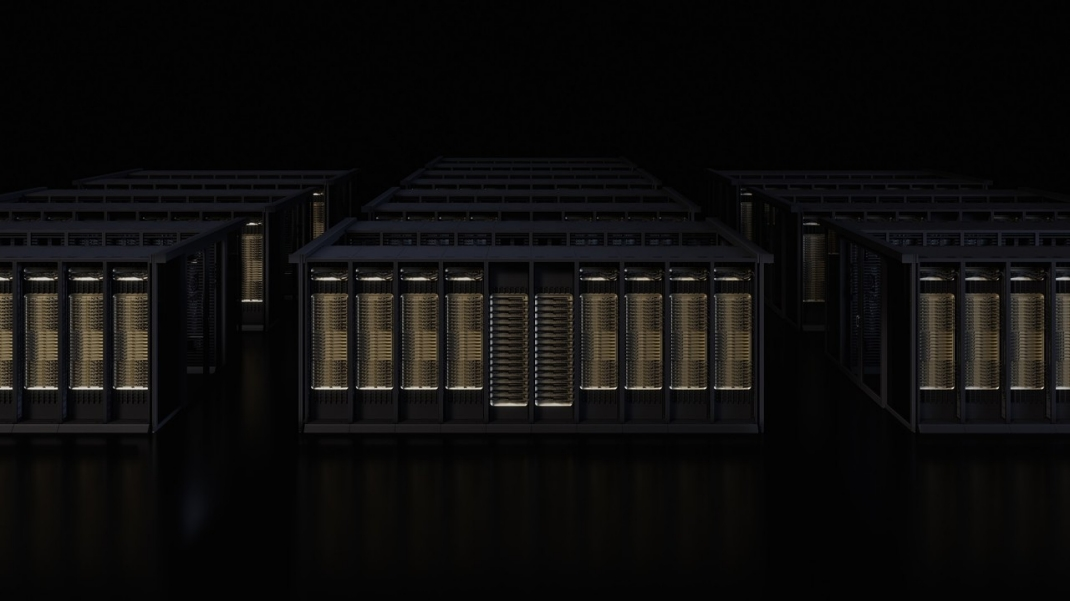
AI datacenters are moving toward 800V DC power infrastructure as rack power demand rises beyond what legacy designs can efficiently support.
The AI infrastructure race is no longer only about GPUs. Power delivery is becoming one of the biggest limits in next generation datacenters, and the industry is now preparing for a major shift toward 800V DC architectures. According to TrendForce, NVIDIA’s Vera Rubin platform and Google’s next generation AI datacenters are reportedly among the first major deployments expected to adopt 800V high voltage direct current systems. Supply chain sources expect initial shipments to begin in small volumes in Q3 2026, with broader adoption rising as AI rack power density continues to climb.
NVIDIA has already confirmed its own move toward 800 VDC architecture for future AI factories. The company says legacy 54V rack power distribution becomes increasingly difficult as AI racks move past 200kW and toward 1MW scale.
Traditional datacenter power systems were not designed for megawatt class AI racks. As GPU density rises, low voltage distribution requires heavier copper, more conversion stages, more rack space, and more energy loss. NVIDIA says 800V DC power can reduce current, lower copper requirements, simplify conversion, and free rack space for compute. The company also says the design can improve end to end power efficiency by up to 5%, reduce maintenance costs by up to 70%, and help cut total cost of ownership by up to 30%.
The physics are straightforward. Higher voltage allows the same amount of power to move with lower current. Lower current means less heat, thinner conductors, smaller distribution hardware, and less wasted energy.
That is why 800V DC is becoming a serious infrastructure discussion as NVIDIA moves toward Rubin, Rubin Ultra, and eventually Feynman era systems.
The shift also creates a major opportunity for power infrastructure suppliers. TrendForce reports that Delta Electronics is expected to benefit from demand for 800V DC rack power systems, battery backup units, and energy management platforms. Delta has also shown 800V DC row based power systems with liquid cooling, including 2.4MW liquid cooling solutions, high voltage DC fans, and next generation cold plate modules.
Schneider Electric has also discussed the 1MW AI rack transition, noting that NVIDIA showed an 800V DC sidecar power supply at GTC 2025 for a Kyber rack carrying 576 Rubin Ultra GPUs. Schneider says 800V DC is needed for single IT racks from 400kW up to 1MW and has positioned its own sidecar solution around future NVIDIA, Google, Meta, and other hyperscale deployments. This connects with NVIDIA’s Quantum X co packaged optics switch at Lambda. In modern AI factories, networking power, cooling, electrical distribution, and GPU utilization are now part of the same system level problem.
The pressure will likely increase after Rubin. As reported by Wccftech, future Feynman racks could push power semiconductor content past US$191,000, around 17 times higher than Blackwell. That estimate is not official NVIDIA pricing, but it shows how quickly power delivery is becoming a major cost center. The GPU is still the headline product, but the surrounding power electronics, voltage regulation, cooling, and safety systems are becoming just as important to datacenter economics.
TrendForce also cites reports that Rubin Ultra racks may reach around 450kW, while Feynman generation systems could rise toward 600kW to 1MW. At that level, the old power model becomes difficult to scale.
800V DC is not just an engineering upgrade. It is a survival move for AI infrastructure.
Datacenters are now running into the limits of the electrical grid, local power availability, rack density, copper, cooling, and operational complexity. The next AI race will not be won only by whoever has the fastest GPU. It will also be won by whoever can power, cool, monitor, and maintain those GPUs at scale. NVIDIA understands this clearly. The company is not only designing accelerators, but also pushing the power architecture, rack design, networking stack, cooling ecosystem, and supplier base around them.
Google’s reported early adoption is also important. Hyperscalers are under pressure to scale AI while controlling power use and infrastructure cost. 800V DC gives them a path to move more power with less waste, but it also requires new safety systems, new maintenance practices, new power electronics, and deeper coordination across the supply chain.
The move to 800V DC shows where AI hardware is going. The future datacenter is not just a building full of servers. It is becoming a tightly engineered AI factory where every watt has to be planned.
Do you think 800V DC power will become the new standard for AI datacenters, or will grid limits slow down the next wave of GPU deployments?
