
Noctua Finds CPU Cooler Clearance Can Differ by Up to 10 mm From Case Specifications
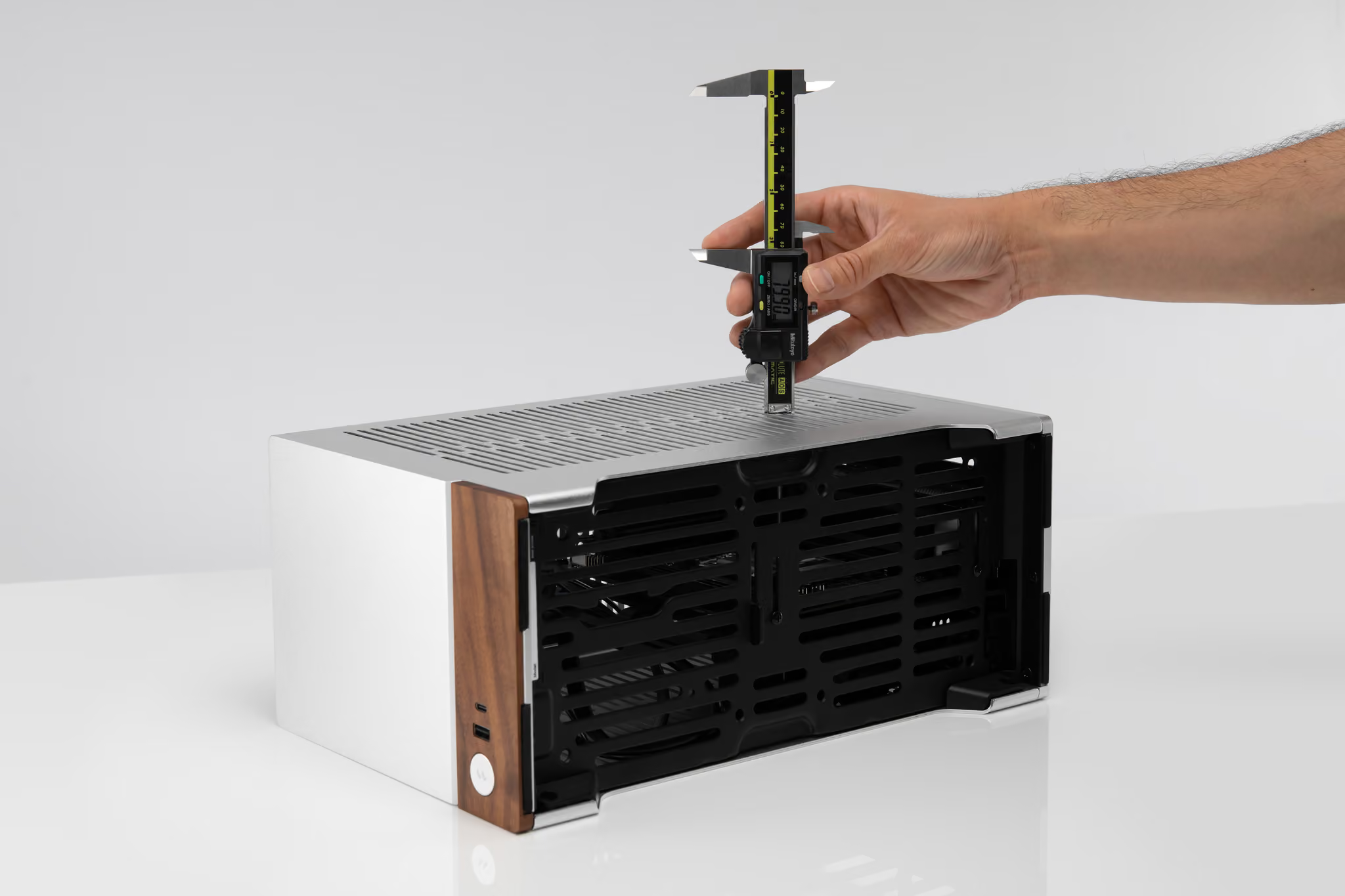
Choosing a CPU cooler based entirely on a case manufacturer’s specifications may not always give PC builders the full picture. Noctua has revealed that its physical measurements of popular PC cases frequently differ from officially published CPU cooler clearance figures, sometimes providing significantly more space than advertised and, in other cases, less room than buyers may expect. The difference can determine whether a high performance air cooler fits correctly, particularly inside Small Form Factor and ITX systems where only a few millimeters can separate a compatible build from a cooler pressing directly against the side panel.
According to Noctua, the company has started physically measuring popular cases rather than relying exclusively on manufacturer specifications. While many published figures prove accurate, its testing has identified numerous cases where the actual available CPU cooler height differs enough to change which cooler can realistically be installed. Noctua has now measured more than 100 cases and identified 56 with what it considers a relevant deviation from the manufacturer’s stated specifications.
One of the latest examples is the NZXT H2 Flow. NZXT specifies support for CPU coolers up to 75 mm tall, while Noctua measured approximately 79 mm of usable clearance. That additional 4 mm changes the compatibility situation considerably because Noctua’s NH L12Sx77 is 77 mm tall. Based purely on the official specification, builders could assume the cooler does not fit and select a smaller thermal solution, while Noctua’s physical testing indicates that the larger cooler can actually be installed.
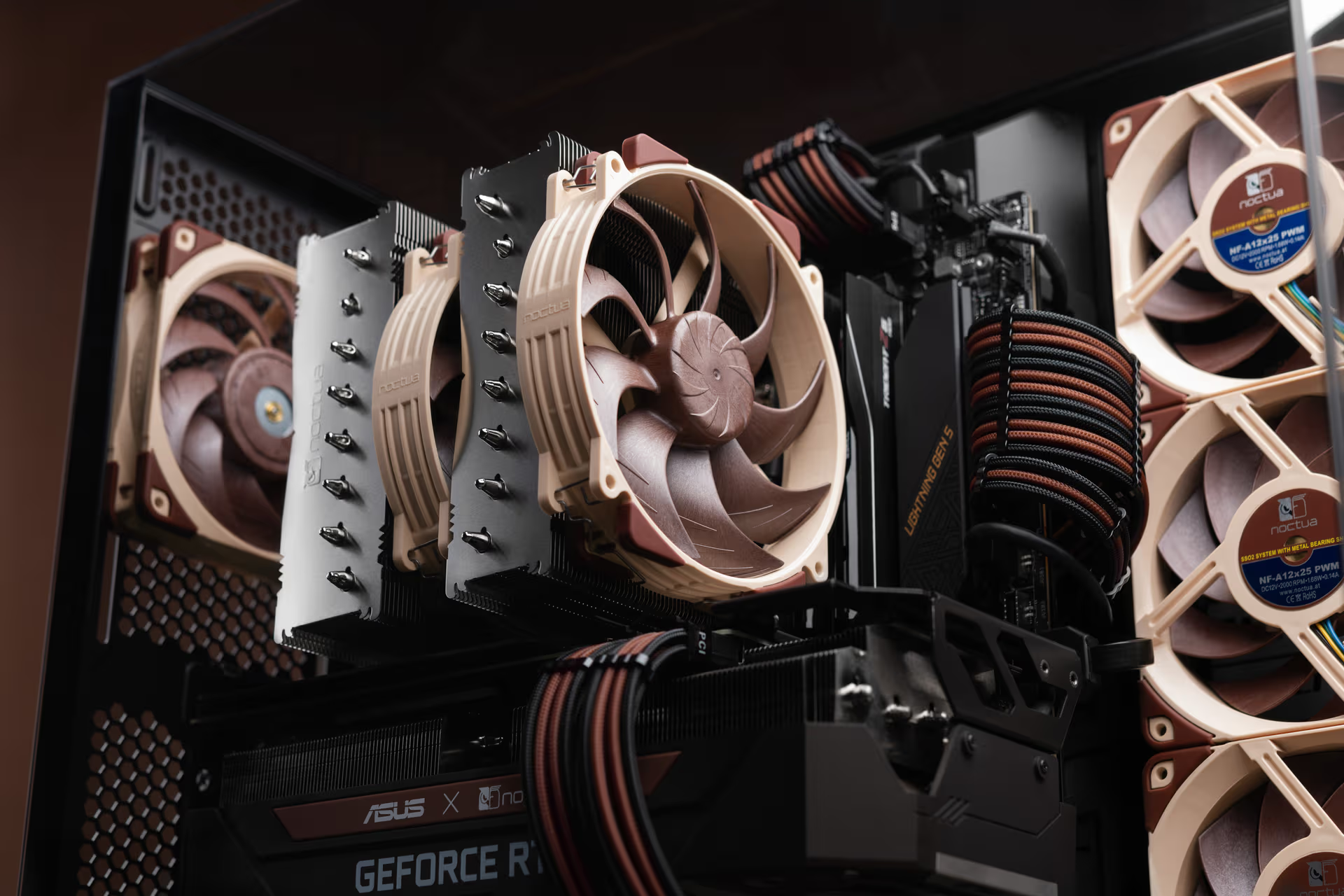
A similar situation appears with the Thermaltake TR100. Noctua measured 70.7 mm of CPU cooler clearance compared with the manufacturer specification of 68 mm. Although 2.7 mm sounds insignificant in a conventional desktop case, crossing the 70 mm threshold gives builders enough room to consider the larger NH L12 Ghost S1 Edition instead of being restricted to the smaller NH L9x65. For compact gaming PCs, that small dimensional difference can translate directly into additional cooling capacity.
The largest differences Noctua highlighted appear in several Corsair cases. Its measurements of the Corsair 5000D, 4000D, and Frame 4000D found approximately 10 mm more CPU cooler space than their listed specifications suggest. In the Frame 4000D, Noctua measured 180 mm instead of the specified 170 mm. That additional space is especially useful with the 168 mm NH D15 G2 because builders can move the cooler’s front fan upward when using taller memory modules without immediately running into the case side panel.
More clearance than advertised is a welcome surprise, but the opposite situation creates a more serious compatibility problem. Noctua measured only 168.3 mm inside the ASUS Prime AP201 despite an official specification of 170 mm. With the NH D15 G2 installed, Noctua says there is effectively no additional space to raise its front fan for taller RAM, restricting the configuration to standard 32 mm memory modules.
The Lian Li B4 mATX presents an even clearer example. Its specifications list 168 mm of cooler clearance, but Noctua measured only 164.5 mm. That difference means the 168 mm NH D15 G2 does not fit according to Noctua’s physical testing even though the official case specifications would suggest otherwise. A builder relying exclusively on the published dimensions could therefore purchase components that cannot actually be assembled as intended.
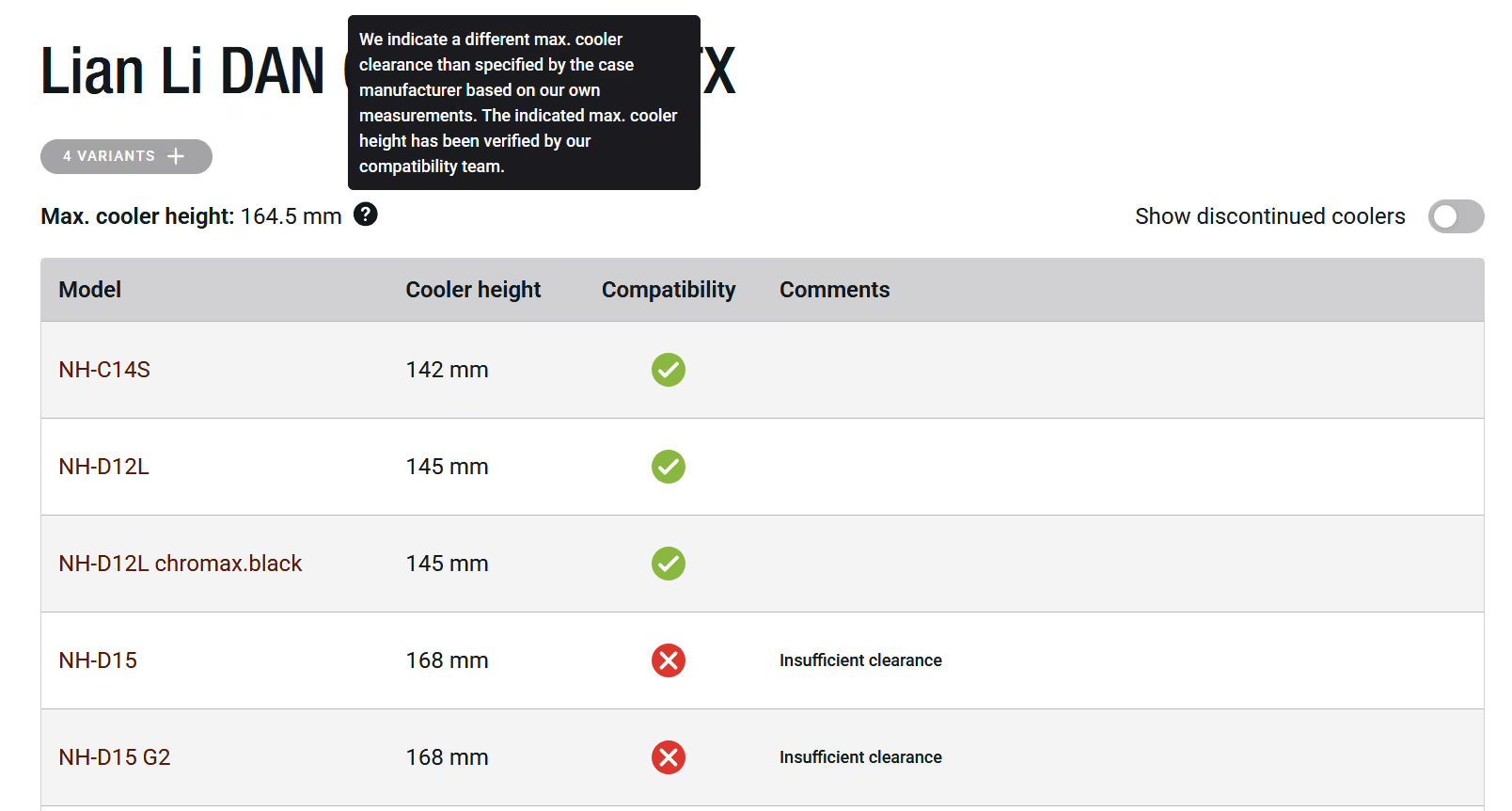
Noctua has responded by adding its own measurements to its case compatibility database. Cases that have been physically measured and found to differ from their published specifications display a dedicated indicator beside the maximum CPU cooler height. The goal is to give builders another source of dimensional information when selecting a cooler, especially when working with configurations where memory height, fan position, side panels, and compact chassis dimensions interact.
The work also fits with Noctua’s broader push to provide more detailed mechanical information for PC builders and product designers. The company recently released official public CAD models for many of its cooling products, with external dimensions and mounting geometry intended to help designers plan component integration more accurately. That becomes increasingly useful as modern gaming PCs combine larger GPUs, taller DDR5 modules, elaborate motherboard heatsinks, and increasingly complex cooling layouts inside cases where physical compatibility can be determined by only a few millimeters.
This may sound like a small dimensional issue, but it exposes one of the most frustrating realities of PC building. A specification such as 170 mm CPU cooler clearance looks definitive on a product page, yet the usable space inside an assembled system can depend on exactly where that measurement was taken and how surrounding components are positioned.
The difference becomes especially important with premium dual tower coolers. Raising a front fan to clear taller DDR5 memory increases the total cooler height, meaning a case that technically supports the heatsink may still not support the complete configuration. In Small Form Factor systems, even 2 mm or 3 mm can determine whether builders can use a substantially stronger cooler.
Noctua physically validating these dimensions is therefore more useful than it initially appears. Compatibility databases should increasingly account for real assembled hardware instead of treating every manufacturer dimension as an absolute value, especially as enthusiasts continue packing higher performance CPUs, GPUs, and memory into increasingly compact gaming systems.
Have you ever bought a CPU cooler that should have fitted according to the case specifications but discovered that the real clearance was different?
