

Microsoft has introduced a new Windows 11 performance optimization called Accelerated App Launch, allowing supported applications to open up to 33% faster under heavy multitasking conditions. The feature, introduced through the October 28, 2026 optional Windows update, initially targets Microsoft Edge, with the company reporting an average improvement of approximately 15% for most users. Unlike traditional performance optimizations that focus on CPU or memory utilization, this implementation reduces unnecessary process creation when reopening applications that are already running in the background.
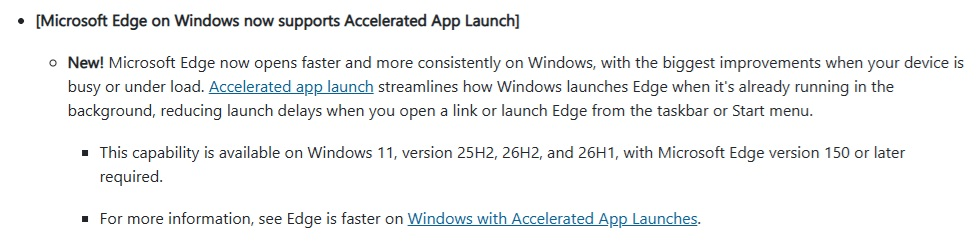
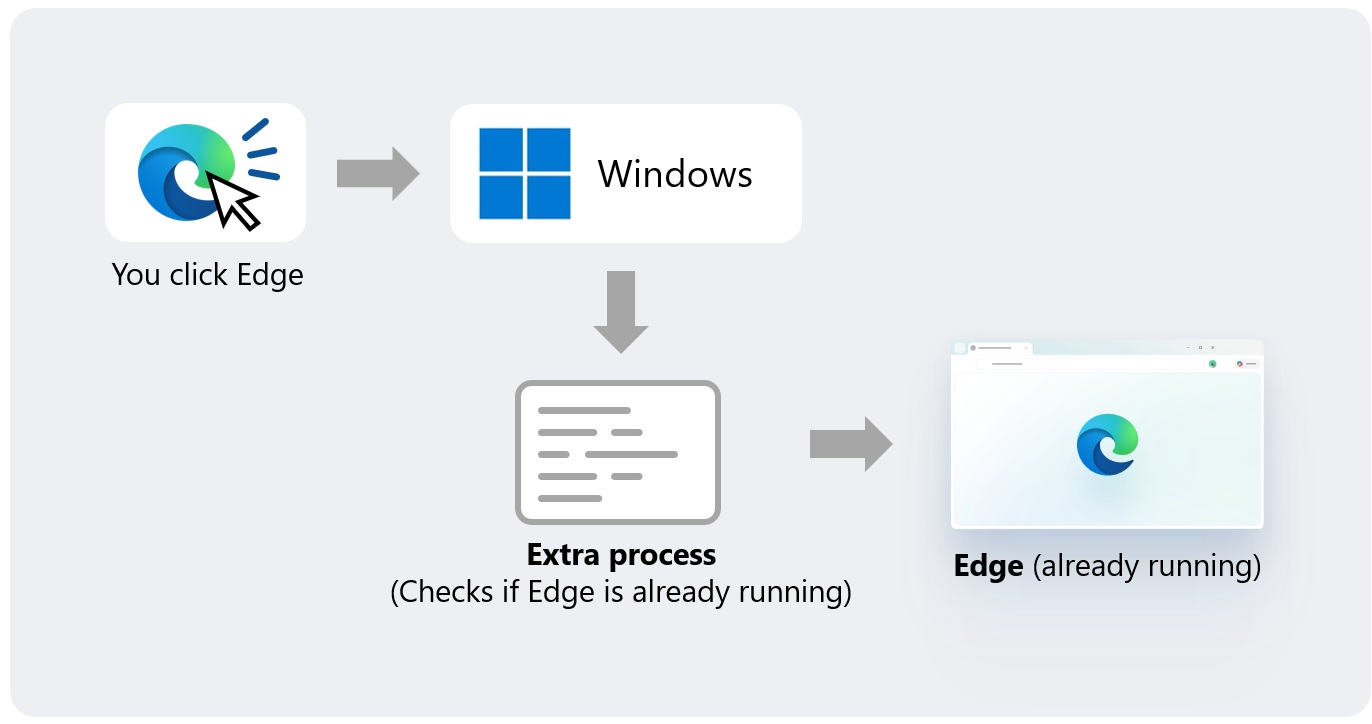
According to the official Microsoft Edge announcement, Windows traditionally launches an intermediary process whenever users attempt to reopen Edge through the Start menu, taskbar, or supported hyperlinks. This temporary process determines whether an existing browser instance is available before forwarding the request and terminating. Although the additional overhead is relatively small on an idle system, it can introduce noticeable delays when multiple applications compete for CPU and memory resources. Accelerated App Launch eliminates this unnecessary step by allowing supported applications to register their active processes directly with Windows, enabling the operating system to deliver subsequent launch requests without creating an intermediary process.
The optimization is currently available for Microsoft Edge version 150 or later on Windows 11 versions 25H2, 26H1, and 26H2, provided the corresponding October 2026 update or a newer cumulative update is installed. For Windows 11 versions 25H2 and 26H2, the feature was introduced through KB5127936, while version 26H1 receives support through KB5127653. No manual activation is required for supported Edge installations.
However, the reported 15% to 33% improvement applies specifically to warm application launches, meaning Edge must already have an active process, either through an existing browser session or background functionality such as Startup Boost. Launching Edge for the first time after a system restart does not receive the same acceleration, and the optimization does not automatically translate into faster Windows startup, improved gaming performance, or reduced system memory consumption.
Microsoft is also preparing to expand the technology beyond Edge. Through its Windows application development documentation, the company explains how developers can register existing application instances to receive launch requests directly, reducing startup latency in software designed around a single active process. The underlying APIs are currently classified as a Limited Access Feature, requiring developers to request authorization before implementation. Microsoft is additionally contributing the technology to the open source Chromium project, potentially allowing browsers such as Google Chrome, Brave, and Vivaldi to benefit from the same optimization. Further improvements are also being explored for opening PDF documents through Edge, although no release schedule has been confirmed.
The introduction of Accelerated App Launch follows Microsoft's broader initiative to improve Windows 11 responsiveness and resource efficiency. The company recently detailed memory optimizations for Windows 11 systems equipped with 8 GB of RAM, including changes to background resource management and application responsiveness. Together, these improvements indicate a growing focus on reducing operating system overhead rather than relying exclusively on increasingly powerful PC hardware.Accelerated App Launch is a relatively small but meaningful improvement to Windows 11, particularly because it addresses unnecessary operating system overhead without requiring additional hardware resources. While a 33% improvement sounds substantial, the actual time saved will depend on the original launch delay and system workload. Nevertheless, improvements to everyday responsiveness are especially valuable for users running older processors, limited memory configurations, or demanding multitasking environments.
More importantly, Microsoft making the technology available to other developers is a positive direction. Windows performance improvements should benefit the entire software ecosystem rather than serving as exclusive advantages for Microsoft's own applications. If broader adoption follows, applications such as game launchers, communication platforms, and productivity software could eventually benefit from similar optimizations.
For PC gamers and enthusiasts, reducing unnecessary background processing and improving system efficiency should remain priorities. Windows 11 does not necessarily need more features or additional hardware requirements to deliver a better experience. It needs to make more efficient use of the hardware users already own.
Do you believe Microsoft is finally prioritizing Windows 11 performance and efficiency, or should the company focus more aggressively on reducing background processes and overall RAM consumption?
