
Lenovo ThinkBook 2026 Could Be the First Consumer Laptop to Use CXMT LPCAMM2 Memory
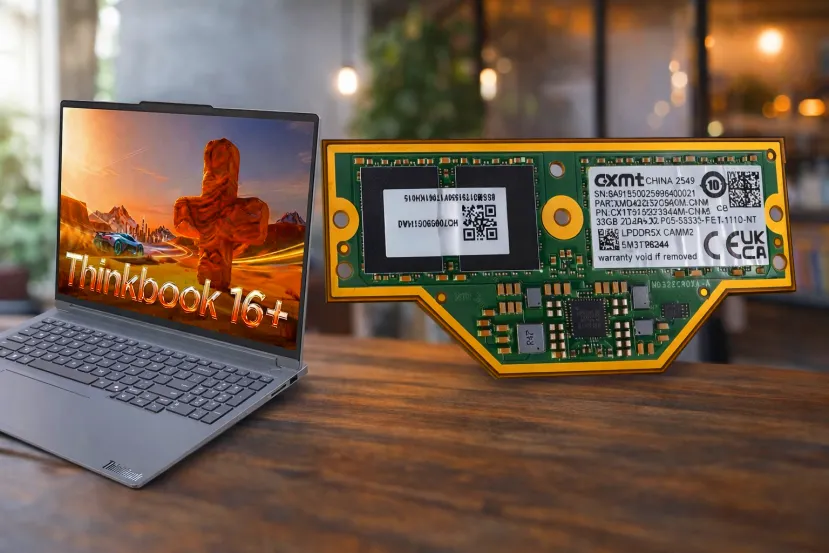
Lenovo’s ThinkBook 2026 is now at the center of an interesting memory industry development, as a new report suggests the upcoming laptop may ship with LPCAMM2 memory modules built by CXMT. If accurate, this would mark a notable expansion for the Chinese memory maker, which is better known for producing DDR4, DDR5, and LPDDR5X chips rather than branded notebook memory modules. The claim appears to originate from hardware leaker realVictor_M, and it adds a new layer to Lenovo’s already attention grabbing move toward LPCAMM2 in the consumer laptop segment.
ThinkBook + 2026 搭载长鑫(CXMT) LPCAMM2 内存 pic.twitter.com/a6Y9BcAaOv
— 孤城Hardware (@realVictor_M) March 5, 2026
The ThinkBook 2026 has already been reported as one of the first mainstream consumer laptops to adopt LPCAMM2 LPDDR5X memory, a format designed to deliver the speed and efficiency benefits of LPDDR memory while also enabling a replaceable and upgradeable module design. Earlier assumptions pointed toward Micron as the likely supplier, especially because Lenovo’s ThinkPad P1 Gen 7 workstation had previously launched with Micron based LPCAMM2 LPDDR5X memory. This new report, however, indicates Lenovo may instead be using a CXMT built solution in the ThinkBook 2026, which would be a meaningful shift for the platform and for the broader memory ecosystem.
What makes this especially notable is that CXMT reportedly is not just supplying the underlying memory silicon, but may also be assembling the LPCAMM2 module itself. That would position the company beyond being only a DRAM chip manufacturer and into a more vertically integrated role within the notebook memory market. Based on the images and details circulating in the report, the module appears to carry a 32GB configuration labeled as 32GB 2D4Rx32, using 2 LPDDR5 packages per channel and rated for 8533 MT/s. Those specifications align with prior reporting around the ThinkBook 2026 family and reinforce the view that Lenovo is targeting a premium, next generation laptop memory implementation rather than a conventional SO DIMM upgrade path.
From a product strategy perspective, LPCAMM2 remains one of the most interesting developments in the laptop space because it addresses a major long term pain point for users. Traditional soldered LPDDR memory gives OEMs better space efficiency and often better power characteristics, but it removes upgradeability entirely. LPCAMM2 aims to close that gap by delivering LPDDR class performance in a replaceable module format. For users, that means thinner and more efficient designs without fully sacrificing serviceability. For laptop makers, it opens the door to more flexible configurations in premium business and consumer systems.
That said, this transition will still take time before it becomes common across the mainstream market. LPCAMM2 is still relatively new, adoption remains limited, and supply chain scaling will matter just as much as technical merit. If CXMT is indeed entering this category, it could become an important competitive factor, particularly as Lenovo and other OEMs look for more supply options in advanced mobile memory. For now, the ThinkBook 2026 is shaping up as a device worth watching closely, not only because of its platform design, but because it may signal a broader shift in who gets to participate in the next phase of notebook memory innovation.
Would you consider LPCAMM2 upgradeable memory a major reason to choose your next laptop, or do you think most buyers still prioritize price and CPU performance first?
