
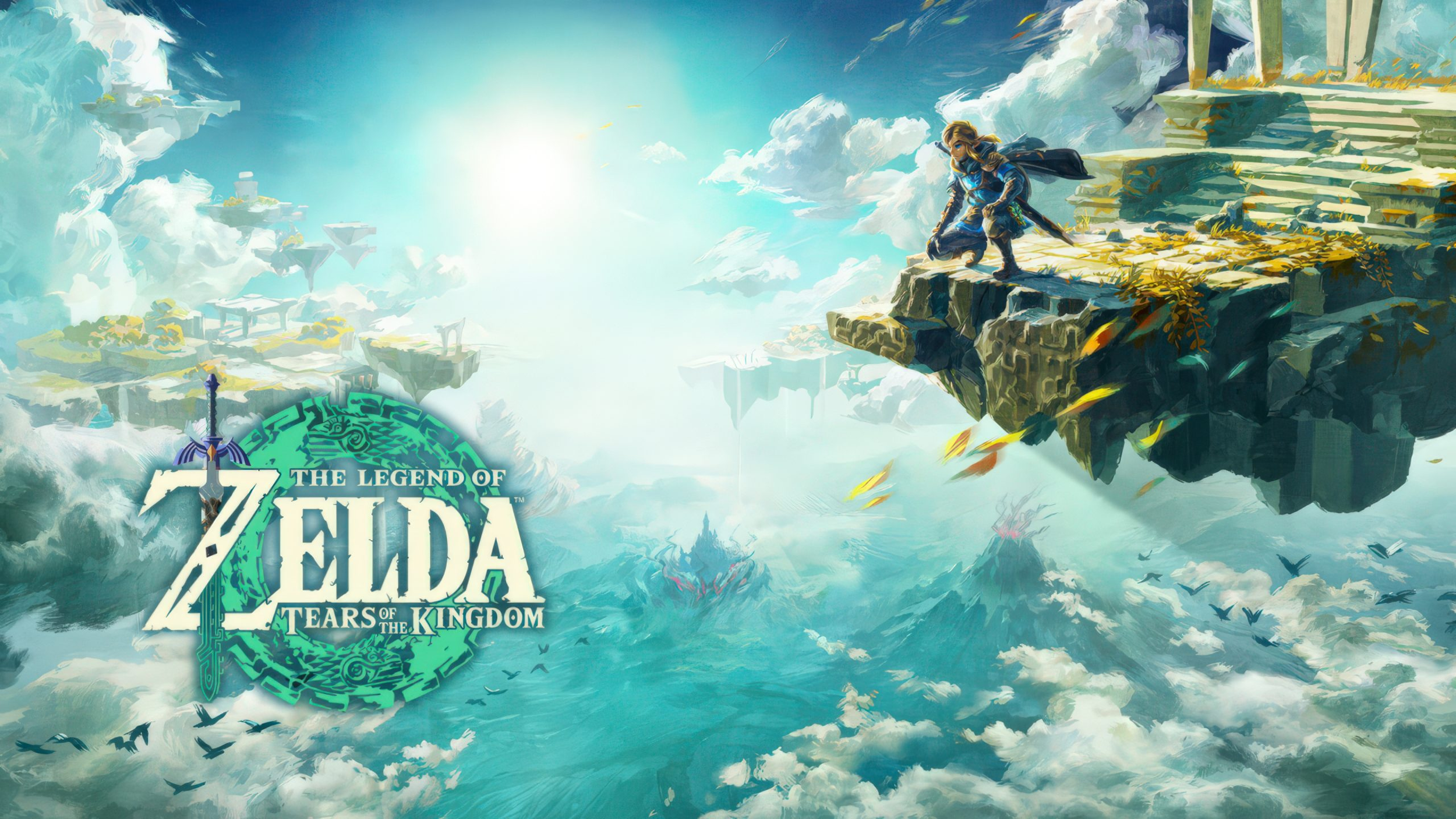
The Legend of Zelda: Tears of the Kingdom has received an unofficial native PC port, allowing Nintendo's acclaimed open world adventure to run on Windows without relying on a traditional Nintendo Switch emulator. Developed by modder NotRexed, the project, known as SkyboundTOTK, has entered an experimental beta stage with AMD FSR 1 upscaling, keyboard and mouse controls, ultrawide display options and experimental frame interpolation.
According to the official SkyboundTOTK GitHub repository, the project uses static recompilation to translate the original game's ARM64 instructions into C code, which is subsequently compiled into a native Windows executable. Unlike conventional emulation, this approach prepares the game's CPU instructions ahead of time rather than translating them continuously during gameplay. However, a compatibility runtime remains necessary, while the rendering system uses WebGPU to translate graphics operations through native backends such as Vulkan or DirectX 12.
The beta introduces several features designed for modern PC hardware. AMD FidelityFX Super Resolution 1 provides spatial image upscaling with adjustable sharpening, while an experimental frame interpolation system inserts additional frames between rendered images to improve perceived smoothness. Importantly, this is not AMD FSR 3 frame generation, and it does not increase the underlying simulation frame rate or reduce input latency.
Ultrawide display support is also being tested, with adjustments to camera positioning and the interface. However, the developer acknowledges that some configurations currently stretch the image instead of providing a properly expanded field of view.
SkyboundTOTK PC Port Features and Requirements
| Feature | Current Beta Support |
|---|---|
| Platform | Windows 10 and Windows 11, 64 bit |
| Technology | Static recompilation |
| Graphics Backend | WebGPU through native graphics APIs |
| Upscaling | AMD FSR 1 with adjustable sharpening |
| Frame Interpolation | Experimental, independent of AMD FSR |
| Ultrawide Displays | Experimental, visual issues reported |
| Controls | Keyboard, mouse and compatible controllers |
| Game Compatibility | Original version 1.0.0 only |
| Additional Storage | At least 45GB beyond game files |
| Distribution | Source code, requires local compilation |
The biggest limitation is accessibility. SkyboundTOTK does not currently provide a ready to run executable, meaning users must compile the project themselves using development tools such as Python, Visual Studio Build Tools and LLVM. The process can be demanding on CPU and memory resources and requires an additional 45GB of available storage.
Users must also supply their own legally obtained and extracted copy of Tears of the Kingdom version 1.0.0. The repository does not include Nintendo's game files, firmware, encryption keys or save data, and later game versions are unsupported.
Performance and compatibility remain unfinished. Reported problems include incorrect terrain textures, broken shadows, graphical artifacts and occasional stuttering during shader compilation. The project maintains a local graphics cache to improve subsequent sessions, but the developer explicitly warns that successful compilation does not guarantee a complete playthrough.
SkyboundTOTK follows the native PC recompilation of Zelda: Link's Awakening, another community project bringing a Nintendo Switch exclusive to modern PC hardware without conventional CPU emulation.
Nintendo has not announced an official Windows version of Tears of the Kingdom. The company instead released an enhanced Nintendo Switch 2 Edition featuring improved resolution, smoother performance and faster loading times.
Although SkyboundTOTK remains far from a polished PC release, its initial beta represents another technical milestone for game preservation and native recompilation projects.
SkyboundTOTK demonstrates how static recompilation is becoming an increasingly interesting alternative to conventional console emulation. Translating game code ahead of time can reduce CPU translation overhead while providing developers greater flexibility to implement PC specific features.
However, recompilation does not automatically guarantee better performance. Graphics translation, shader compilation and compatibility with the original game's systems still require substantial development work.
The current implementation is particularly interesting because it combines modern rendering options with a native executable, but its demanding compilation process and incomplete graphics compatibility make it more suitable for technical experimentation than everyday gaming.
As similar projects continue emerging, native recompilation could become an important tool for preserving console exclusives beyond the lifespan of their original hardware.
Would you prefer to play Tears of the Kingdom through a native PC port with ultrawide support and FSR, or stick with Nintendo Switch 2 for a more stable and officially supported experience?
