
Jensen Huang Says AI Will Create More Jobs, Not Fewer, While Warning NVIDIA’s China AI Share Has Fallen to Zero
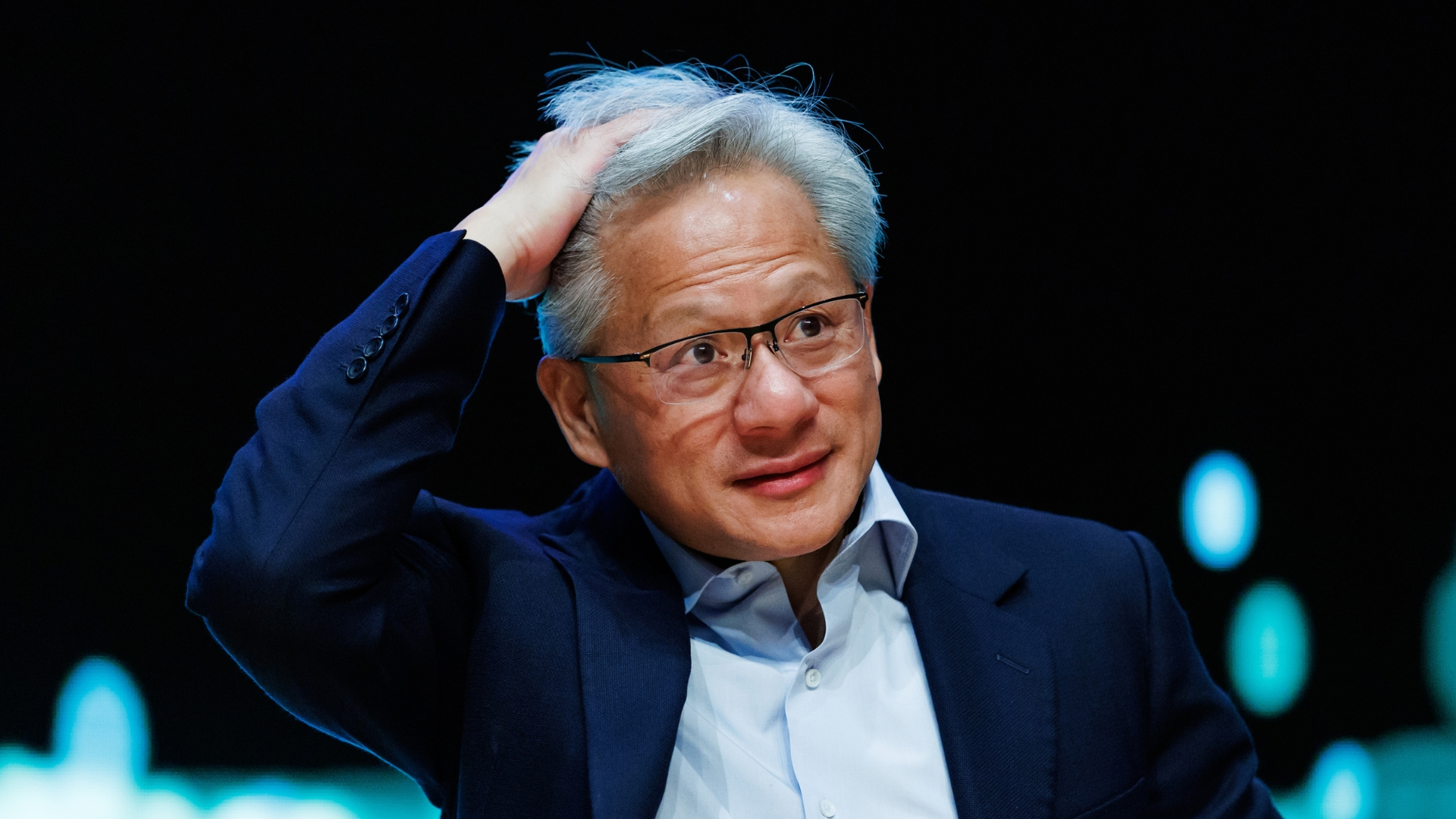
In the latest episode of Memos to the President, NVIDIA chief executive Jensen Huang pushed back hard on the idea that artificial intelligence is mainly a job destroying force, arguing instead that AI is becoming one of the biggest economic growth engines the United States has seen in years. The interview focused on generative computing, reindustrialization, and physical AI, with Huang framing the current moment as a chance to expand American manufacturing, infrastructure, and high skill employment rather than shrink it.
One of Huang’s clearest messages was that the labor debate is being framed too narrowly. NVIDIA later amplified the interview by highlighting his claim that AI has already created more than 500,000 jobs and that companies using AI are growing faster and hiring more people. That position fits the broader line Huang has been developing for months, where AI is not treated as a replacement for workers in the abstract, but as a force multiplier that helps firms expand output and then expand headcount around that growth.
Huang’s most important argument for software engineers was the distinction between a job’s task and a job’s purpose. His point was that coding is a task, but the real purpose of software engineering is innovation, problem solving, connecting ideas, and identifying new needs. That is why he keeps rejecting the view that AI writing more code automatically means fewer engineers are needed. In his framework, AI reduces the time spent on typing and repetitive implementation, while increasing the value of judgment, architecture, and invention.
That is also why Huang has been especially vocal about not scaring younger talent away from engineering. Recent reporting on the interview shows he criticized executives who make sweeping claims about AI wiping out jobs, warning that this kind of narrative can discourage exactly the people companies like NVIDIA still need. He argued that leaders should stick to evidence, not doomsday rhetoric, because the industry still requires engineers who can build, test, refine, and deploy the systems behind the AI boom.
Huang tied that optimism directly to manufacturing. In the interview summary and NVIDIA’s own manufacturing announcements, the company links AI to a broader reindustrialization push in the United States, including chip plants, packaging, systems assembly, and AI factory infrastructure. NVIDIA’s 2025 domestic manufacturing plan said American AI chip and supercomputer production could create hundreds of thousands of jobs and drive trillions of dollars in economic security over time, while Reuters reported that the company expects up to 500 billion dollars of AI server production in the U.S. over 4 years.
At the same time, Huang was blunt about the geopolitical cost of current U.S. policy toward China. He said NVIDIA has now “dropped to zero” in China, and multiple reports have interpreted that as the company’s AI accelerator market share in China falling to zero after export controls and related restrictions cut it out of the market. Huang’s broader argument is that conceding a market of China’s size does not make strategic sense and has instead accelerated the rise of domestic competitors.
That warning is not theoretical anymore. Reuters recently reported that DeepSeek’s new V4 model has been optimized for Huawei chips, underlining how quickly a domestic Chinese AI stack is forming around local silicon, local models, and local infrastructure. Huang’s concern is that if American firms are pushed out too completely, China will not stop building. It will simply build faster around its own ecosystem, while U.S. companies lose influence over one of the world’s most important AI markets.
The deeper logic behind Huang’s position is that the United States should be trying to win every layer of the AI stack at once. He argues that America still leads in leading edge chips, but that China has enormous strengths in energy, applied infrastructure, and above all talent. That is why he has been framing researchers and engineers almost like a national resource battle. For Huang, the right strategy is not just controlling exports, but also attracting more global AI talent into the American ecosystem while expanding domestic production capacity fast enough to keep that ecosystem ahead.
The result is a much sharper NVIDIA message than the usual “AI will change everything” corporate line. Huang is effectively saying 2 things at once. First, AI is not mainly a white collar extinction event, and the software engineer of the future is still central because the real job is solving problems, not merely typing code. Second, the U.S. cannot afford to lose strategic AI markets while assuming export restrictions alone will preserve leadership. In his view, growth, talent, and manufacturing scale matter more than fear, and the country that turns AI into an industrial ecosystem fastest will shape the next phase of the global economy.
What do you think, is Jensen Huang right that AI will expand engineering and manufacturing jobs, or is the labor disruption risk still being underestimated?
