
Jensen Huang Says Agentic AI Is Driving 1,000x More Token Demand, Raising Pressure on Compute Infrastructure

NVIDIA CEO Jensen Huang says the rise of agentic AI is reshaping enterprise demand far faster than many expected, with token consumption now running at levels roughly 1,000 times higher than earlier software driven workloads. Speaking this week, Huang described the current shift as one of several major AI inflection points and argued that the application layer is becoming one of the most commercially important parts of the AI stack. NVIDIA has recently framed that stack as a five layer model spanning energy, chips, infrastructure, models, and applications, with the top layer increasingly driving real deployment demand.
One of the more eye catching remarks from Huang involved OpenClaw and AI agents, which he described as an extraordinarily important software release because of how quickly agent based AI tools are spreading. Multiple reports on his Morgan Stanley conference appearance quote Huang as saying OpenClaw’s adoption has moved at a pace rarely seen in open source software, even comparing it with Linux. That said, the more dramatic comparisons around OpenClaw surpassing Linux appear to be Huang’s characterization rather than an independently verified industry standard, so they should still be treated cautiously.
The bigger strategic point, however, is not just OpenClaw itself. Huang’s message is that AI agents are materially changing the economics of computing. Traditional software generally executes fixed workflows, but agentic systems can perform long chain reasoning, repeated searches, tool use, content generation, and multi step analysis with much heavier token usage. That increase, according to Huang, is creating a compute vacuum where infrastructure demand keeps expanding as more enterprises discover practical ways to embed AI into real workflows. Computer Weekly separately summarized Huang’s argument by noting that the compute needed to run AI software is about 1,000 times higher than what non AI software typically requires.
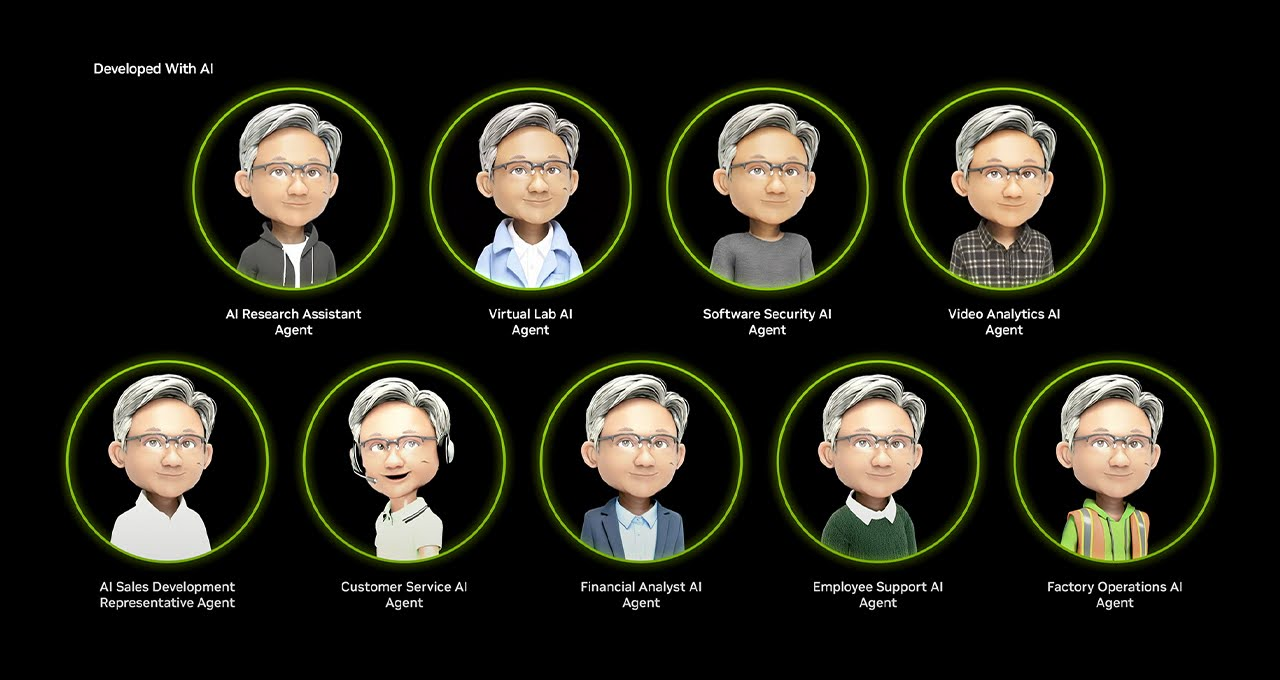
From NVIDIA’s perspective, this is exactly why the next generation platform roadmap matters so much. Hopper and Blackwell have already anchored the current training and inference cycle, while Rubin is being positioned as the next major step for handling larger context windows and more demanding AI workloads. Reuters reported earlier this year that NVIDIA’s Rubin systems are designed to deliver major gains in token generation efficiency, and Huang has consistently argued that future infrastructure will need to optimize for output metrics such as tokens per watt and tokens per dollar rather than just raw peak performance.
This also helps explain why hyperscalers and frontier labs continue to pour capital into AI infrastructure despite concerns about overspending. Bloomberg reported this week that Huang pushed back against growing skepticism around AI capital expenditure, arguing instead that agentic AI is pushing the market into a new phase where compute directly maps to revenue opportunities. In other words, if AI agents can take on more economically useful work, demand for the hardware behind them does not soften. It scales.
For enterprises, the takeaway is straightforward. The next chapter of AI demand may not be driven only by bigger foundation models, but by the sheer number of tasks those models are asked to perform once they evolve into usable agents. That shift could become one of the most important growth engines for NVIDIA and the wider AI supply chain over the next several years. At the same time, the OpenClaw example also shows the other side of the equation. Rapid adoption alone is not enough. Agent platforms are already drawing scrutiny over safety and security risks, which means the infrastructure race will be matched by an equally serious battle around control, trust, and execution quality.
Do you think agentic AI will become the real driver of the next compute boom, or is the industry still getting ahead of itself on practical adoption?
