
Intel Publishes XeSS 3 SDK on GitHub, but the Technology Still Is Not Truly Open Source
Intel has officially published the XeSS 3 SDK on GitHub, expanding developer access to its latest upscaling and frame generation stack, but the release still falls short of being genuinely open source. As highlighted by Phoronix, the newly posted SDK is distributed as Windows focused binary packages rather than editable source code, which means developers can integrate XeSS 3 into projects without gaining the transparency or modification freedom that open source advocates were hoping for.
That distinction matters because GitHub availability and open source availability are not the same thing. Intel’s GitHub repository now hosts the XeSS 3 SDK and describes it as the package developers should use to integrate XeSS 3 into games and applications, but the implementation itself is still delivered through proprietary binaries. In practical terms, that gives studios easier access to deployment tools while still keeping Intel in tight control of the core technology.
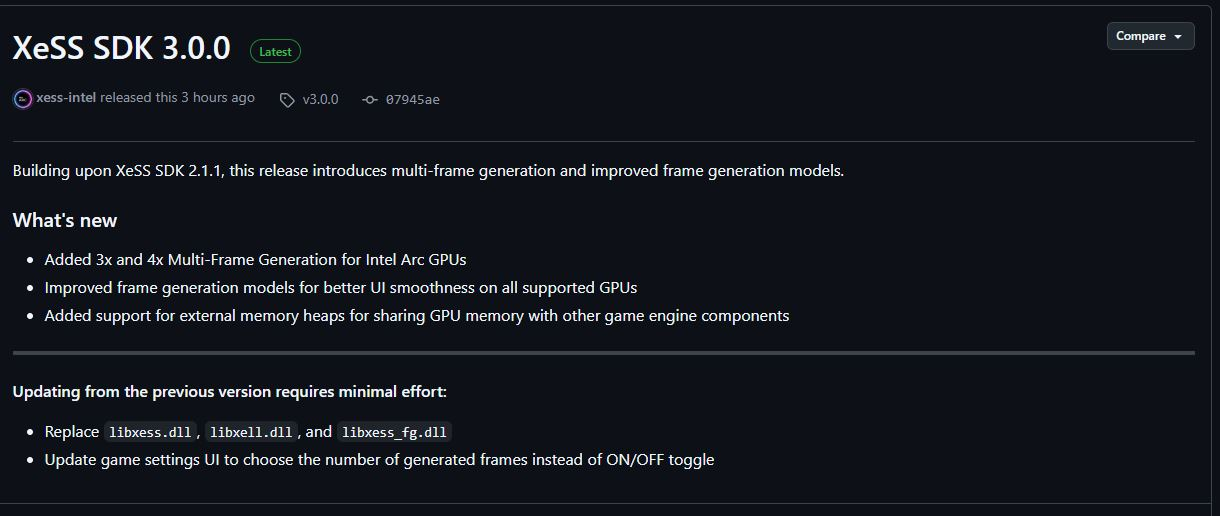
Intel is also clearly positioning XeSS 3 as a much bigger platform level feature than earlier XeSS releases. On its developer materials, the company says XeSS 3 adds Multi Frame Generation with up to 3 AI generated frames on Intel hardware, expanding the performance narrative well beyond simple super resolution. That makes the SDK release strategically important, because it gives game developers a more direct path to Intel’s latest rendering features at a time when frame generation is becoming a key battleground across the GPU market.
Still, the limitations are hard to ignore. Phoronix reports that the SDK remains Windows only in native form, and public GitHub issues around the repository now show developers already asking about Linux library distribution and Vulkan support for newer XeSS features. That means the current release improves accessibility for Windows based game development, but it does not deliver the broader cross platform openness many developers expected when Intel previously talked about XeSS in more open terms.
This is where Intel risks losing momentum in the perception battle, even if the technology itself is strong. AMD’s FSR continues to benefit from a more open model that lets developers inspect and adapt the code more freely, while Intel is still asking studios to trust a black box approach for critical rendering features. For major developers that may not be a deal breaker, but for engine tinkerers, Linux focused teams, and open graphics advocates, it remains a meaningful barrier. This comparison is an industry inference based on AMD’s broader open approach and Intel’s current binary only distribution model.
For gamers, the short version is that XeSS 3 is moving forward, but not in the fully open way some people expected. Developers now have the SDK, Intel’s newest frame generation features are part of the package, and adoption could still rise if the performance wins are strong enough. But until Intel publishes actual source code rather than mainly shipping compiled Windows libraries, XeSS 3 will remain more accessible than before without truly becoming open source.
Do you think Intel needs to fully open source XeSS to compete more effectively with AMD and NVIDIA, or is wider SDK access enough for game developers?
