
Intel Arc Pro B70 Appears in LLM Scaler vLLM Release Notes, Strongest Signal Yet That a Battlemage G31 Workstation GPU Is Real
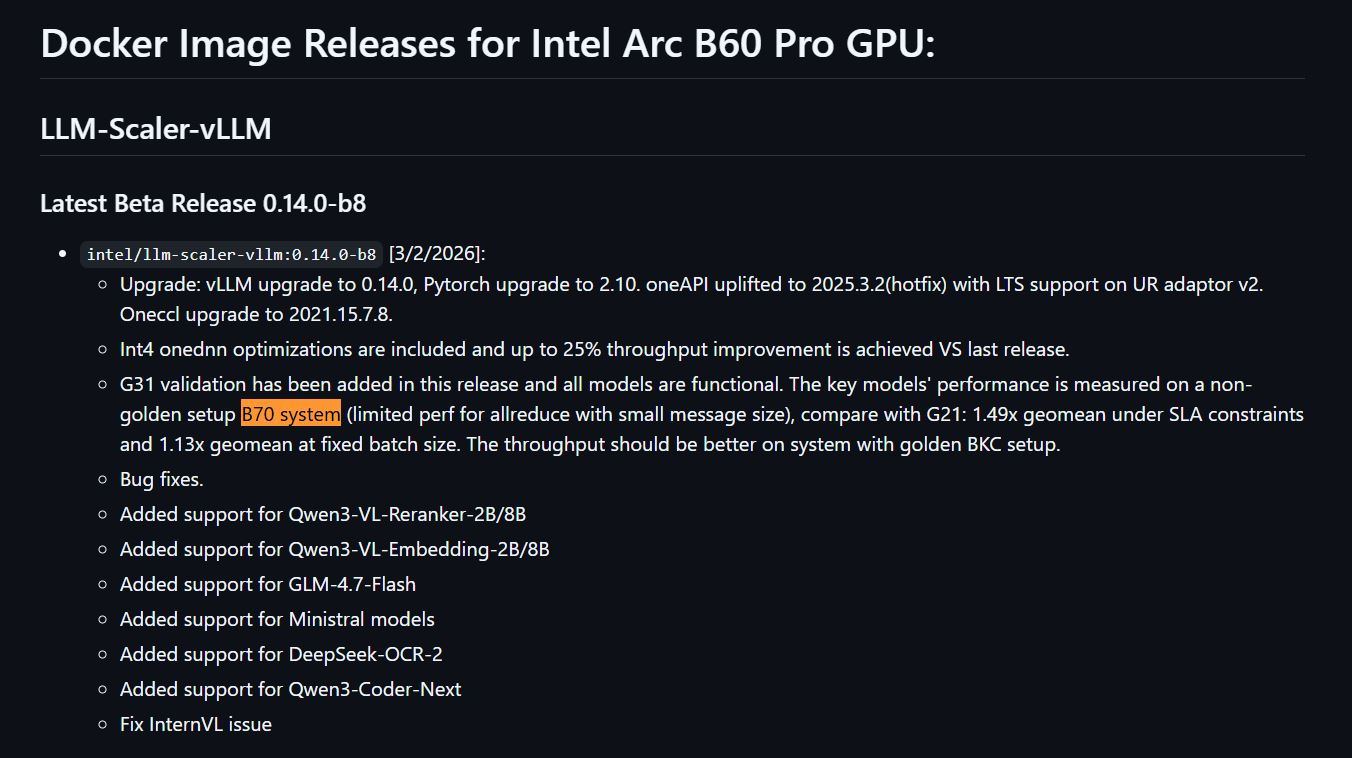
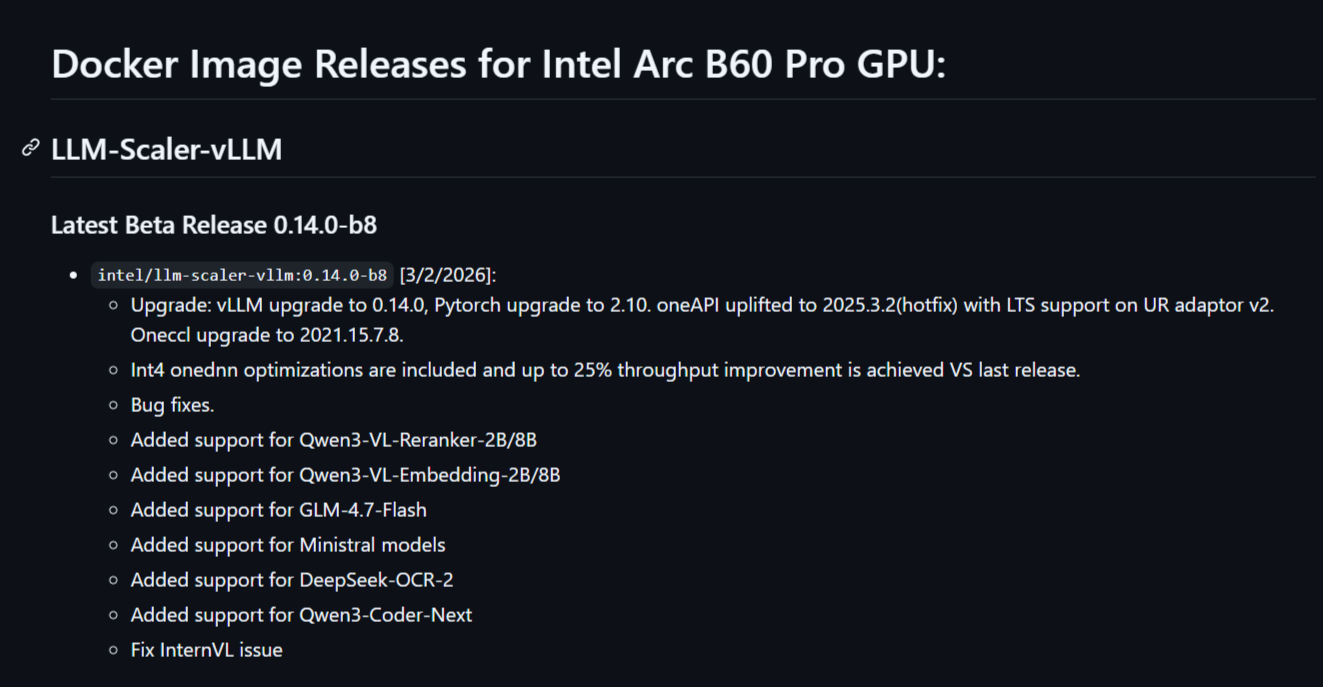
Intel has not publicly announced an Arc Pro B70 on its official channels, but a new breadcrumb just landed in a place that matters to enterprise and AI developers: Intel’s own software ecosystem. The Arc Pro B70 name shows up in the release notes for Intel’s LLM Scaler vLLM project, where the latest beta explicitly references a “B70 System”, effectively confirming that a higher tier Arc Pro configuration exists beyond the current Arc Pro B60 stack.
The mention is notable because this is not a rumor screenshot or a reseller placeholder. It is a reference inside a project tied to Intel’s multi GPU inference workflow for vLLM, which makes it a more operationally grounded signal than typical leak cycles. That is why this is being treated as the clearest confirmation so far that Arc Pro B70 is part of Intel’s workstation roadmap, even if the company is still keeping the hardware reveal quiet.
The Arc Pro B70 has been previously hinted at by leakers, including a post from jaykihn0, but Intel itself had not validated the naming in any public product brief until this software reference surfaced.
Based on current reporting and leak chatter, Arc Pro B70 is expected to use the larger Battlemage die commonly referred to as BMG G31, with a configuration rumored around 32 Xe2 cores paired with 32 GB of GDDR6 on a 256 bit memory interface. A second model, Arc Pro B65, has also been discussed as a cut down variant, rumored to keep 32 GB GDDR6 but with fewer Xe2 cores, positioned above the Arc Pro B60 which is associated with the smaller die tier and 24 GB class memory. These specifications remain unofficial until Intel publishes a formal product page, but they align with the industry narrative that Intel’s workstation push is prioritizing capacity and bandwidth for local inference and professional workloads.
If that 32 GB capacity lands as described, Arc Pro B70 would be strategically positioned for creators and workstation users who are increasingly memory constrained by modern pipelines, including local LLM inference, large dataset workflows, and higher resolution production tasks that punish smaller VRAM pools. In other words, this is less about competing in mainstream gaming mindshare and more about owning a value lane where VRAM capacity and software enablement matter as much as raw raster performance.
The reason this discovery is getting traction is the context. Intel’s workstation GPU strategy has been strongly tied to software stacks, validation, and multi GPU scaling narratives, which is exactly where LLM Scaler vLLM sits. When a product name appears inside that ecosystem, it often signals internal enablement is already underway, which typically happens close enough to launch planning that teams need stable identifiers for testing and packaging.
That said, it is still not the same thing as an official launch. For now, the most accurate framing is this: Intel Arc Pro B70 has been referenced in Intel associated release documentation, which strongly indicates the hardware exists, but availability, final specifications, and positioning remain unconfirmed until Intel makes it official.
If Arc Pro B70 really ships with 32 GB GDDR6, would you rather see Intel price it aggressively for local AI and creator rigs, or keep it premium and focus on software stability plus workstation certification?
