
GPD Box Mini and G2 eGPU Move Beyond OCuLink With MCIO 8i and Up to 512Gbps External GPU Bandwidth
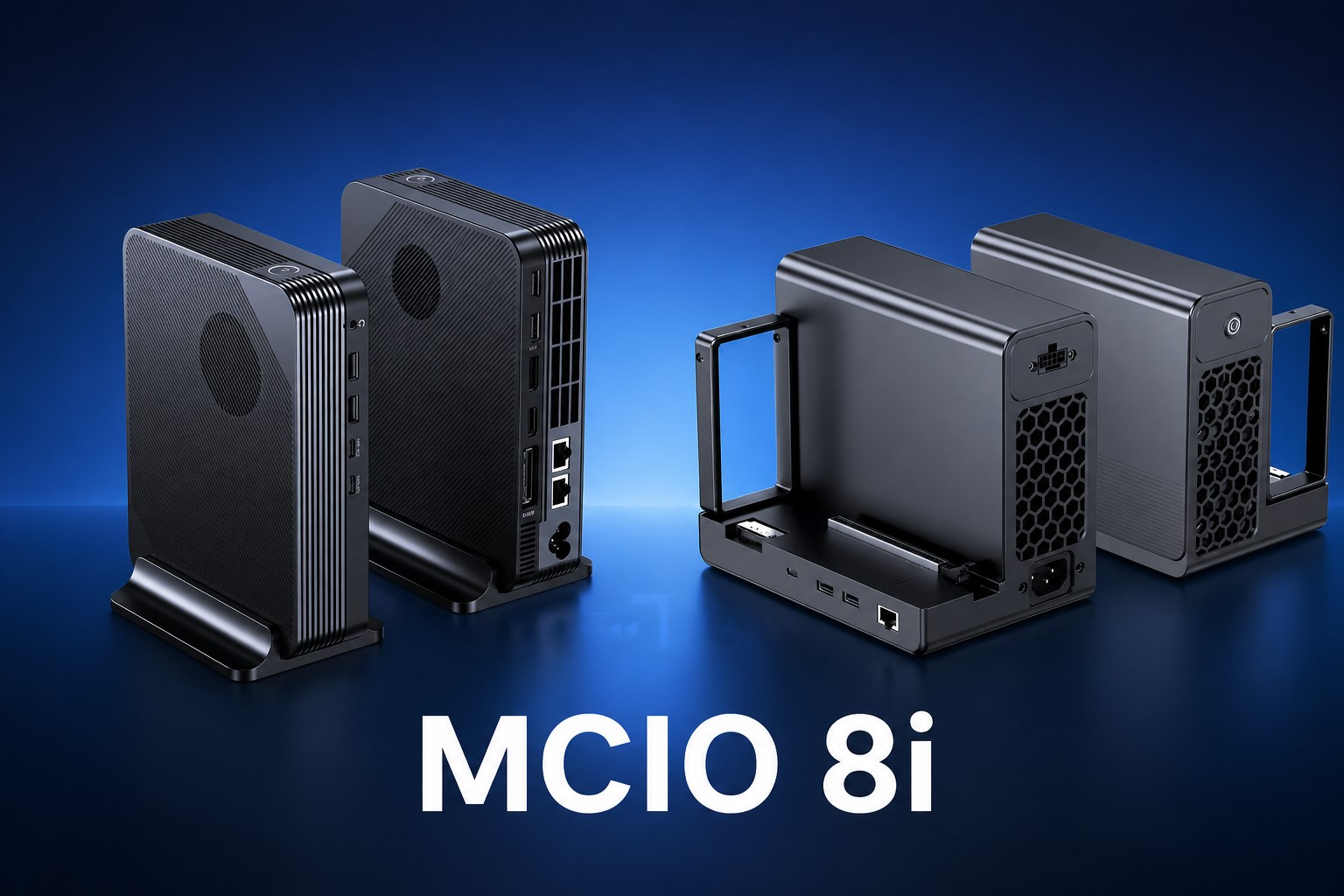
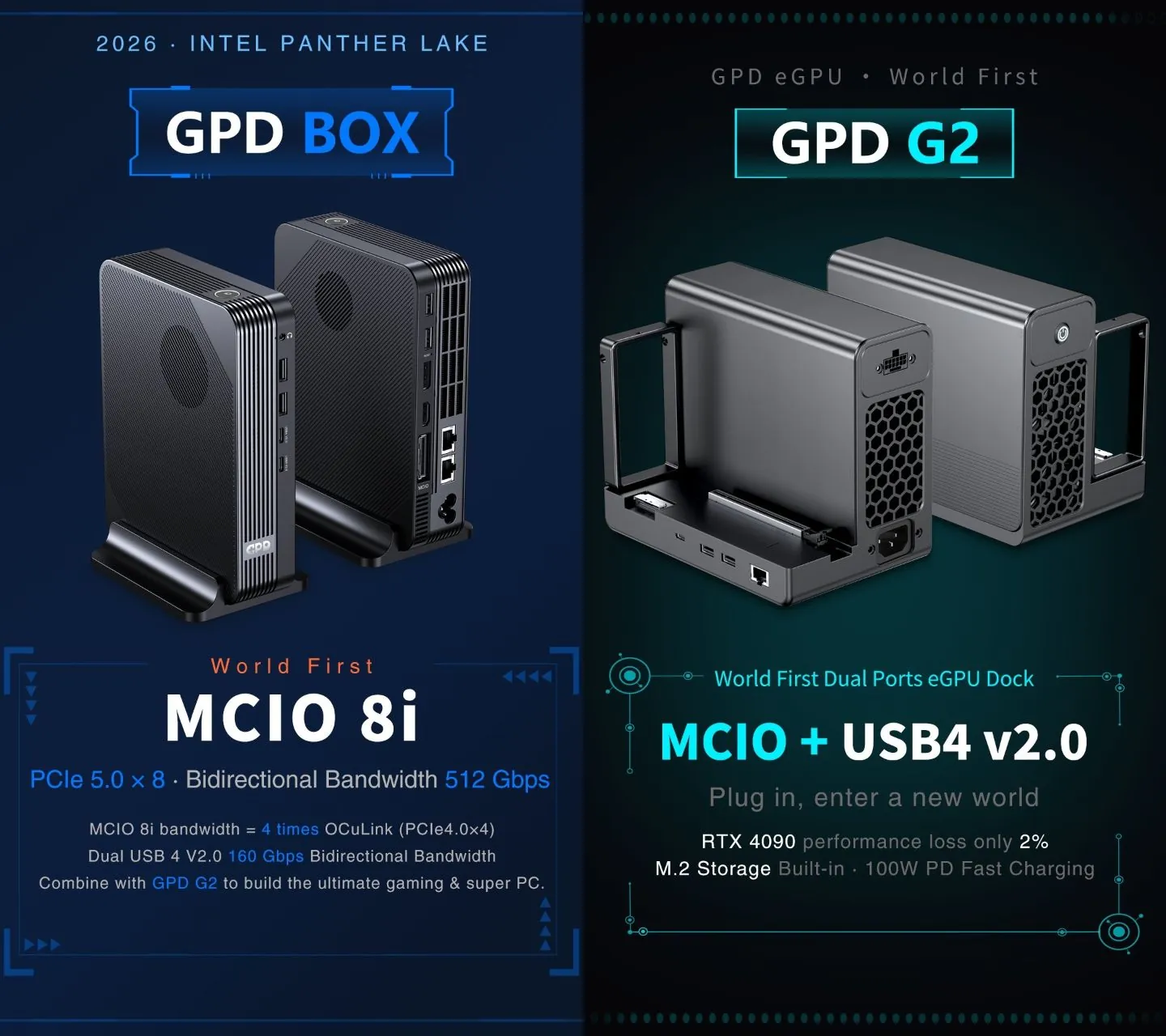
GPD is preparing a major leap for external GPU performance with the introduction of the GPD Box Mini and GPD G2 eGPU, both featuring the newer MCIO 8i interface. The key upgrade is bandwidth. While Thunderbolt 5 and OCuLink have helped external GPUs get closer to desktop performance, MCIO 8i pushes the concept much further by offering PCIe 5.0 x8 equivalent bandwidth, reportedly reaching around 256Gbps or 512Gbps bidirectional.
External GPUs have always carried one major limitation: bandwidth. A desktop graphics card installed directly into a motherboard through PCIe 4.0 or PCIe 5.0 x8 or x16 has far more communication bandwidth than most external GPU solutions. That is why many eGPU setups, especially older Thunderbolt models, often lose noticeable performance compared with a normal desktop installation.
OCuLink and Thunderbolt 5 helped reduce that gap. Both can reach around 63Gbps of effective bandwidth, which is roughly comparable to PCIe 4.0 x4. That is enough for strong performance in many games, especially when paired with mobile devices, mini PCs, and handhelds. However, high end GPUs such as the GeForce RTX 4090 can still be held back by this bandwidth limit.
MCIO 8i changes the conversation. With a PCIe 5.0 x8 equivalent connection, GPD claims that external GPUs can move much closer to native desktop performance. In the case of the GPD G2 external GPU enclosure, the company reportedly claims only around 2% performance loss when using an RTX 4090 through MCIO 8i. If real world testing confirms that result, it would be one of the biggest improvements the eGPU market has seen in years.
The GPD G2 external GPU enclosure includes both MCIO 8i and USB4 v2 ports, giving users more than one connection option depending on their device. It is also described as a dual port eGPU dock, with an additional M.2 storage connector and up to 100W PD fast charging. The enclosure also appears to include a LAN port and a 16 pin power connector, making it a more complete docking solution rather than only a GPU box.
This kind of design matters because modern eGPU users are not only connecting graphics cards. They often want one dock that can handle GPU acceleration, charging, storage expansion, networking, and desktop style connectivity from a single setup. For gaming handhelds, compact laptops, and mini PCs, that can turn a small portable device into a much more powerful desktop gaming or creator station.
The second new product is the GPD Box Mini, a compact mini PC that also features MCIO 8i connectivity. The device is based on Intel Panther Lake, although GPD has not yet disclosed the exact CPU SKUs. It also includes dual USB4 v2 ports and can be paired with the GPD G2 eGPU for a high bandwidth external graphics setup. If GPD executes this properly, the Box Mini and G2 could become a very strong modular PC gaming combination.
The appeal is clear: a compact Panther Lake mini PC for daily use, paired with an MCIO 8i eGPU for desktop class gaming or GPU accelerated workloads when needed. This type of modular design fits the current direction of the PC market, where more users want small, efficient systems that can scale up with external hardware instead of relying on large tower desktops.
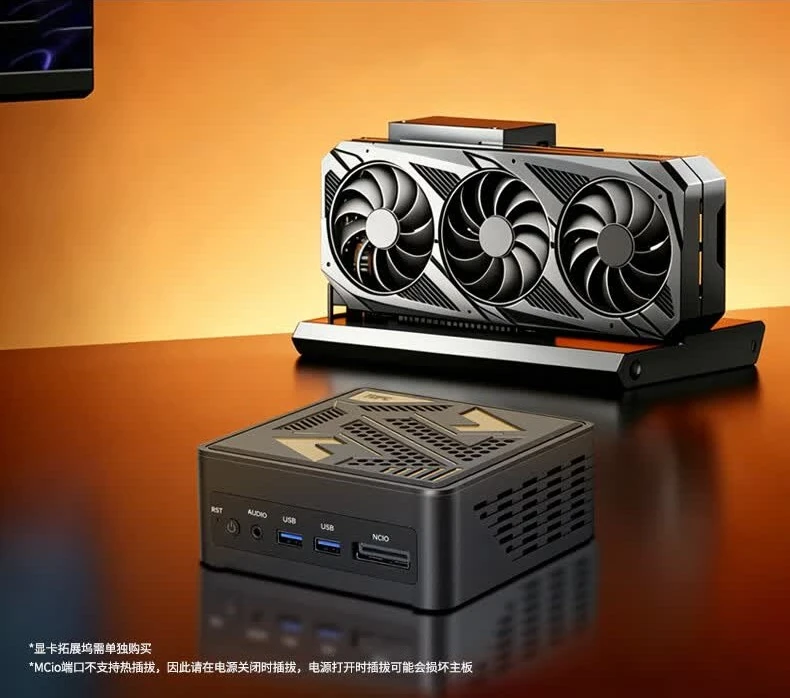
GPD is not the only company moving toward MCIO. TOPC has also launched its TA255 mini PC with an MCIO interface, described by IT Home as a compact system based on the AMD Ryzen 7 H 255 processor. The TA255 includes 16GB or 24GB of LPDDR5 6400 memory, 2 M.2 SSD slots, WiFi 6E, Bluetooth 5.3, dual 2.5GbE, HDMI 2.1, DisplayPort 2.1, and USB connectivity. However, its MCIO interface is limited to PCIe Gen 4 x8, which provides half the bandwidth of PCIe 5.0 x8 but should still be strong enough for many GPUs. The 16GB version is priced at 2699 yuan, around $394, while the 24GB version is priced at 2999 yuan, around $438.
That difference matters. PCIe 4.0 x8 is still a meaningful improvement over OCuLink and Thunderbolt 5, but PCIe 5.0 x8 is the more exciting target for near native high end GPU performance. GPD’s use of MCIO 8i at PCIe 5.0 x8 equivalent bandwidth is what makes its upcoming products especially interesting for RTX 4090 class setups.
For gamers, the main question will be compatibility and practicality. MCIO is not as common as USB4, Thunderbolt, or OCuLink, so adoption will depend on whether more mini PCs, laptops, handhelds, and eGPU docks begin supporting it. Cable quality, signal integrity, firmware support, hot plug behavior, GPU compatibility, and enclosure design will also matter heavily.
For creators and workstation users, the higher bandwidth could be equally important. External GPUs are not only used for gaming. They can accelerate video editing, rendering, AI workflows, 3D modeling, local LLM workloads, and GPU compute tasks. The closer an eGPU gets to native PCIe performance, the more viable it becomes as a serious productivity tool.
The GPD G2 and Box Mini also show how quickly the compact PC space is evolving. A few years ago, external GPUs were mostly niche devices with major compromises. Now, with Thunderbolt 5, OCuLink, and MCIO 8i, the performance ceiling is rising quickly. If MCIO 8i becomes more widely adopted, external GPU setups may finally move from enthusiast compromise to practical desktop replacement.
There are still unanswered questions. GPD has not yet shared complete specifications, pricing, final launch dates, or detailed performance data for the G2 and Box Mini. Independent testing will be essential, especially with high end GPUs like the RTX 4090. A claimed 2% performance loss is extremely impressive, but real performance will vary by game, workload, resolution, CPU, driver, and connection behavior.
Still, this is one of the most important eGPU developments to watch. By moving beyond OCuLink and Thunderbolt 5 into MCIO 8i, GPD is targeting the biggest weakness of external GPU systems head on. If the company can deliver stable performance, good thermals, clean compatibility, and reasonable pricing, the GPD G2 could redefine what an external GPU dock can do.
For users who want a small PC or handheld that can become a serious desktop gaming machine when docked, MCIO 8i may be the breakthrough the eGPU market has been waiting for.
Would you use an MCIO 8i eGPU setup if it could deliver nearly desktop level RTX 4090 performance from a mini PC?
