
Google Says Project Genie Is Not a GenAI Game Creation Tool, but a Research Step Toward New Playable Worlds
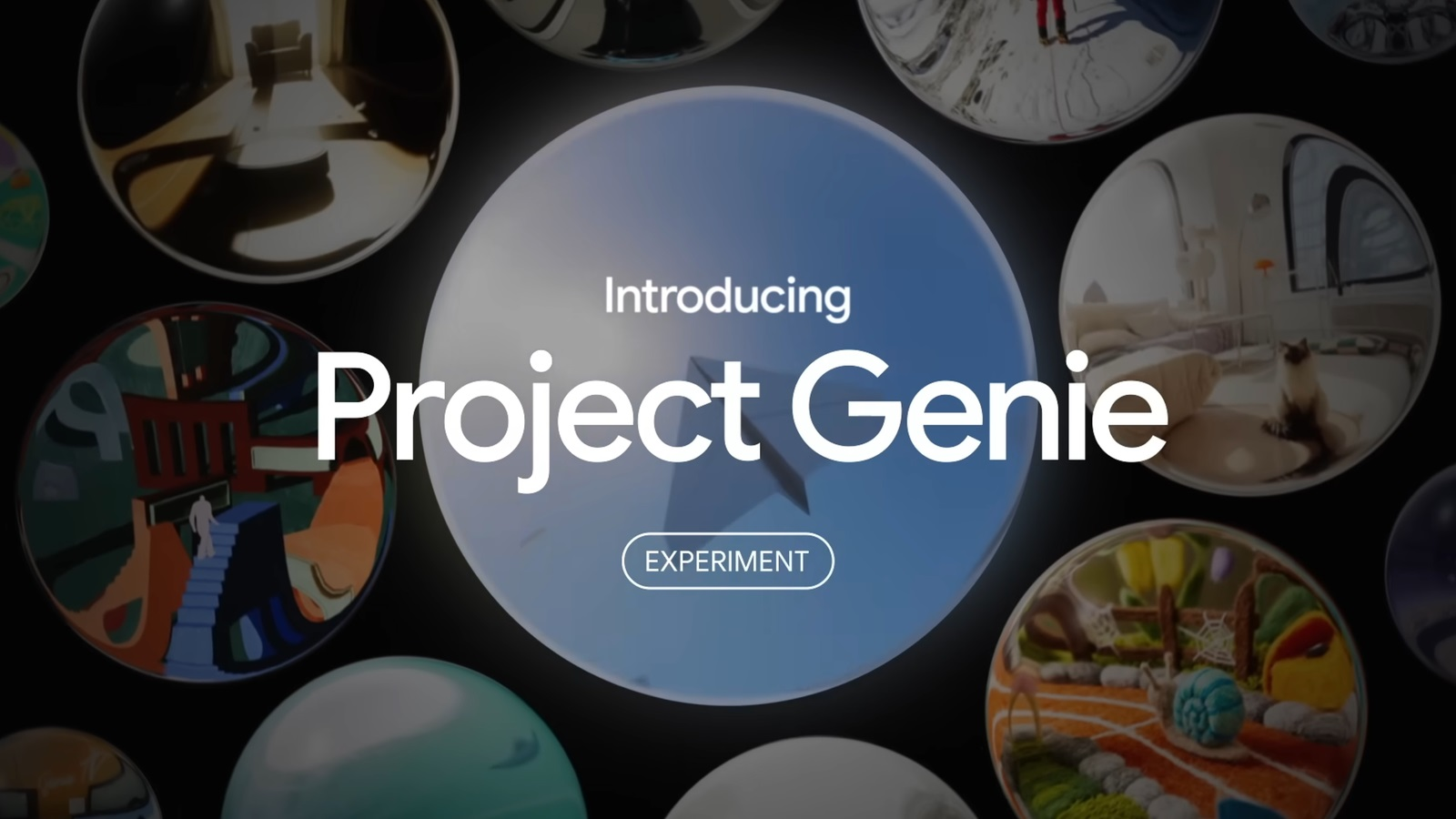
Google’s Project Genie is drawing major attention again at GDC 2026, but the latest comments from the company make one thing much clearer: this is not a plug and play system for replacing game development. According to reporting from Game File, Google DeepMind product lead Alexandre Moufarek said, “We’re not at all in a stage where we can just, say, make a game with it,” while explaining that the team’s goals are centered more around world models, AI agents, and experimenting with new kinds of interactive experiences than building a direct replacement for traditional game production. That framing is also echoed in coverage from GamesIndustry.Biz, which reported that Genie 3 world models still begin to break down after roughly a minute.
That distinction matters because the market reaction when Project Genie was first revealed in late January was far more dramatic than the technology itself appeared to justify. Investor panic briefly hit several gaming related companies, including Unity, Take Two, CD Projekt, and Roblox, as some observers treated Genie like an instant threat to conventional game development. But even at reveal, Google described Genie 3 as a general purpose world model that can generate interactive environments, not a finished end to end game creation pipeline. The system’s official positioning was about interactive world generation and experimentation, not fully replacing design teams, pipelines, creative direction, and production workflows.
That broader context also supports what analyst Joost van Dreunen argued after the initial reveal. He described tools like Genie as meaningful progress in content generation, while stressing that they still cannot replace the creative vision, narrative depth, and intangible qualities that make games memorable. That point has held up well as more technical discussion around Genie has emerged. Even the recent GDC coverage suggests that the technology is still best understood as a research and prototyping system for simulated worlds, not a serious substitute for the full development process behind modern commercial games.
What Google appears to be chasing instead is a different category of opportunity. Moufarek said the hope is to help “imagine new game experiences... you couldn't even imagine without AI,” which is a very different ambition from saying developers can simply type a prompt and receive the next major blockbuster. Based on the available reporting, DeepMind is more interested in how AI can generate digital spaces for exploration, experimentation, and agent based interaction. In that sense, Project Genie looks less like a shortcut to making a full game and more like a research platform that could influence future tools, simulation design, prototyping workflows, or entirely new genres that are still difficult to define.
The limitations remain important. Reported says that the generated worlds still start to lose consistency after around a minute, which highlights how far the technology remains from sustained, production ready use. That breakdown is a major practical barrier because games are not just moving images or reactive clips. They are systems built on persistence, rules, progression, authored design, memory, and intentional player feedback. If a world model starts losing coherence after a short window, it is nowhere near replacing the work that goes into designing something with the stability and structure of a major commercial release.
There is also the unresolved issue of copyright and training data, which continues to follow nearly every major GenAI conversation. While the user facing hype often jumps straight to disruption headlines, the more serious industry concerns remain centered on ownership, authorship, consent, and the legal limits of training models on creative works. Those questions are especially sensitive in games, where art direction, mechanics, level design, narrative structure, music, and animation all sit at the core of what gives a project identity. A technology that can approximate worlds frame by frame is one thing. A technology that can responsibly create commercially viable and legally clean game content at scale is another challenge entirely.
For the game industry, the most practical read here is not that Project Genie is a new Unreal Engine competitor or a replacement for human developers. It is that Google is exploring world models as a new interactive medium, one that may eventually support prototyping, simulation, and experimental design in ways that traditional tools do not. That could still become influential over time. But there is a major gap between an interesting AI generated world model and a finished game people actually want to play for dozens of hours.
And that is where the investor reaction looks especially disconnected from the reality of development. Even if these tools improve dramatically, they still do not address the core human work that defines a memorable game: design intent, pacing, emotional payoff, worldbuilding logic, balance, art direction, authored mechanics, and creative coherence. Those elements are not accidental outputs. They are the result of teams making thousands of deliberate decisions.
Project Genie may still become an important technology. It may help developers experiment with interactive systems, speed up certain forms of prototyping, or inspire entirely new ways to think about playable worlds. But based on what Google is saying at GDC 2026, it is not trying to be a one click game making kit, and it is nowhere close to being one.
What do you think, could world models like Project Genie become a useful creative tool for developers, or is the industry still too far from anything that resembles real game production?
