
GMKtec Teases 2nd Gen AI Supercomputer Mini PC With 180 TOPS, Fueling Panther Lake Speculation
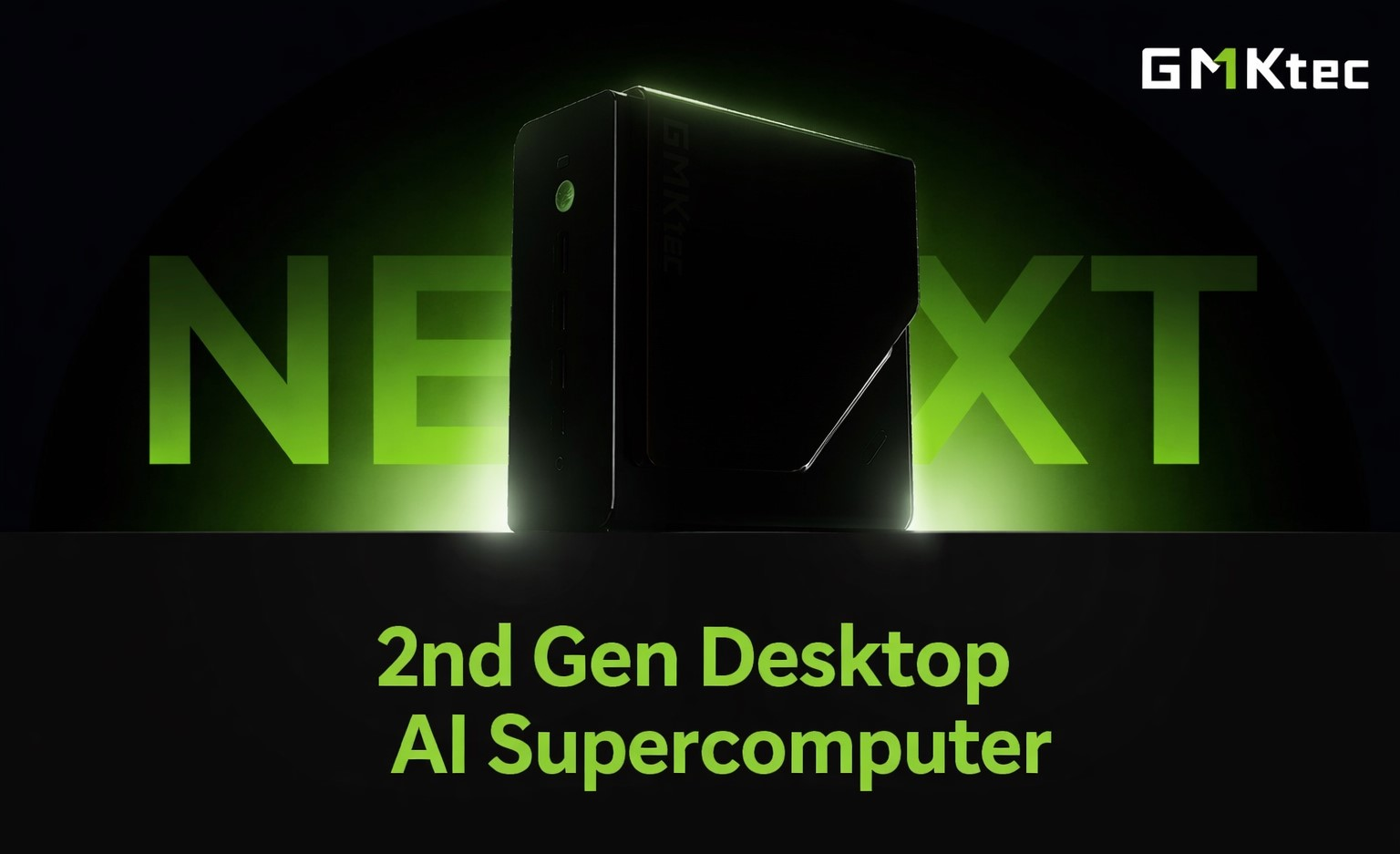
GMKtec has started the hype cycle for a new compact AI focused mini PC, teasing what it calls a 2nd gen desktop AI Supercomputer that can deliver up to 180 AI TOPS inside a small box. The company has not published a spec sheet yet, but the performance number is specific enough that it immediately narrows the field and strongly hints at Intel Panther Lake class hardware rather than a simple refresh of today’s Core Ultra H systems.
⚡ 180TOPS AI power… all in a tiny box.
— gmktecofficial (@gmktecdotcom) March 2, 2026
👀 Guess what this is?
💚 COMING SOON#GMKtec #2ndGenDesktopAISupercomputer #MiniPC #DesktopAI #AIWorkstation pic.twitter.com/TIcpl02nVJ
Why does 180 TOPS matter. GMKtec’s current fastest Intel based mini PC lineup has been built around Core Ultra 9 285H class hardware, and GMKtec itself has previously marketed similar systems around roughly 99 AI TOPS combined. Jumping from around 99 to 180 is not a minor tuning update, it signals a new platform tier where the iGPU and NPU contributions scale hard enough to almost double the combined AI throughput.
That is why Panther Lake immediately becomes the most likely target. The only widely discussed mobile platform tier that consistently clears the 150 TOPS range in combined AI compute is the upcoming Panther Lake lineup, where the AI math is typically driven by a strong iGPU contribution plus a next gen NPU block and a smaller CPU contribution. In practical terms, that combination aligns with the kind of compact device GMKtec likes to ship: a small chassis that does not rely on a discrete GPU, but still targets creators, developers, and edge AI users who want fast local inference, vision workflows, and AI assisted productivity without a full tower PC.
The teaser image and phrasing also point to a familiar strategy from GMKtec. The company often reuses a successful chassis design and differentiates by platform and configuration, so it would not be surprising if the 2nd gen unit stays visually close to existing EVO series systems while upgrading the internal platform, cooling tuning, and firmware. If that happens, the buying decision will likely come down to 3 factors that matter more than the chassis: sustained power behavior, memory capacity options, and I O, especially USB4 or Thunderbolt class bandwidth for external accelerators and fast storage.
What to watch next is not just the CPU model name, but the complete platform positioning. A 180 TOPS mini PC can be marketed as an AI workstation, but the real user experience is determined by whether it ships with enough memory headroom and storage throughput to keep models fed. If GMKtec offers higher memory configurations like 64 GB and 96 GB tiers and pairs them with strong NVMe support, this could become one of the more interesting small form factor boxes for local AI workflows in 2026. If memory and I O are conservative, the headline TOPS number may read better on a poster than in real world usage.
For gamers, this kind of mini PC is not just about frame rates. It is about the future of compact setups that can handle game streaming, capture, encoding, and lightweight content creation while also running AI tools locally for mods, asset workflows, voice cleanup, and creator pipelines. If Panther Lake class systems really do land in a widely available mini PC at a realistic price, the small form factor market could get a serious shakeup.
If GMKtec confirms Panther Lake for this 180 TOPS mini PC, would you rather prioritize higher memory options like 64 GB to 96 GB, or a lower price with a more mainstream configuration?
