
GIGABYTE Launches Z890 Plus Series Motherboards With Ultra Turbo Mode and D5 Duo X for Intel Arrow Lake Refresh
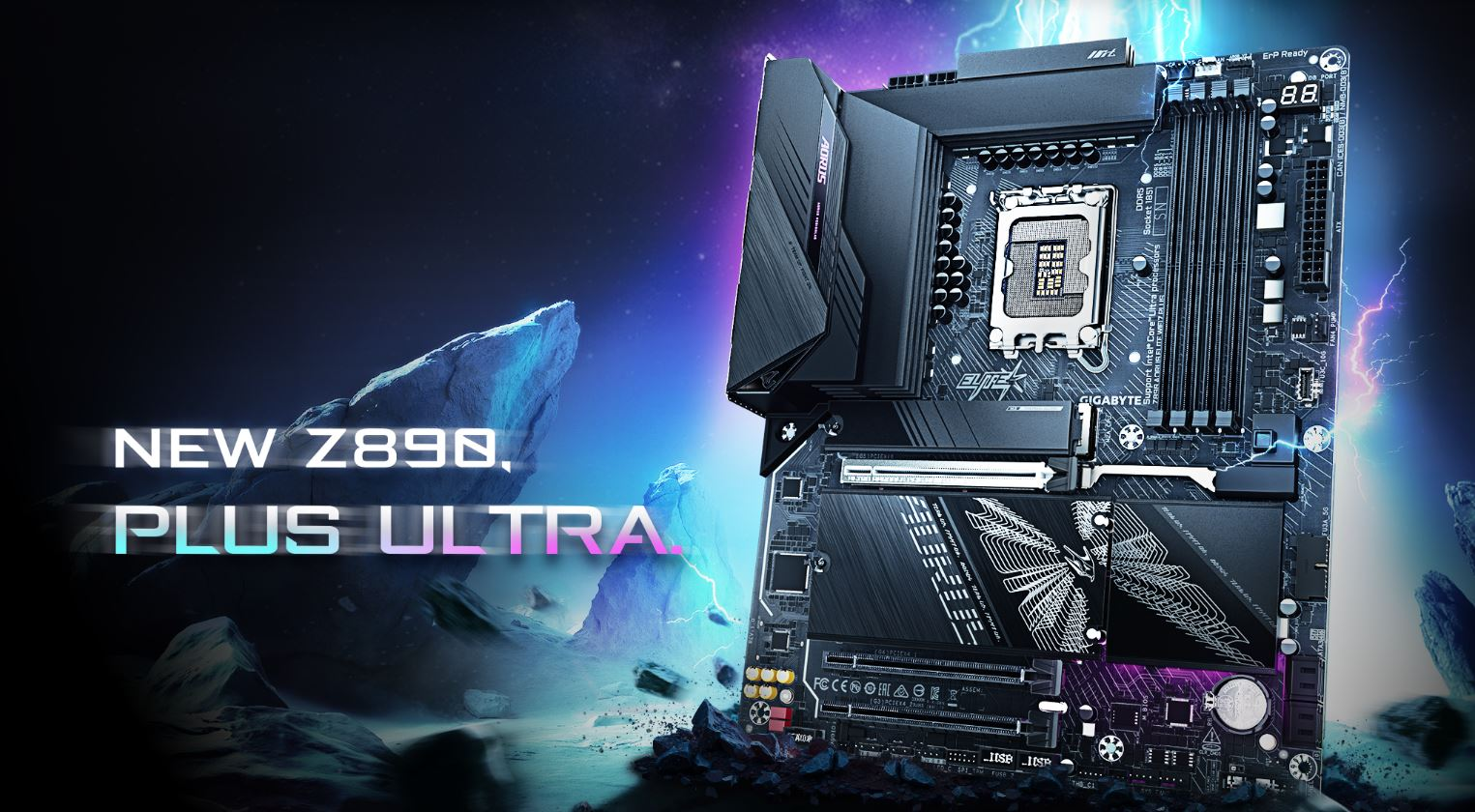
GIGABYTE has officially introduced its new Z890 Plus series motherboards, expanding its Intel platform lineup with models designed for the latest Core Ultra 200S Plus processors. According to the company’s March 11 announcement, the new family is centered on two major platform upgrades: Ultra Turbo Mode for one click CPU and DRAM tuning, and D5 Duo X technology aimed at pushing higher DDR5 capacity and frequency together on dual DIMM designs.
The launch is important because it signals how motherboard vendors are preparing for Intel’s Arrow Lake refresh cycle with boards that are not only ready for the new chips out of the box, but also more aggressively tuned for memory scaling and simplified performance uplift. GIGABYTE says the Z890 Plus lineup will span Elite, EAGLE, FORCE, and Duo X variants, giving the company broader coverage across mainstream gamers, enthusiasts, and higher density memory users.
The most notable addition here is D5 Duo X. GIGABYTE positions this as a memory architecture and BIOS tuning strategy for dual DIMM boards that can support the newer CQDIMM standard while also maintaining backward compatibility with CUDIMM. In practical terms, the company is trying to solve a long standing enthusiast problem: increasing memory density without giving up frequency stability. GIGABYTE says its Duo X implementation combines optimized board layout, refined clock driver architecture, and BIOS level tuning to reduce memory channel loading and improve signal integrity. Gigabyte also claims speeds up to DDR5 10266 and support for 256GB total memory using 2 high capacity modules.
That detail matters for the memory market because high capacity DDR5 kits are becoming increasingly relevant not only for workstations and AI adjacent tasks, but also for advanced gaming and creator systems that want more headroom without moving into oversized platform complexity. GIGABYTE also states it worked with memory partners including ADATA, TeamGroup, and V Color to improve compatibility for CQDIMM kits, which gives this launch extra weight for users who are closely watching the evolution of next generation DDR5 module standards.
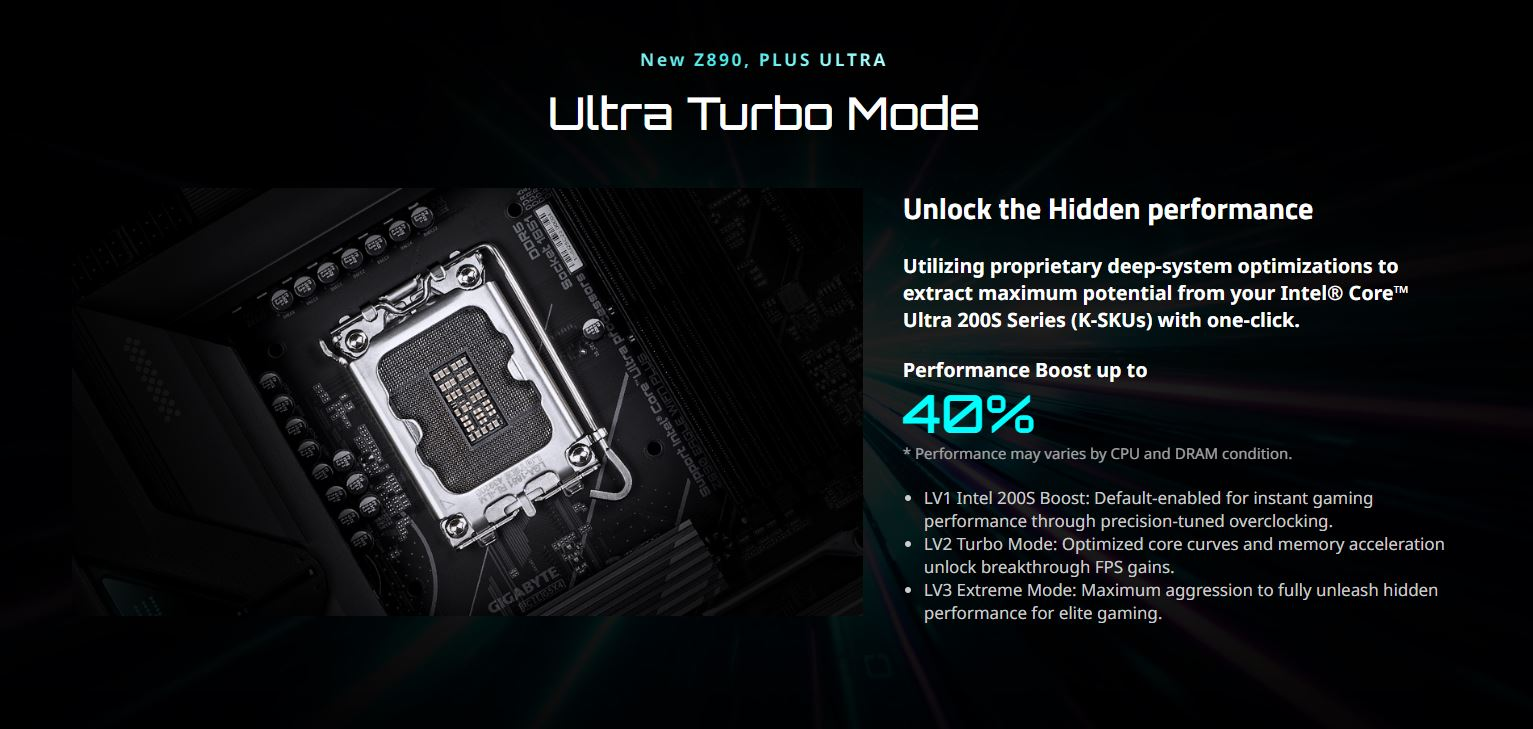
Ultra Turbo Mode is the second major talking point. GIGABYTE says this feature can unlock up to 40% more performance with a single click on supported Core Ultra 200S Plus K series processors, though that number comes from a specific internal test setup using a Core Ultra 7 270K Plus, DDR5 10266 memory, Hitman 3, and APO enabled. The company outlines three selectable modes: LV1 Intel 200S Boost, LV2 Turbo Mode, and LV3 Extreme Mode. As always with vendor supplied uplift numbers, real world gains will depend heavily on the CPU sample, memory quality, BIOS maturity, and workload. Still, it is clear that GIGABYTE is pushing a much stronger plug and play performance message with this generation.
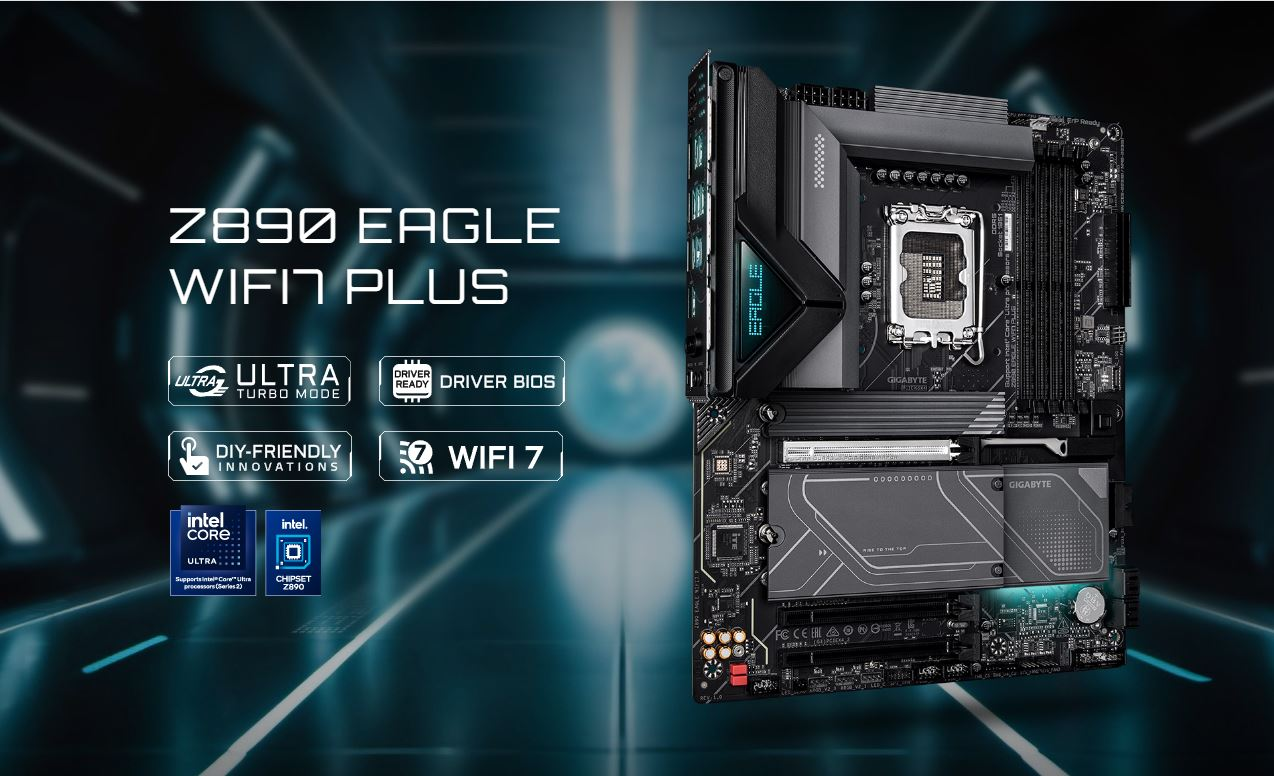
Beyond CPU and memory tuning, the Z890 Plus family also carries over several builder friendly and premium features. GIGABYTE highlights a Digital Twin 16+1+2 phase VRM design on higher end models, updated thermal engineering, EZ assembly features, DriverBIOS for first boot WiFi driver convenience, WiFi 7, 5GbE LAN, PCIe 5.0 M.2 support, and USB4 Type C connectivity on select boards. These are not surprise additions in the premium motherboard space, but together they show that the company is trying to balance enthusiast tuning with a smoother out of box building experience.
For gamers and hardware enthusiasts, the bigger strategic takeaway is that the motherboard market is increasingly shifting from simple platform readiness to value added tuning ecosystems. Vendors are no longer selling only power delivery and connectivity. They are packaging BIOS optimization, memory validation, AI assisted tuning, and easier assembly into a single mainstream pitch. In that respect, GIGABYTE’s Z890 Plus launch is not just about more boards arriving for Intel’s refreshed desktop lineup. It is also about defining how much performance and usability can be extracted from a platform before the user even starts manual tuning.
The early live models visible from GIGABYTE’s rollout include the Z890 AORUS ELITE WiFi7 PLUS and Z890 EAGLE WiFi7 PLUS, with additional boards expected to follow. If GIGABYTE’s claims on CQDIMM scaling and simple one click optimization hold up in broader testing, the Z890 Plus family could become one of the more interesting motherboard launches in this refresh cycle, especially for builders targeting high speed, high density DDR5 systems with fewer compromises.
What do you think about GIGABYTE’s push into CQDIMM and one click tuning for Arrow Lake refresh builds? Would you take a dual DIMM high frequency design over a traditional 4 slot layout for your next gaming or creator PC?
