
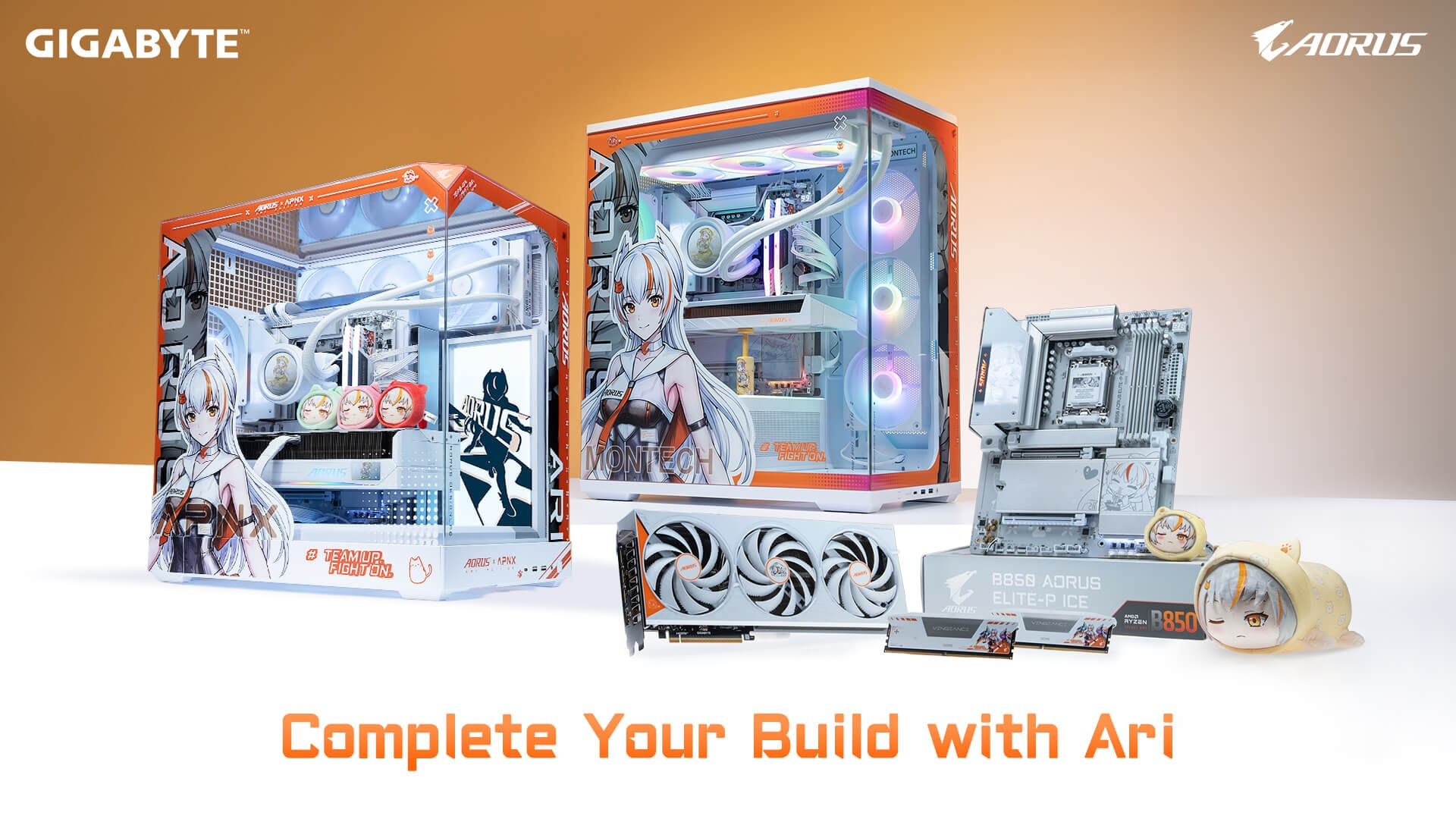
GIGABYTE has expanded its AORUS ARI gaming hardware lineup through partnerships with Corsair, APNX, and Montech, introducing new DDR5 memory and PC cases designed around the company's original anime character, Ari. Announced on November 20, 2026, the collaboration creates a more complete ecosystem for enthusiasts interested in building coordinated anime inspired gaming PCs, extending the existing collection of motherboards and graphics cards with matching components.
According to GIGABYTE's official announcement, the expanded lineup includes Corsair Vengeance RGB DDR5 memory, the APNX V2 chassis, and the Montech TG3 case, all featuring custom AORUS ARI artwork. The Corsair memory combines customizable RGB lighting with character themed aesthetics, while both cases feature panoramic designs intended to showcase the internal hardware. The APNX V2 incorporates 3 tempered glass panels and the company's X Pand Flow cooling design, while the Montech TG3 focuses on a panoramic presentation that highlights the entire gaming system.
New AORUS ARI Components
| Product | Features |
|---|---|
| Corsair Vengeance RGB DDR5 ARI Edition | Custom Ari artwork, RGB lighting, DDR5 memory |
| APNX V2 ARI Edition | 3 tempered glass panels, X Pand Flow cooling design |
| Montech TG3 ARI Edition | Panoramic chassis with custom Ari artwork |
The new components complement GIGABYTE's existing B850 AORUS ELITE P ICE and B760M AORUS ELITE WIFI6E P GEN5 motherboards, which support DDR5 memory speeds reaching 8200 MT/s and 7800 MT/s, respectively. The collection also includes the previously released AORUS GeForce RTX 5060 ARI 8G, featuring 8 GB of GDDR7 memory, a 2722 MHz boost clock, custom character artwork, and GIGABYTE's WINDFORCE cooling system with Hawk fans.
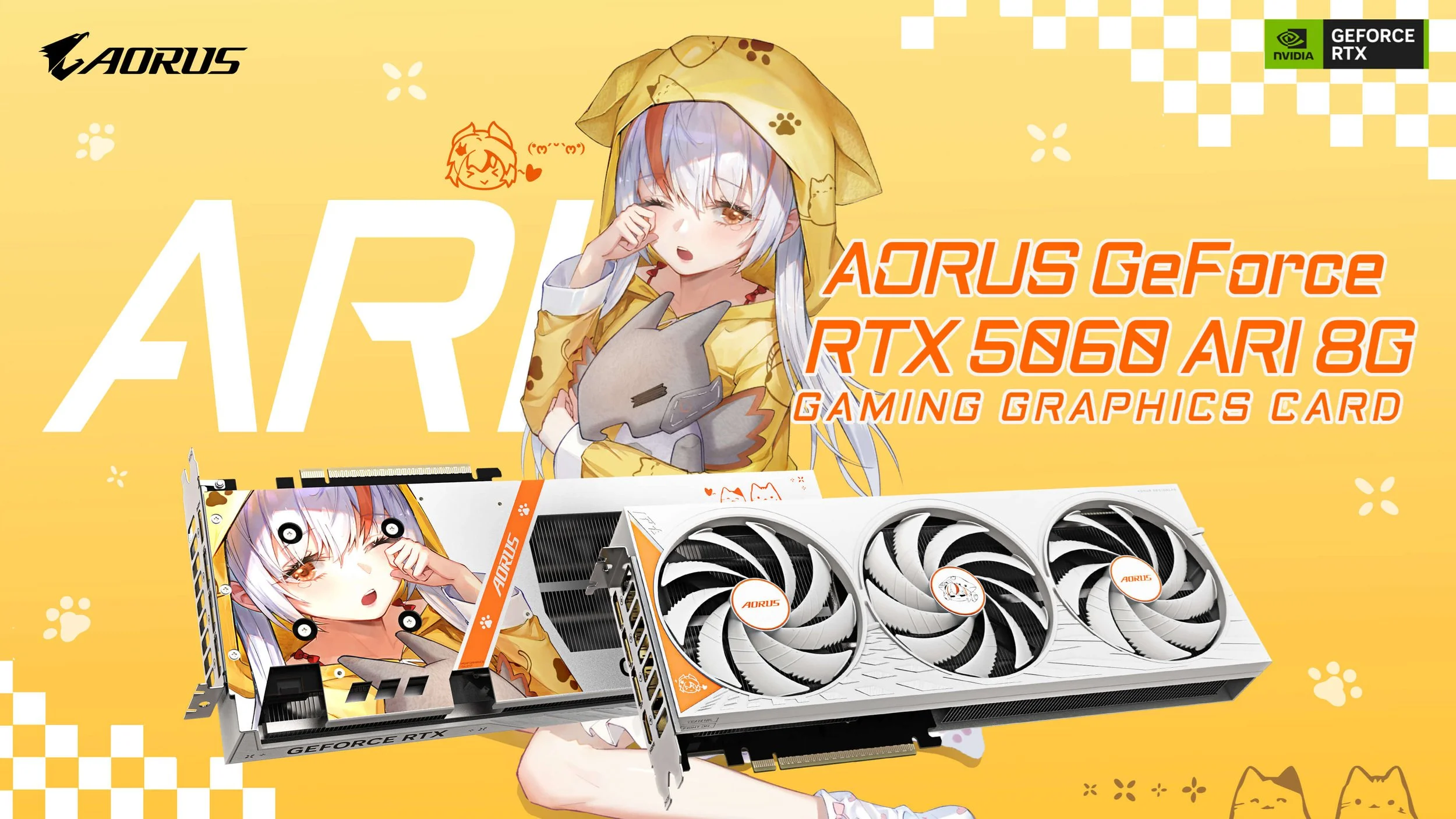
Ari originates from GIGABYTE's AORUSVERSE universe and represents the company's growing investment in anime culture and personalized PC hardware. The character already appears across several motherboard designs with different outfits, including pajama, cheongsam, and armor themes. GIGABYTE is also preparing the upcoming B850 AORUS ELITE ARI motherboard, introducing a darker variation of the existing pajama design.
While the expanded lineup provides more customization options, GIGABYTE has not announced pricing, release dates, or regional availability for the new memory and cases. Corsair's specific DDR5 capacity, frequency, and latency configurations also remain undisclosed. These details will be important for determining whether the themed components offer competitive value compared with conventional gaming hardware.
GIGABYTE's AORUS ARI ecosystem demonstrates how PC customization continues evolving beyond traditional RGB lighting and component colors. Partnering with Corsair, APNX, and Montech provides enthusiasts with more flexibility to create coordinated gaming systems without relying exclusively on a single manufacturer's hardware.
However, visual customization should not overshadow hardware performance or affordability. The existing RTX 5060 ARI remains an 8 GB graphics card regardless of its premium design, and buyers should carefully evaluate whether themed components justify their potential price increases.
The strongest aspect of this collaboration is the ability to combine components from different manufacturers while maintaining a consistent visual identity. PC customization should expand user choice rather than restrict compatibility or upgradeability, allowing gamers to prioritize both performance and personal expression.
Would you build a complete AORUS ARI themed gaming PC with matching Corsair memory and custom cases, or would you rather invest the additional budget in a faster graphics card?
