
Five Brand New NVIDIA Blackwell GPU PCI IDs Spotted: GB112 and GB120 Could Point To More Ultra Variants
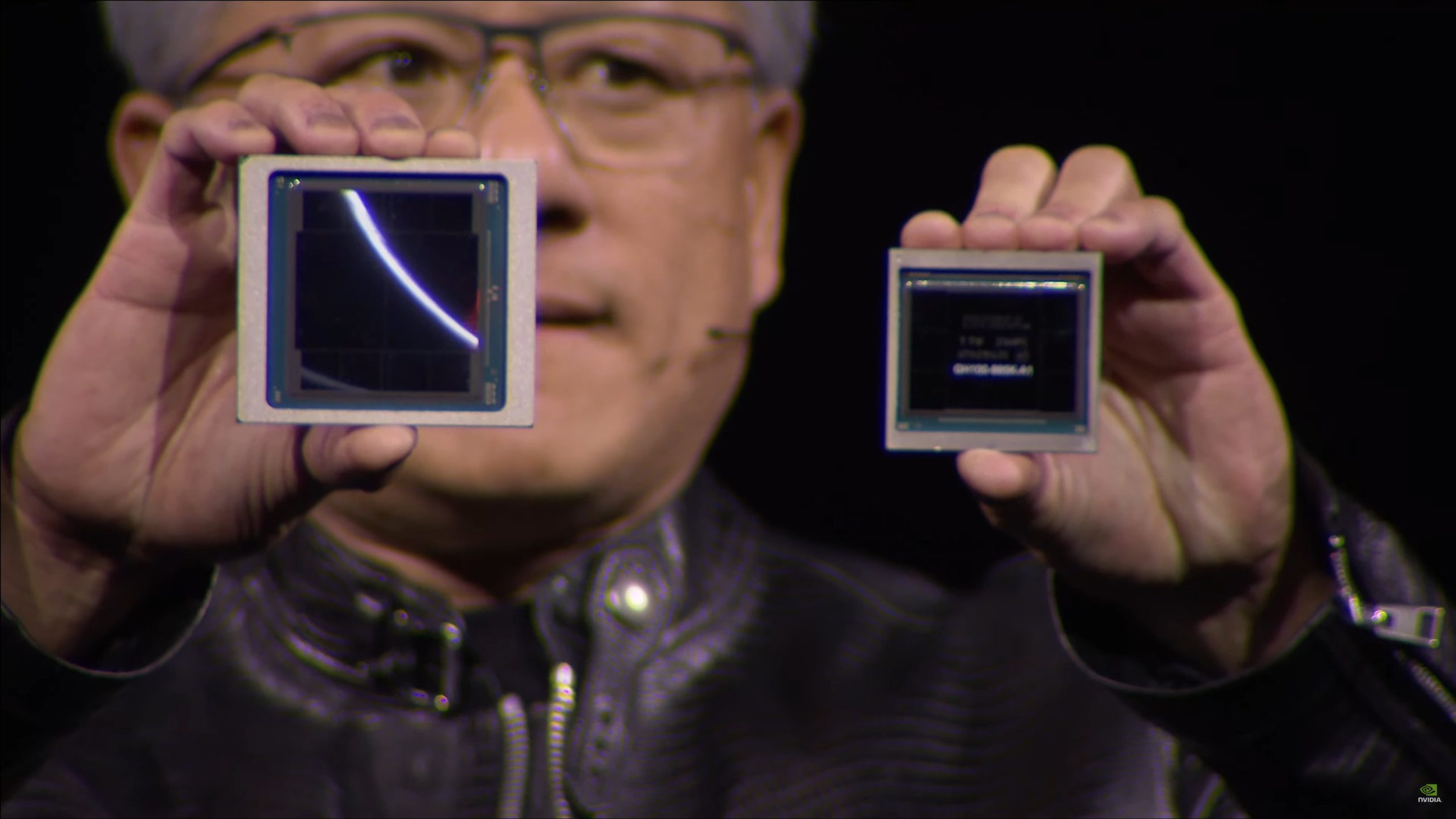
NVIDIA looks to be quietly expanding its Blackwell roadmap again, with 5 fresh GPU PCI IDs now appearing in a public hardware identifier database. While PCI IDs alone do not confirm product names or launch timelines, they are a reliable early signal that silicon variants are being validated in the ecosystem, often before formal announcements and well before wide availability.
According to the PCI ID repository, NVIDIA has added 5 new Blackwell related entries that include 1 GB110, 3 GB112, and 1 GB120. The GB110 designation is particularly interesting because it is widely associated with Blackwell Ultra class data center direction, while GB112 and GB120 look like new branches that are not part of the already established consumer focused GB200 family naming that underpins the GeForce RTX 50 series stack.
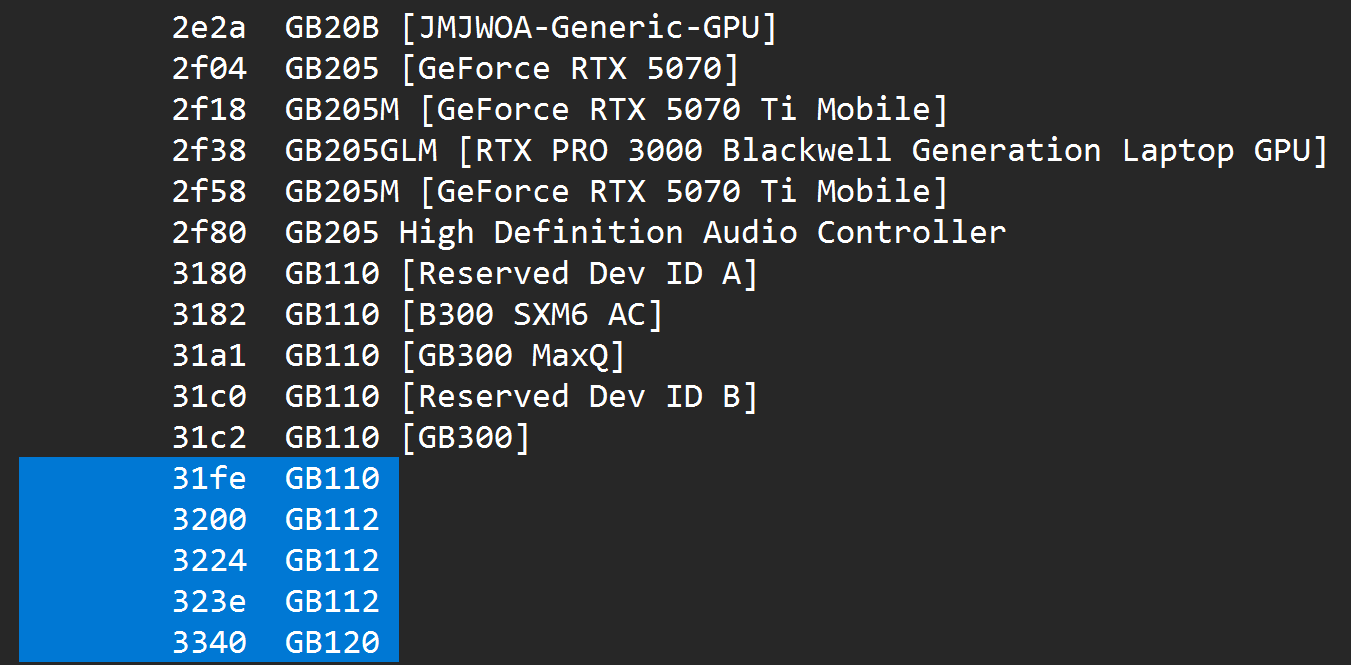
A PCI ID entry is not a spec sheet, but it is a footprint. When new IDs show up, it usually indicates NVIDIA has working hardware or near final silicon stepping moving through platform enablement, driver mapping, and partner validation. For the industry, that means software support, system vendor integration, and product segmentation work are already in motion. For enthusiasts watching the market, it often hints at future product positioning long before marketing branding becomes public.
Based on the current Blackwell segmentation, the consumer GeForce lineup is tied to the GB200 family variants, typically referenced as GB202, GB203, GB205, GB206, and GB207, each already mapped to an RTX 50 series product tier. That makes GB112 and GB120 stand out as likely non consumer oriented, at least from a naming pattern perspective.
One plausible interpretation is that these new IDs represent further tuned Blackwell Ultra adjacent parts intended for NVIDIA’s large scale system offerings such as DGX, HGX, or MGX deployments, or for additional enterprise configurations where NVIDIA can optimize yield, power envelopes, and memory subsystem layouts across multiple SKU targets. In other words, this could be NVIDIA expanding its data center playbook, creating more granularity in how it bins and deploys Blackwell for different customers and workload tiers.
It is tempting to connect any new GPU identifiers to a GeForce RTX 50 SUPER refresh, but the more grounded take is that a SUPER update would most likely reuse the existing consumer GB200 family while changing memory configurations and core counts. Even in scenarios where a refresh is planned for mid 2026, supply dynamics such as memory availability can influence schedules and product scope, which makes these newly spotted GB112 and GB120 entries more consistent with data center iteration than a consumer refresh signal.
This update reinforces a clear pattern: NVIDIA is still actively iterating Blackwell rather than simply waiting for the next architecture wave. With Rubin expected to be a future chapter rather than an immediate mass market transition, NVIDIA has every incentive to keep refining Blackwell Ultra and related data center offerings to maximize performance per watt, platform stability, and SKU coverage for partners.
Do you think NVIDIA should keep extending Blackwell with more Ultra variants, or would you rather see them accelerate next generation launches even if it means fewer refinements and shorter product cycles?
