
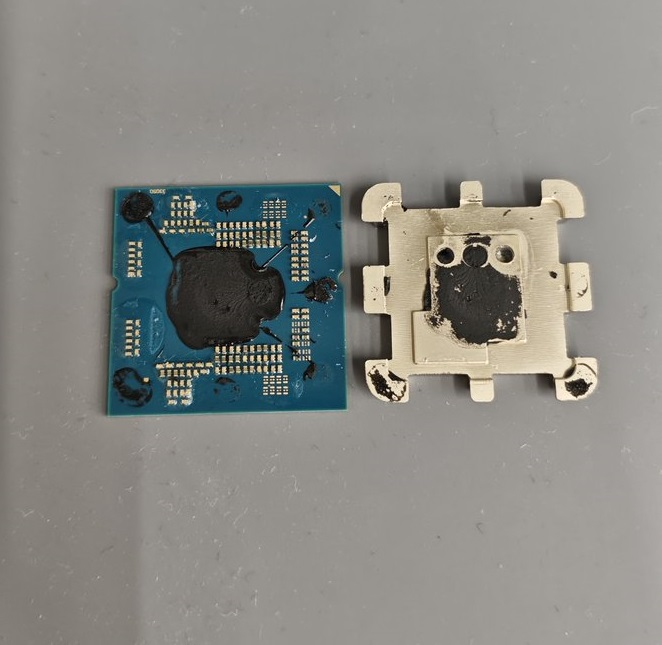
A customer in Japan has reportedly fallen victim to a counterfeit AMD Ryzen 9 9900X3D processor that appeared legitimate from the outside but contained no functioning silicon underneath its integrated heat spreader (IHS). Japanese PC hardware retailer PC One's shared photographs of the suspicious processor on October 27, revealing that the CPU substrate was missing both core complex dies (CCDs) and its I/O die, effectively leaving the customer with an expensive piece of nonfunctional hardware.
_人人人人人人人人人_ > 特 級 呪 物 <  ̄Y^Y^ Y^Y^Y^Y^Y^ ̄ というわけでお客様からご提供いただいたこちら。 見ての通り肝心のコアがありません、これはやってるやつですねぇ。 しかもヒートスプレッダの印字も正規品(3枚目)となんか違うし... まさか実物を目にする日が来るとは… https://t.co/89OOIQIVZY
— PCワンズ (@PCONES) October 27, 2026
A genuine AMD Ryzen 9 9900X3D features 12 Zen 5 cores, 24 threads, 128MB of L3 cache, and AMD's second generation 3D V Cache technology. Internally, the processor contains 3 silicon dies, consisting of 2 CCDs and 1 I/O die. However, after removing the IHS from the customer's unit, the retailer discovered that all 3 were missing. The counterfeit was also identifiable through inconsistencies in the lettering printed on the heat spreader, particularly the font and character thickness compared with an authentic processor.
The retailer did not disclose where the customer purchased the CPU, and it remains unclear whether the counterfeit was manufactured using an empty substrate or created by removing the silicon from a genuine processor. Similar cases have surfaced previously, including counterfeit Ryzen 7 9800X3D processors featuring altered markings and mismatched PCB characteristics. These incidents highlight the difficulty of identifying counterfeit hardware, especially when the exterior closely resembles an authentic product.
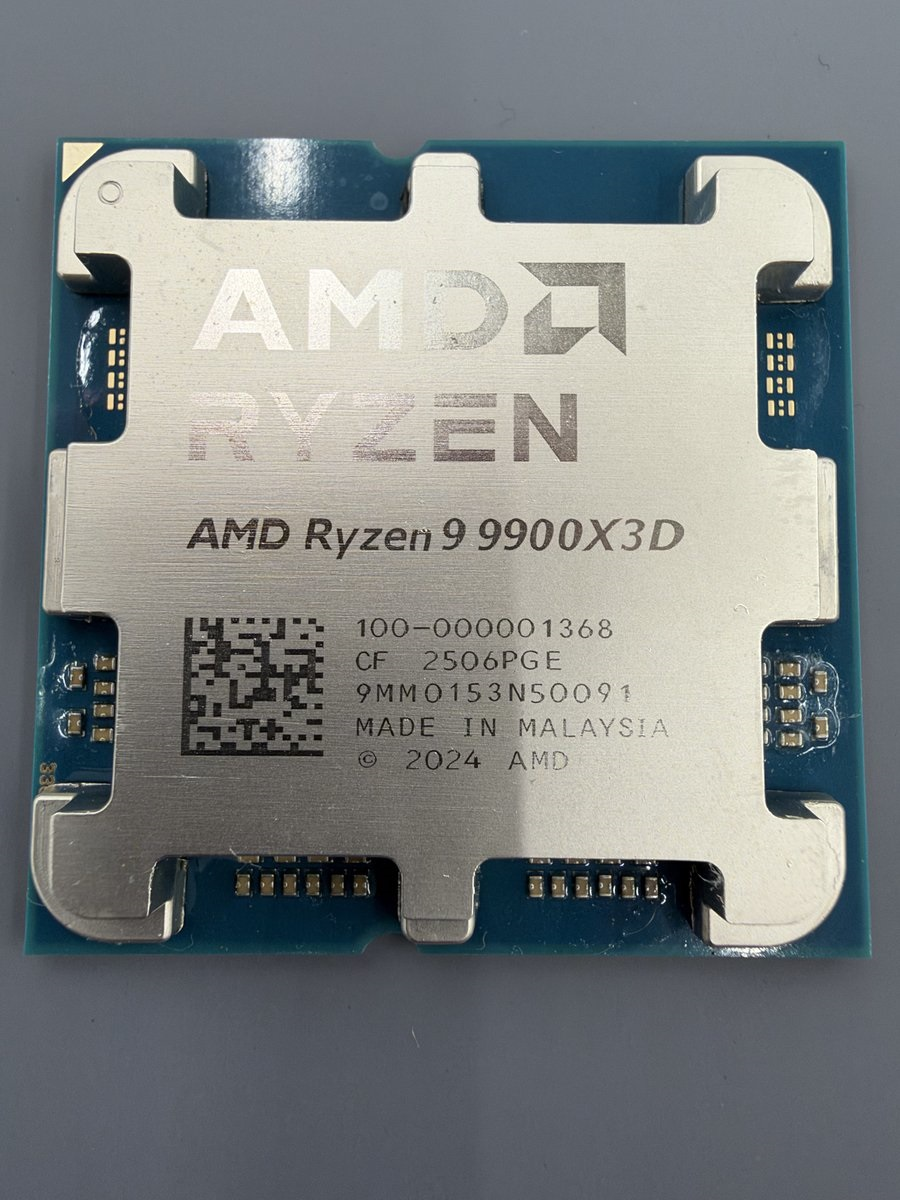
For PC builders, the safest approach remains purchasing from authorized retailers, inspecting CPU markings and packaging, and documenting the unboxing of expensive components. If a processor appears suspicious, buyers should contact the seller before installation rather than attempting to remove the heat spreader, which could damage the component and complicate a return or warranty claim.
Counterfeit processors are becoming an increasingly concerning issue for PC enthusiasts, particularly with premium gaming CPUs carrying substantial resale value. What makes this case especially troubling is that the processor was not simply an older model disguised as a newer one, but a package missing its essential silicon components. Retailers and marketplaces need stronger authentication procedures, particularly when processing returned hardware. For consumers, even familiar packaging and convincing product markings should not replace purchasing from reputable sources.
What do you think? Should AMD introduce stronger physical authentication measures for its processors, or should retailers take greater responsibility for inspecting CPUs before selling them?
