
Dell Alienware Area 51 Reportedly Locks Ryzen 9 9950X3D to Its Motherboard, Restricting PC Upgrades
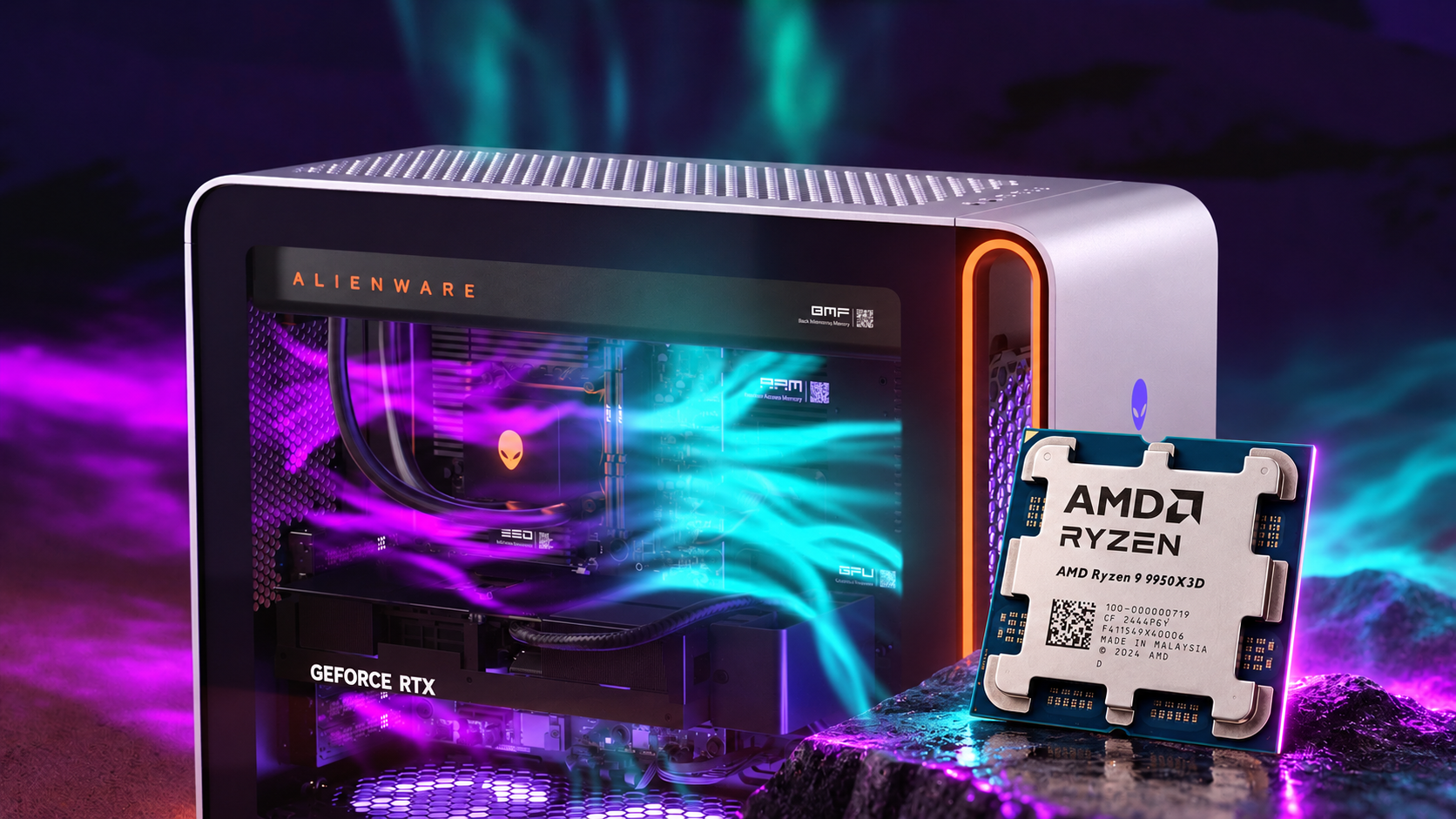
Dell is facing criticism after an Alienware Area 51 owner discovered that the AMD Ryzen 9 9950X3D processor inside the premium gaming desktop reportedly cannot operate on motherboards from other manufacturers. The restriction appears to involve AMD Platform Secure Boot (PSB), a hardware security mechanism that can permanently associate a processor with a manufacturer's firmware signing keys, limiting its compatibility with conventional custom PC builds.
The issue was reported by Reddit user Designer_Teaching_33, who purchased an Alienware Area 51 equipped with an NVIDIA GeForce RTX 5090 and Ryzen 9 9950X3D. According to the owner, the complete system cost less than purchasing an RTX 5090 separately, making it an attractive opportunity to transfer the components into a custom PC.
However, after several days of troubleshooting and testing different motherboards and processors, the Ryzen 9 9950X3D reportedly refused to boot outside the original Alienware system. A repair technician subsequently suggested that the processor had been vendor locked, preventing it from functioning with conventional AM5 motherboards despite using the same physical socket.
The suspected restriction involves AMD Platform Secure Boot, which verifies motherboard firmware through cryptographic signatures before allowing the processor to initialize. When configured by a manufacturer, the security mechanism can program permanent hardware fuses that associate the CPU with that vendor's signing keys.
Standard AM5 vs Vendor Locked Ryzen
| Feature | Standard Retail Ryzen | PSB Vendor Locked Ryzen |
|---|---|---|
| Socket | AM5 | AM5 |
| Motherboard Compatibility | Supported AM5 motherboards | Compatible vendor signed firmware |
| BIOS Verification | Standard platform security | Vendor specific cryptographic verification |
| CPU Transfer | Generally supported | Restricted across manufacturers |
| Lock Reversibility | Not applicable | Permanent once fused |
The reported Area 51 restriction has not been independently confirmed through processor fuse diagnostics. PSB generally ties processors to vendor signing keys rather than necessarily to 1 physical motherboard.
This is not the first time Alienware customers have encountered similar restrictions. In an October 2024 Dell community discussion, a moderator reportedly confirmed that the Aurora R10 used PSB and vendor locked its processors. Dell has also documented the use of permanent AMD processor security fuses within its enterprise server platforms, although that documentation does not establish the exact configuration used in the latest Area 51.
The controversy is particularly relevant as Alienware continues expanding its Area 51 lineup with AMD's Ryzen 9 9950X3D2, offering increasingly powerful configurations aimed at enthusiasts. While vendor specific security mechanisms can protect firmware integrity, they may also restrict motherboard upgrades, processor resale and repairs outside the manufacturer's ecosystem.
For PC enthusiasts, the concern extends beyond the initial purchase. A vendor locked processor can lose much of its value as an independent component, while installing an unlocked replacement CPU into a PSB enabled system could potentially impose the same restriction. Dell has not publicly confirmed the specific Area 51 owner's findings or announced a method for removing the reported limitation.
Hardware security is important, but permanently restricting a consumer processor to a manufacturer's firmware ecosystem raises legitimate concerns about ownership and upgrade flexibility. The AM5 platform is designed around long term compatibility, and customers purchasing premium gaming desktops should reasonably expect transparency about restrictions affecting component reuse.
While PSB offers genuine security benefits, implementing irreversible vendor restrictions without clear disclosure undermines one of desktop PC gaming's greatest advantages: the freedom to upgrade, repair and reuse hardware. Manufacturers should clearly explain these limitations before purchase, particularly when selling systems equipped with expensive flagship processors.
Would you still purchase an Alienware gaming desktop knowing its Ryzen processor could be permanently vendor locked, or should manufacturers be required to disclose these restrictions before selling a PC?
