
Dell 14S Targets MacBook Neo With Wildcat Lake, 21 Hour Battery Life and Premium Aluminum Design
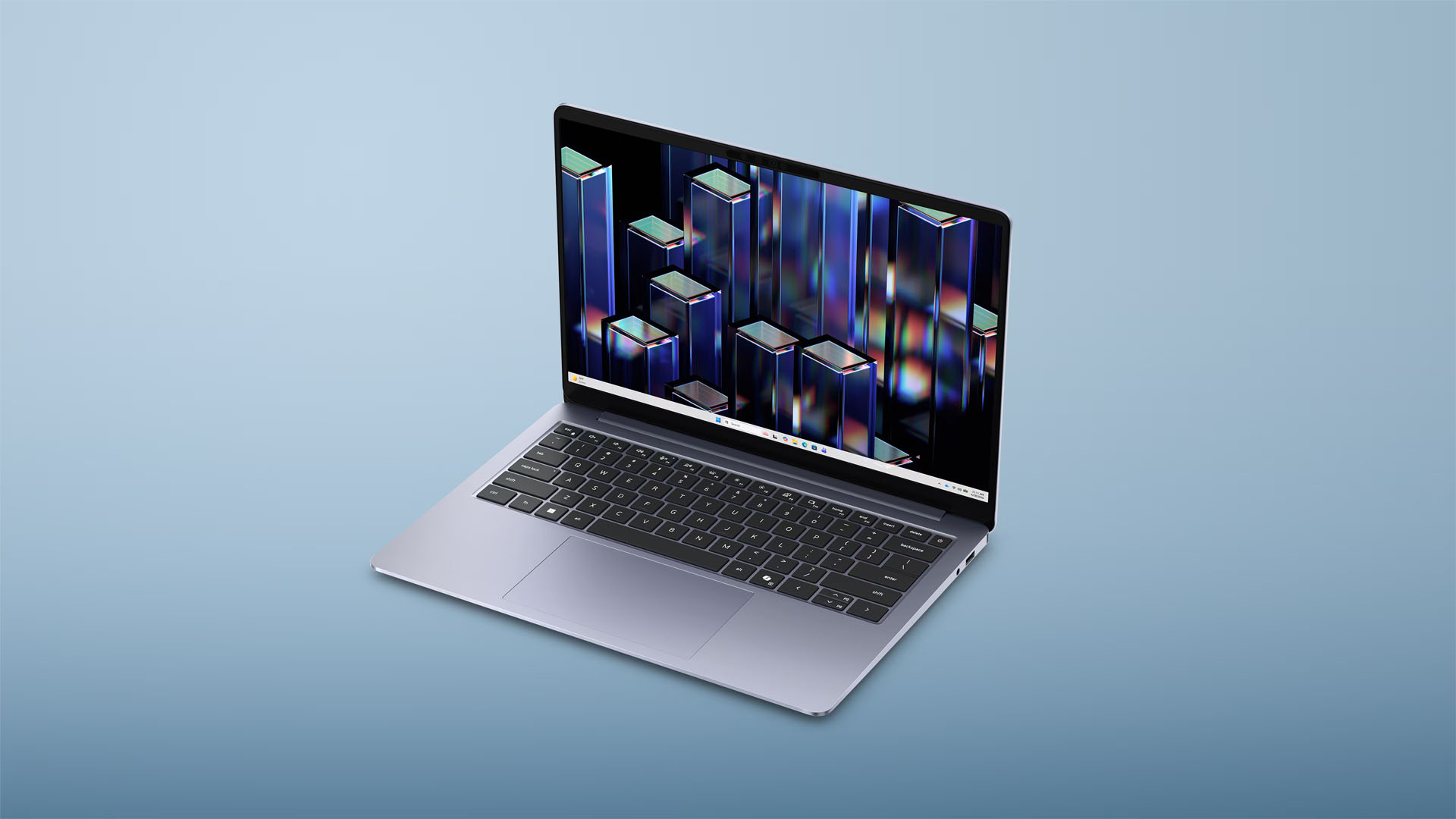
Dell has introduced a new Dell 14S at IFA 2026, expanding its consumer notebook lineup with a lightweight Windows laptop designed specifically for students, young adults and buyers looking for a more affordable alternative to premium ultraportables. The system combines Intel Core Series 3 processors, an aluminum chassis, up to 21 hours of claimed streaming battery life and multiple display options, with Dell directly positioning it as a more accessible companion to the new XPS 13 and an alternative to Apple's MacBook Neo. According to Dell, North American availability begins this fall, although final pricing has not yet been announced.
The Dell 14S measures just 13.5 mm thick and weighs approximately 1.15 kg, placing it slightly above the 1 kg XPS 13 while remaining extremely portable for a full aluminum Windows notebook. Dell will offer the machine in 4 colors called Linen, Dusty Rose, Washed Denim and Velvet Green, giving the company a considerably more colorful design strategy than its traditional XPS lineup. The focus appears to be clear: Dell wants the 14S to feel like a premium device even though it is being positioned below the XPS family.
Intel's Core Series 3, previously known as Wildcat Lake, provides the processing platform. Dell confirms Core 5 and Core 7 configurations, with the Core 5 320 appearing in its battery testing. The architecture represents Intel's more affordable branch of its latest mobile processor family, giving manufacturers access to newer CPU technology without requiring the higher prices associated with Core Ultra systems.
Dell will offer 8 GB or up to 16 GB of LPDDR5X memory, depending on configuration. The memory is not upgradeable, which makes choosing the appropriate capacity particularly important for buyers expecting to keep the laptop throughout several years of school or work. With Windows 11 and modern browsers becoming increasingly memory intensive, the 16 GB configuration will likely be considerably more attractive for long term use even if the 8 GB version allows Dell to reach a lower starting price.
The display comes in 2 main configurations. Dell describes a 2K 60 Hz panel focused on battery life and value, alongside a higher resolution 2.8K 120 Hz display for users prioritizing image quality and smoother motion. The screens use a taller 16:10 aspect ratio, giving additional vertical workspace for documents, websites and productivity compared with traditional 16:9 notebook panels. Dell says the higher end option also provides stronger brightness and color performance.
Battery life is one of Dell's biggest selling points. The 14S introduces what the company describes as its first 750ED PNCM high energy density battery, engineered to provide more capacity without substantially increasing weight or chassis size. Dell claims up to 21 hours of Netflix streaming from a Core 5 320 configuration with 8 GB of memory and 256 GB of storage. The test was performed at 150 nit display brightness, meaning real world battery life will vary substantially according to brightness, multitasking, connectivity and workload.
Connectivity includes 2 USB Type C ports with Power Delivery, HDMI and a 3.5 mm audio connection, while wireless networking reaches Wi Fi 6E. The laptop also includes an FHD webcam, dual microphones, stereo speakers and Windows Hello authentication. Compared with the XPS 13, the 14S gives up features including Wi Fi 7 and some of Dell's more advanced display and platform options, but retains most of the connectivity required for everyday productivity.

Pricing will ultimately determine whether Dell can genuinely compete with Apple. The MacBook Neo currently starts at $699 in the United States, while the base configuration includes an A18 Pro processor, 8 GB of unified memory and 256 GB of storage. Dell has not announced a starting price for the new 14S, but company executives say it will be positioned as a complementary product to the XPS 13 and designed to remain accessible to students. Apple's MacBook Neo also starts at ₩1,190,000 in South Korea, demonstrating relatively controlled regional pricing compared with Dell.
That regional comparison could become one of Dell's biggest challenges. The new 2026 XPS 13 starts at $699.99 in the United States, with students currently able to purchase selected configurations for $599. The same XPS 13 family starts at ₩2,034,890 in South Korea, including VAT, despite the Korean base configuration offering only 8 GB of LPDDR5X and a 256 GB SSD. Dell's United States base configuration currently includes 512 GB of storage at the same $699.99 price.
That means the Korean XPS 13 costs approximately 71% more than the Korean MacBook Neo, while Dell and Apple are separated by almost nothing at their headline US prices. Exchange rates, VAT, logistics and regional product configurations can explain part of the difference, but the size of the gap demonstrates why Dell's promise to make the 14S accessible globally will depend heavily on local pricing rather than simply its US MSRP.
The timing is also challenging because memory prices continue placing pressure on affordable PCs. Manufacturers attempting to build thin laptops around 8 GB or 16 GB of LPDDR5X now have less flexibility in their bill of materials, while Apple benefits from enormous purchasing scale and tighter control over its processor, operating system and hardware ecosystem. Dell will therefore need the 14S to maintain its value proposition across different markets rather than functioning as a MacBook Neo competitor only in countries where Dell can aggressively subsidize or discount the system.
The Dell 14S makes much more sense than trying to turn the XPS 13 into Dell's universal budget MacBook Neo competitor. The XPS name still carries premium expectations, while the 14S gives Dell room to simplify specifications, offer more colors and focus directly on students without weakening its flagship positioning.
The hardware formula looks promising. A 1.15 kg aluminum chassis, Wildcat Lake, a 120 Hz display option and up to 21 hours of claimed streaming battery life cover most of what mainstream buyers actually care about.
Pricing is the unresolved problem. Dell can challenge the MacBook Neo at around $700 in the United States, but the XPS 13 demonstrates how dramatically that equation can change internationally. If Dell genuinely wants the 14S to become a global student laptop rather than a region specific value product, maintaining competitive pricing in markets such as South Korea will matter just as much as the hardware itself.
Would you choose a Dell 14S over the MacBook Neo if both were priced around $700, or does Apple's hardware and software integration make the MacBook more attractive at the same price?
