
DeepSeek Founder Says NVIDIA Is Digging Its Own Grave as Huawei Narrows AI Compute Gap
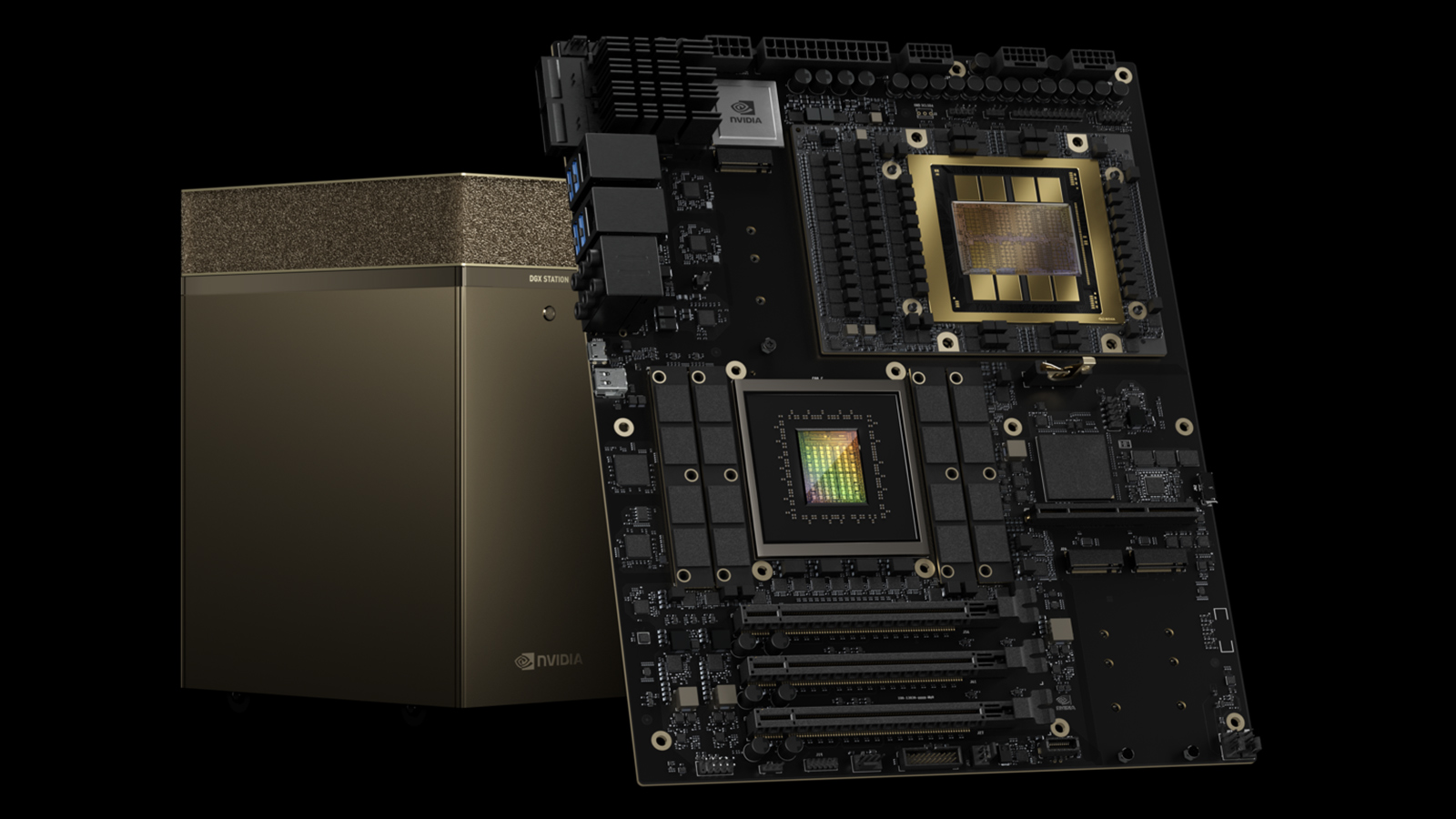
DeepSeek founder Liang Wenfeng reportedly believes NVIDIA is accelerating the development of competing Chinese AI hardware, even though Huawei currently requires approximately 4 Ascend 950 accelerators to match the computing capability of 1 NVIDIA GB300 GPU.
The remarks emerged from a leaked transcript of an investor meeting reportedly held on May 20 and published online in July. The document was produced from an audio recording using automated transcription and has not been confirmed by Liang or DeepSeek, meaning its technical figures should be treated as reported estimates rather than official company disclosures.
"I think NVIDIA is digging its own grave."
Quote by: Liang Wenfeng
According to the transcript, Liang believes Huawei’s Atlas 950 SuperPoD can perform the same categories of training and inference workloads as NVIDIA GB200 and GB300 rack systems. However, he acknowledged that Huawei remains approximately 2 years behind NVIDIA at the individual accelerator level and may require 4 Ascend 950 units to replace 1 GB300 GPU.
"4 Huawei GPUs equal 1 NVIDIA GPU, and it is 2 years behind."
Quote by: Liang Wenfeng
Liang argued that the higher hardware requirement would still be commercially acceptable if Huawei can provide sufficient capacity and a functional software ecosystem. He suggested that even costs reaching 2 or 3 times the NVIDIA alternative could be tolerated because access to advanced NVIDIA hardware remains severely restricted for Chinese companies.
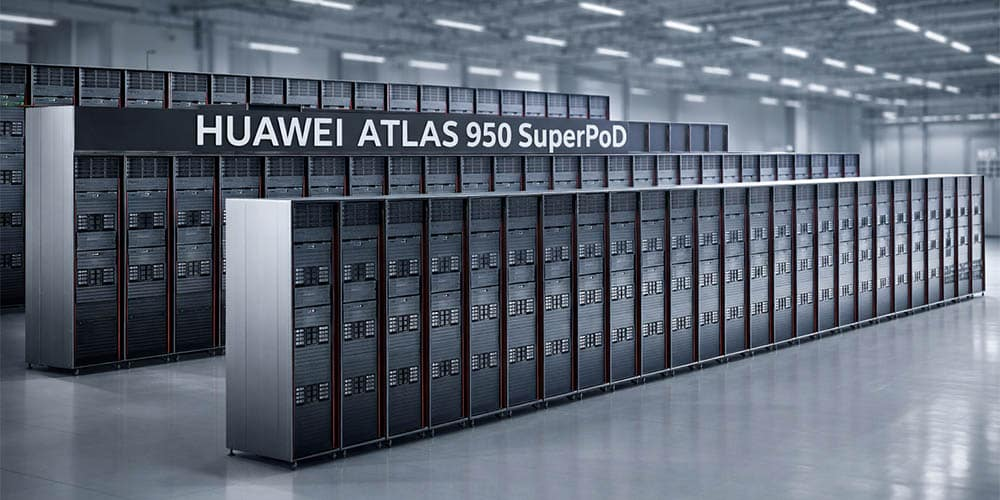
Huawei describes the Atlas 950 SuperPoD as a large scale computing platform that integrates 64 NPUs per cabinet and can expand to 8,192 NPUs through its UnifiedBus interconnect. NVIDIA’s GB300 NVL72 combines 72 Blackwell Ultra GPUs, 36 Grace CPUs, 20 TB of GPU memory, and 130 TB/s of NVLink bandwidth. Directly comparing the platforms remains difficult because rack performance depends on workload type, software optimization, power consumption, networking, and system utilization.
Liang reportedly said DeepSeek has received an allocation of approximately 16,000 Huawei 950 accelerators, equivalent in his estimate to around 4,000 NVIDIA B Series GPUs. He said this capacity would be sufficient to support DeepSeek’s current generation of models and improve the Huawei software ecosystem, but not enough to train its next major frontier model.
The transcript also claims that DeepSeek currently controls computing resources equivalent to approximately 20,000 NVIDIA H Series accelerators, with much of that capacity arriving during the previous 2 months. Liang estimated that training a model comparable in scale to the largest American systems could require approximately 50,000 GB300 GPUs or 200,000 Huawei 950 accelerators, excluding the additional resources required for research and experimentation.
Liang nevertheless expressed optimism that China can reduce its dependence on CUDA through hardware aware software development. DeepSeek has been developing TileLang and other compiler technologies designed to move AI workloads between different accelerator architectures. The company’s recent models have also been optimized for Huawei hardware, as coverage of Huawei’s growing position in China’s AI chip market.
DeepSeek is also increasing its focus on high quality data annotation. Liang reportedly said that approximately half of the company’s core researchers are participating in annotation work, with time and expertise representing greater limitations than capital or accelerator availability. OpenAI and Anthropic began developing these processes earlier, giving American laboratories an advantage that cannot be eliminated simply by purchasing more hardware.
Liang’s comments are less a declaration that Huawei has already defeated NVIDIA and more an argument that restricted access is forcing Chinese developers to build alternatives. Requiring 4 accelerators to match 1 GB300 creates substantial challenges involving power consumption, cooling, rack space, networking, and operating costs.
The greater threat to NVIDIA is therefore not immediate performance parity. It is the possibility that Chinese model developers build software, compilers, and infrastructure around domestic hardware until CUDA is no longer essential inside one of the world’s largest AI markets.
NVIDIA still holds a considerable advantage in performance, efficiency, software maturity, and deployment scale. However, every unavailable NVIDIA accelerator gives Huawei another opportunity to improve its ecosystem and secure long term developer support.
Can Huawei overcome its performance and efficiency gap through massive SuperPoD systems, or will NVIDIA maintain its AI infrastructure advantage?
