
Cerebras CS-4 Claims Up to 30 Times Faster AI Inference Than GPU Systems
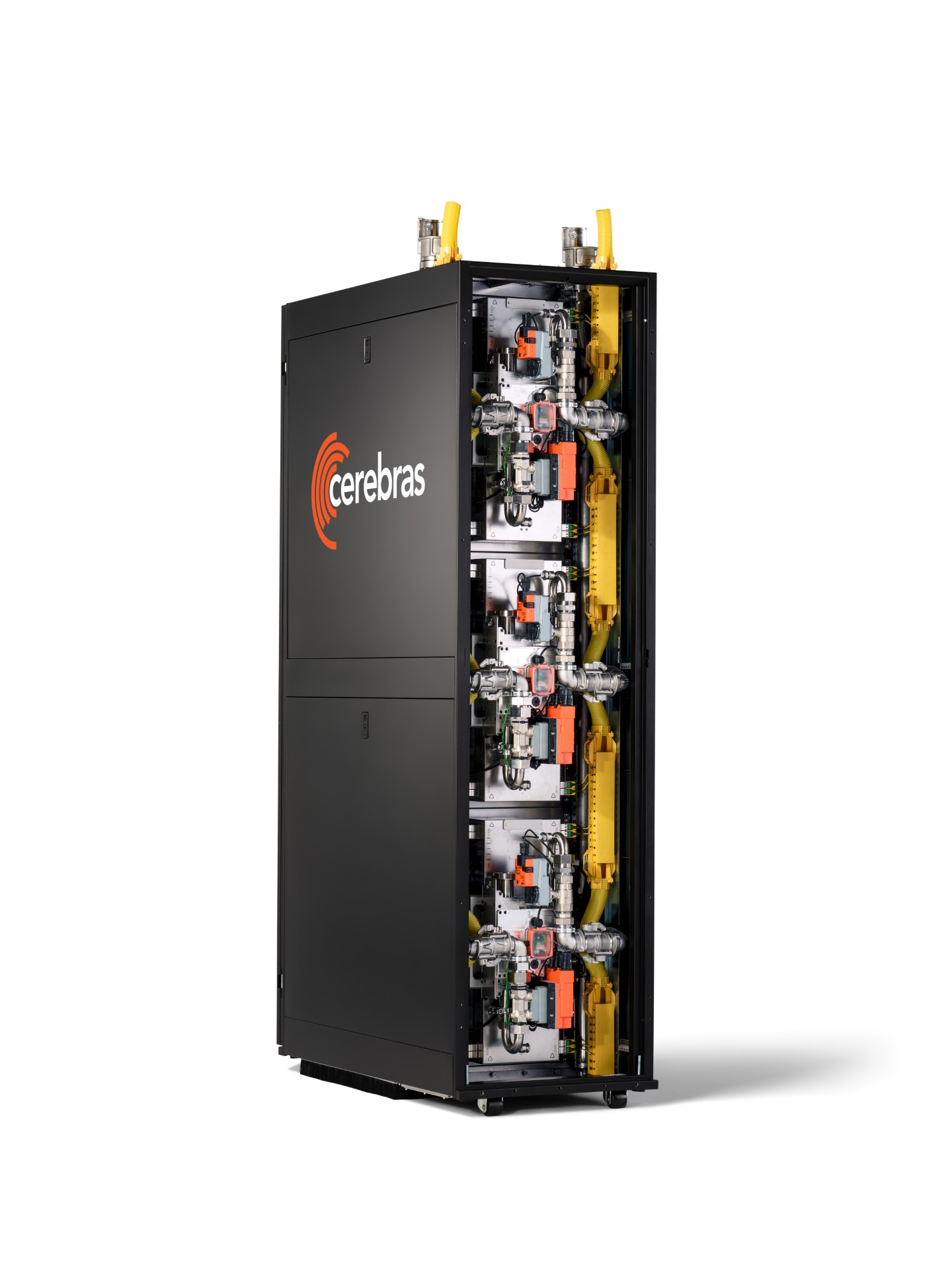
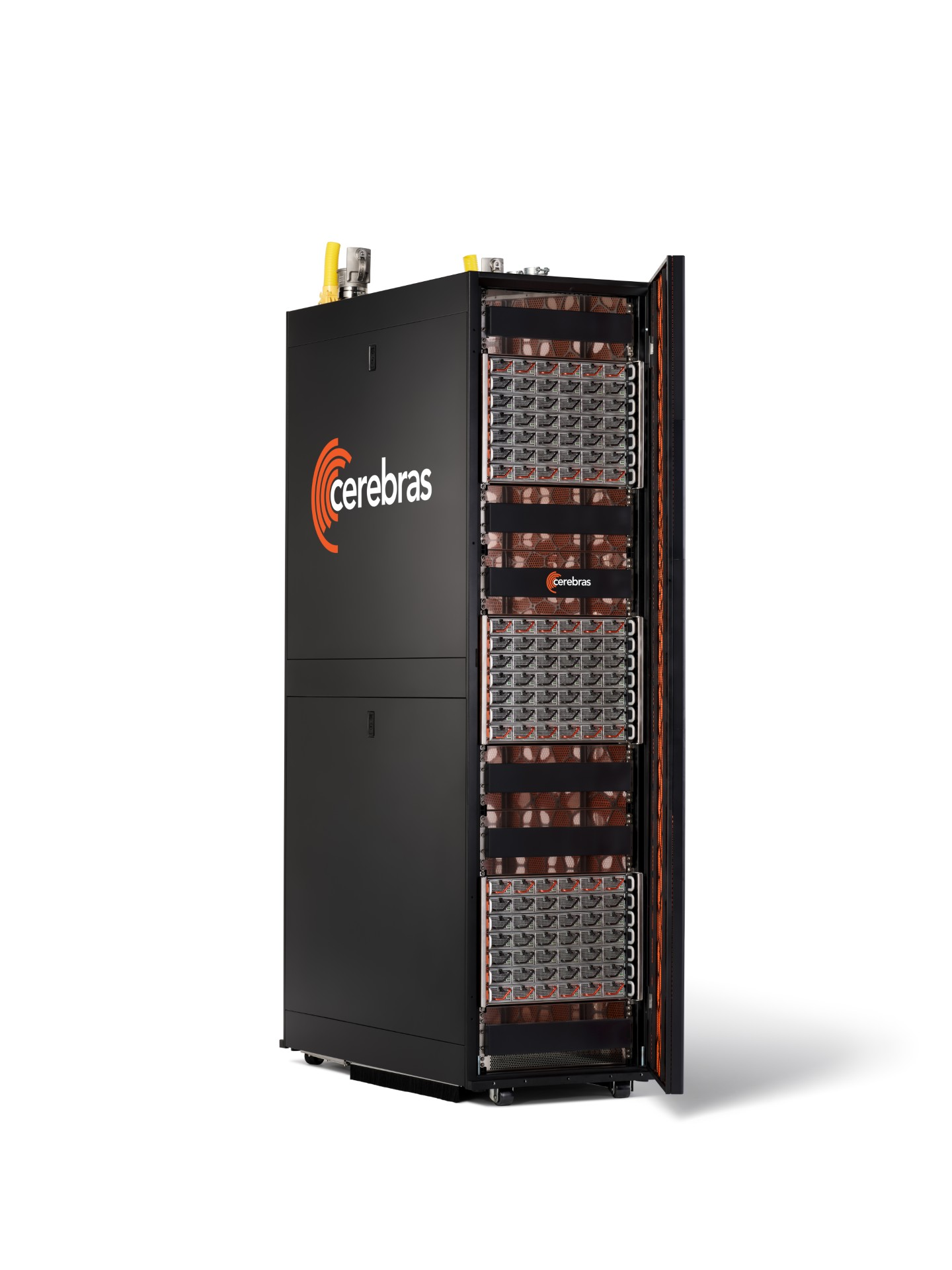
Cerebras has unveiled the CS-4, its fourth generation wafer scale AI system, claiming inference performance up to 30 times faster than GPU based systems while significantly increasing compute density, memory bandwidth, and deployment efficiency. Built around 3 new WSE 3 Turbo processors inside a single rack, CS-4 is designed specifically for the increasingly important inference stage of artificial intelligence, where response latency and token generation speed can directly determine how useful AI agents and interactive models feel.
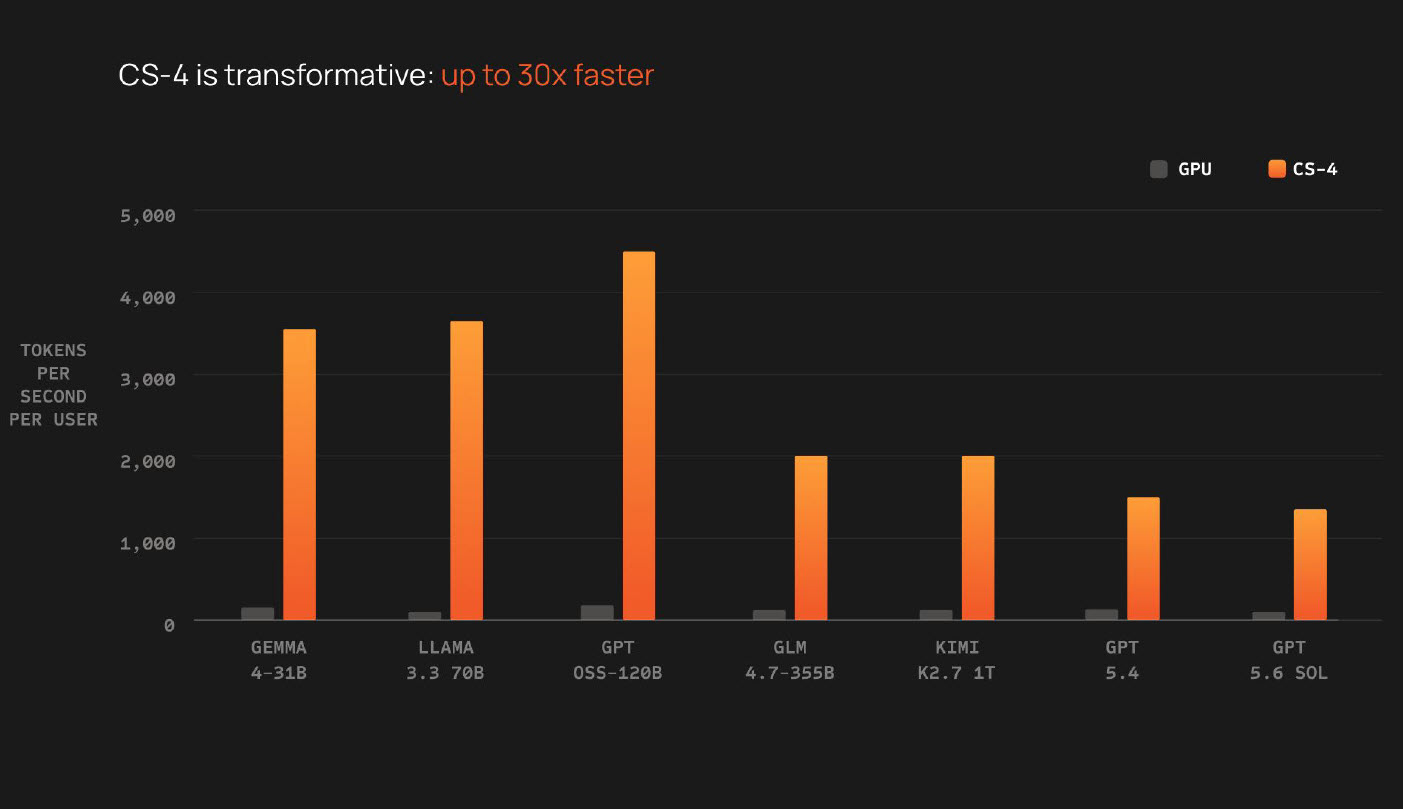
The headline demonstration uses OpenAI's GPT OSS 120B model. Cerebras says CS-4 can exceed 4,400 tokens per second per user, with the company describing the result as up to 30 times faster than the GPU solutions used for comparison. In practical terms, the output Cerebras illustrated generating in approximately 1 second required around 30 seconds on the compared GPU system. The comparison should still be treated carefully because Cerebras says its figures combine Artificial Analysis data with internal benchmarking, and performance can vary considerably according to model, workload, configuration, concurrency, and software.
"In AI, speed is productivity."
— Quote by: Andrew Feldman, Cerebras CEO and cofounder
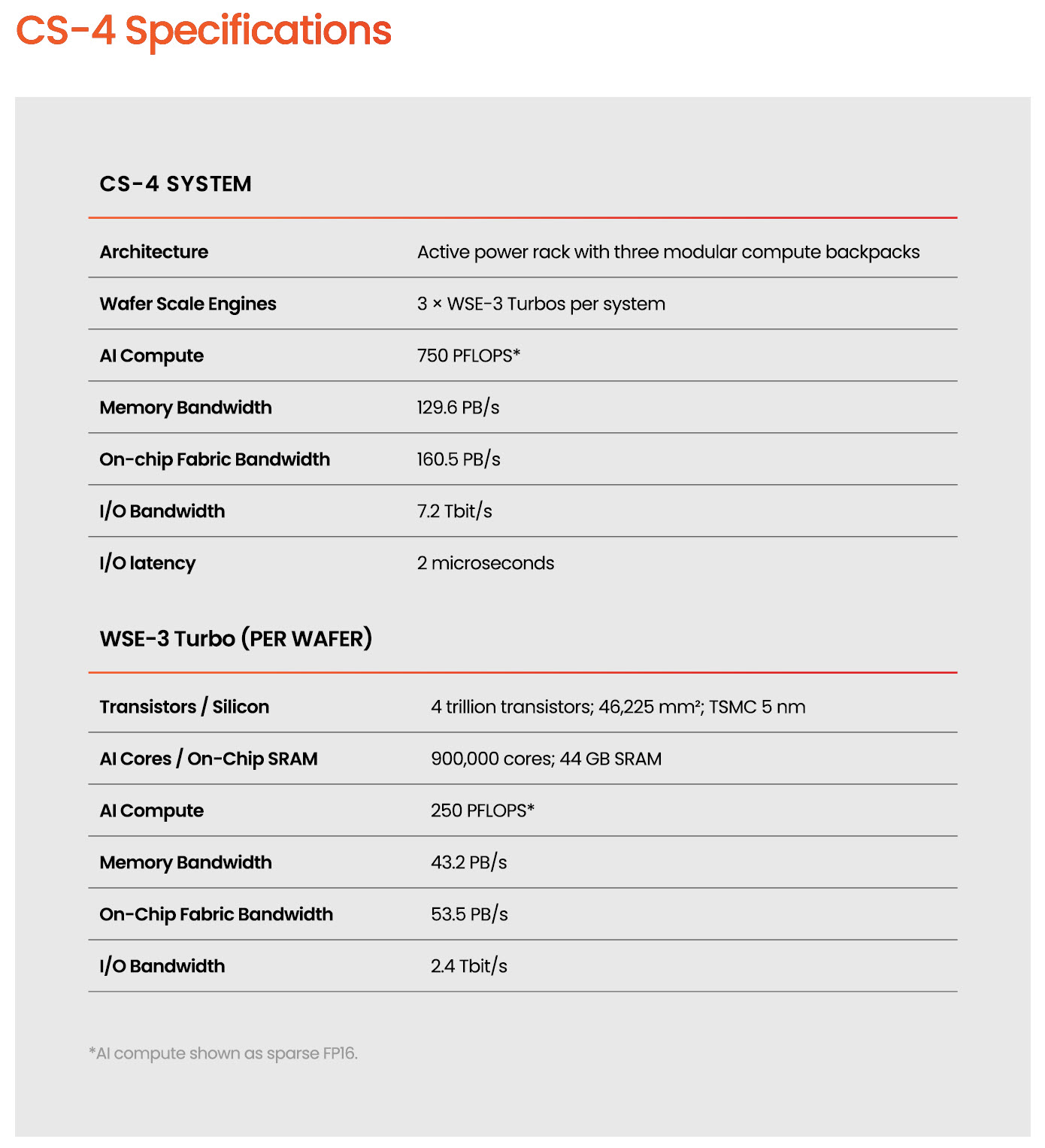
At the center of CS-4 is the WSE 3 Turbo, an upgraded version of Cerebras's massive wafer scale processor. Each chip contains 4 trillion transistors, 900,000 AI optimized cores, 44 GB of integrated SRAM, and 46,225 mm² of silicon. Cerebras has doubled peak AI compute to as much as 250 PFLOPS per wafer with sparsity while memory bandwidth reaches 43.2 PB/s. The processor also provides approximately 53.5 PB/s of fabric bandwidth and 2.4 Tb/s of external I O bandwidth.
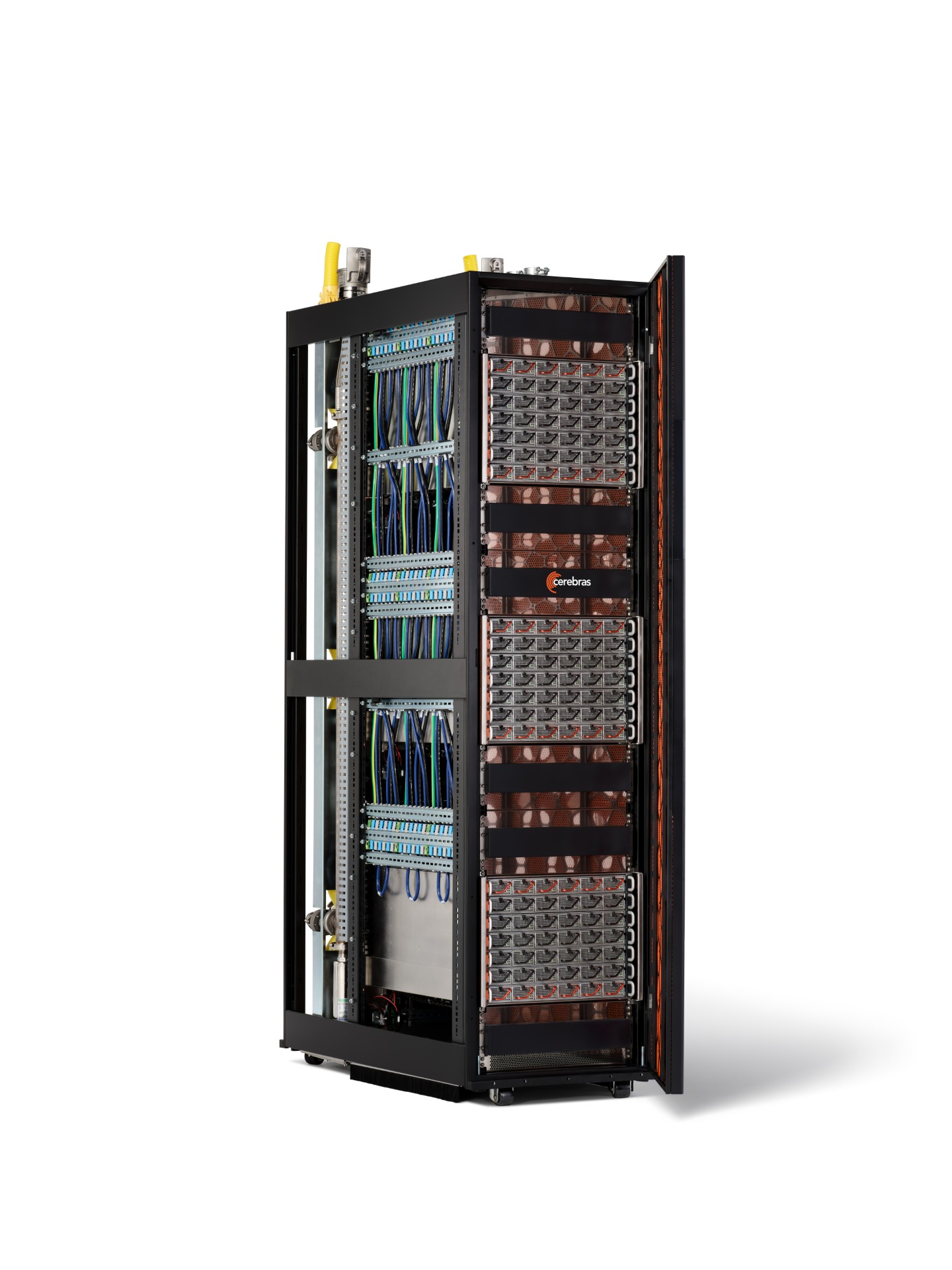
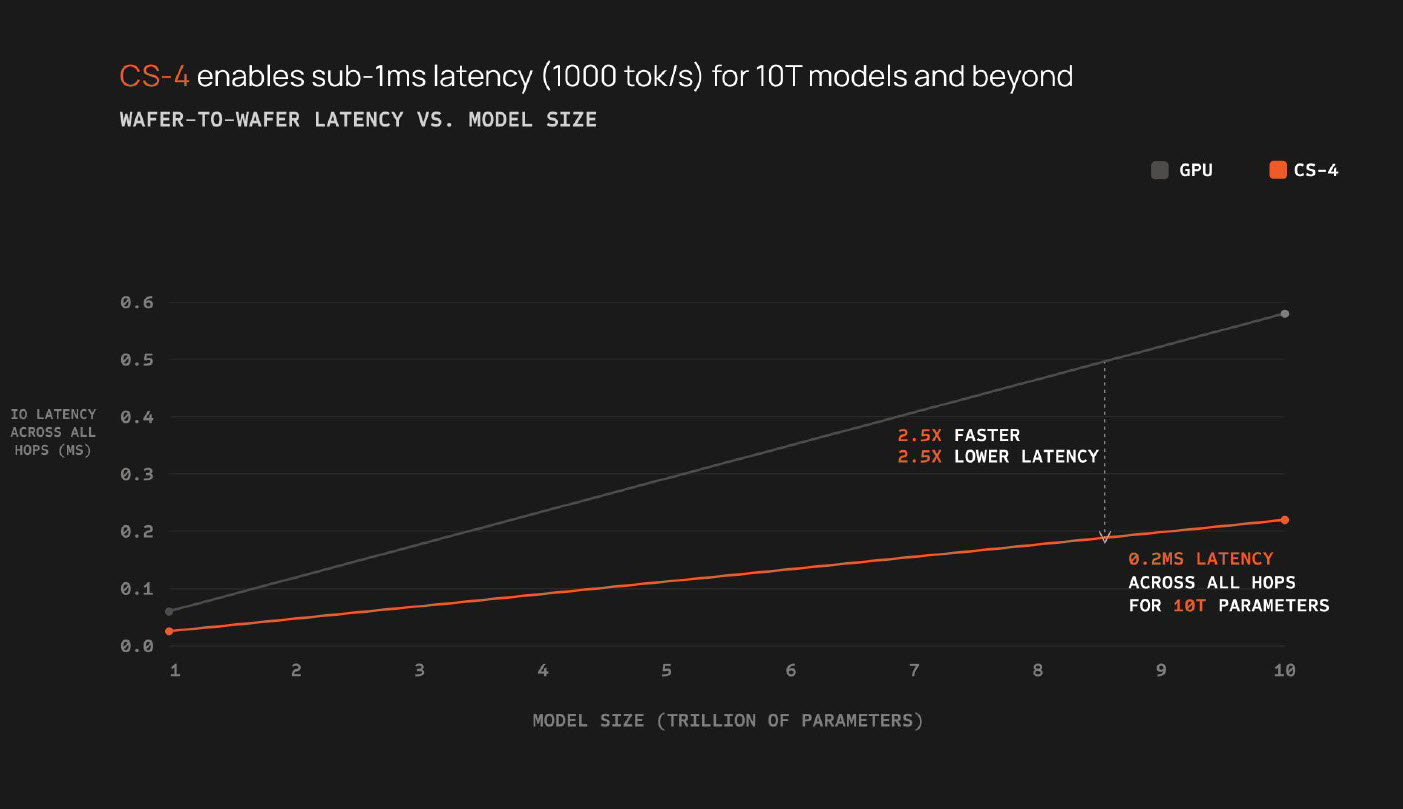
A complete CS-4 rack contains 3 WSE 3 Turbo processors, giving the system up to 750 PFLOPS of AI compute, 129.6 PB/s of SRAM bandwidth, and 7.2 Tb/s of I O bandwidth. Cerebras says the system can also reduce communication latency between wafers to approximately 2 microseconds, allowing multiple systems to work together while maintaining high token generation speeds.
That interconnect performance becomes particularly important as model sizes continue increasing. Cerebras claims CS-4 can generate more than 1,000 tokens per second on models exceeding 10 trillion parameters, while its architecture is designed to scale toward models above 50 trillion parameters. The 1,000 token figure for models above 10 trillion parameters is based on extrapolation from internal benchmarking rather than testing against a currently available 10 trillion parameter production model, making it more of an architectural projection than an independently demonstrated result.
The reason Cerebras can pursue this approach is fundamentally different from conventional GPU infrastructure. GPUs typically rely heavily on external HBM, requiring model data to move between memory and the processor through a comparatively constrained interface. Cerebras places 44 GB of SRAM directly onto each wafer scale processor, giving the WSE 3 Turbo enormous local bandwidth and reducing the amount of data movement required during inference. The architecture is particularly suited to the decode stage, where model weights must repeatedly be accessed as each new token is generated.
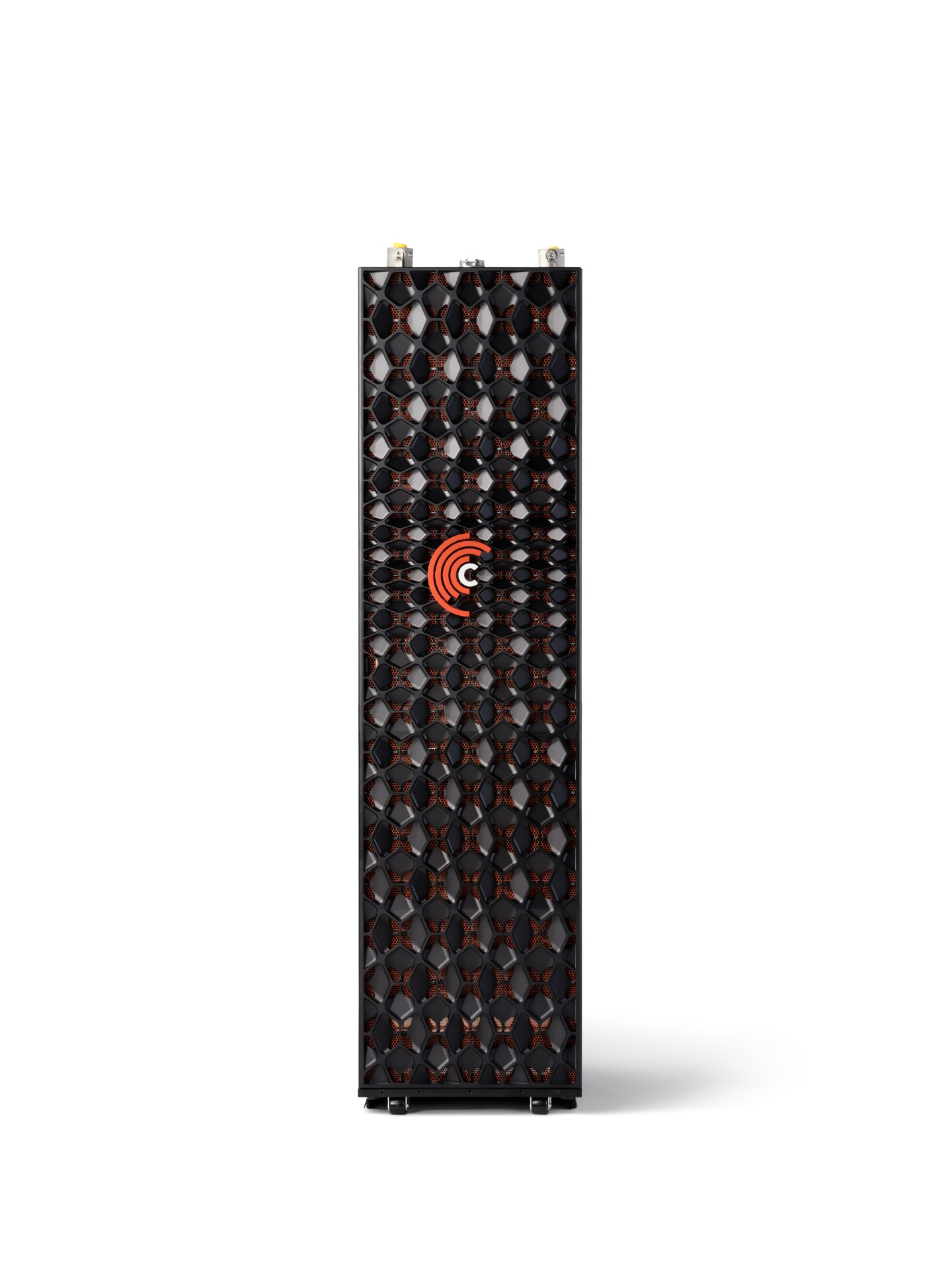
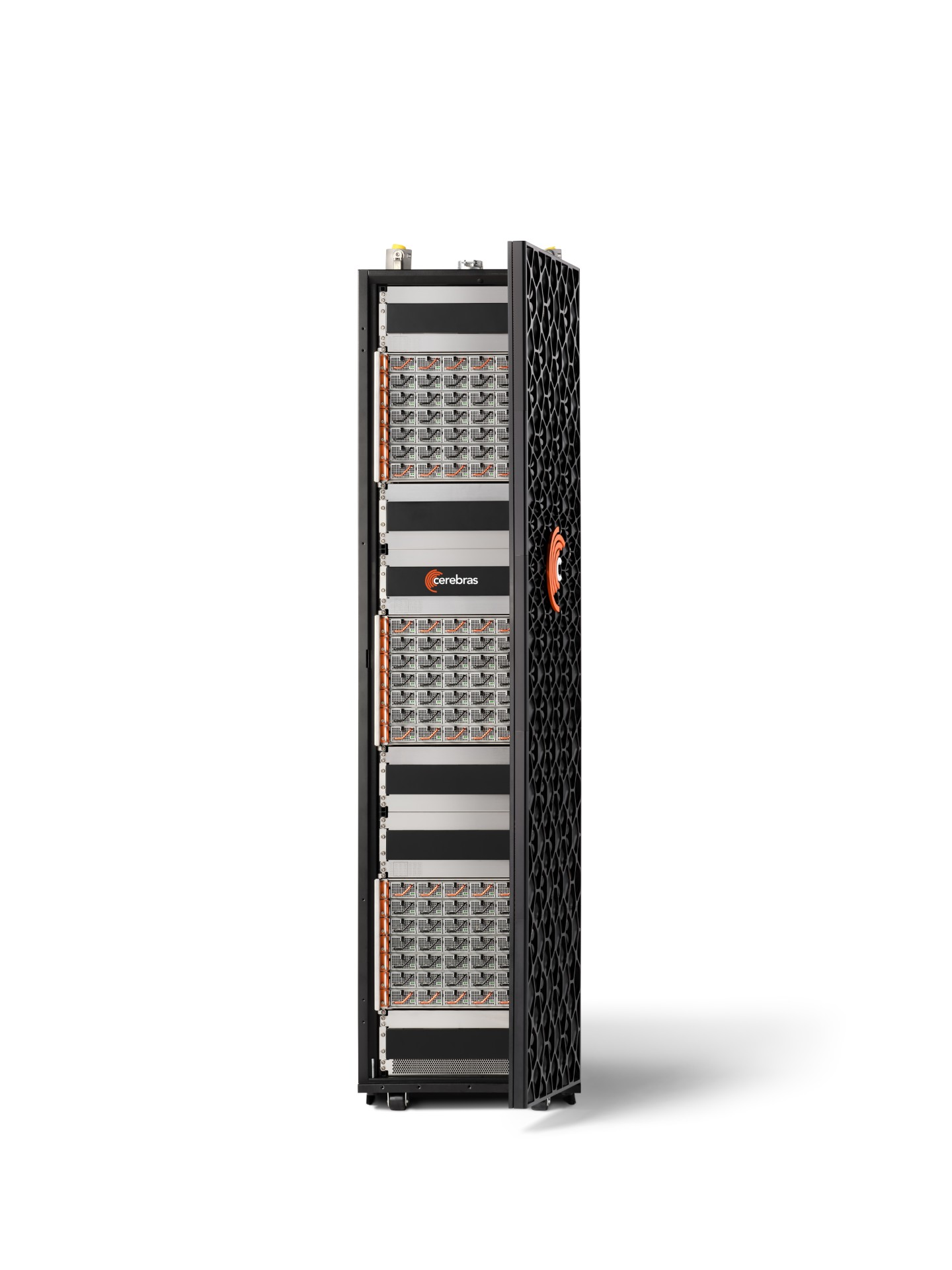
CS-4 also introduces Cerebras's new Nexus Platform Architecture, which reorganizes the rack around separate compute, power, and I O modules. Each wafer is installed inside a removable Wafer Scale Backpack containing direct liquid cooling, power conversion, control electronics, and high speed connectivity. Cerebras says the new design uses 50% fewer components than its previous generation and increases manufacturing automation by 60%, reducing deployment time from days to hours.
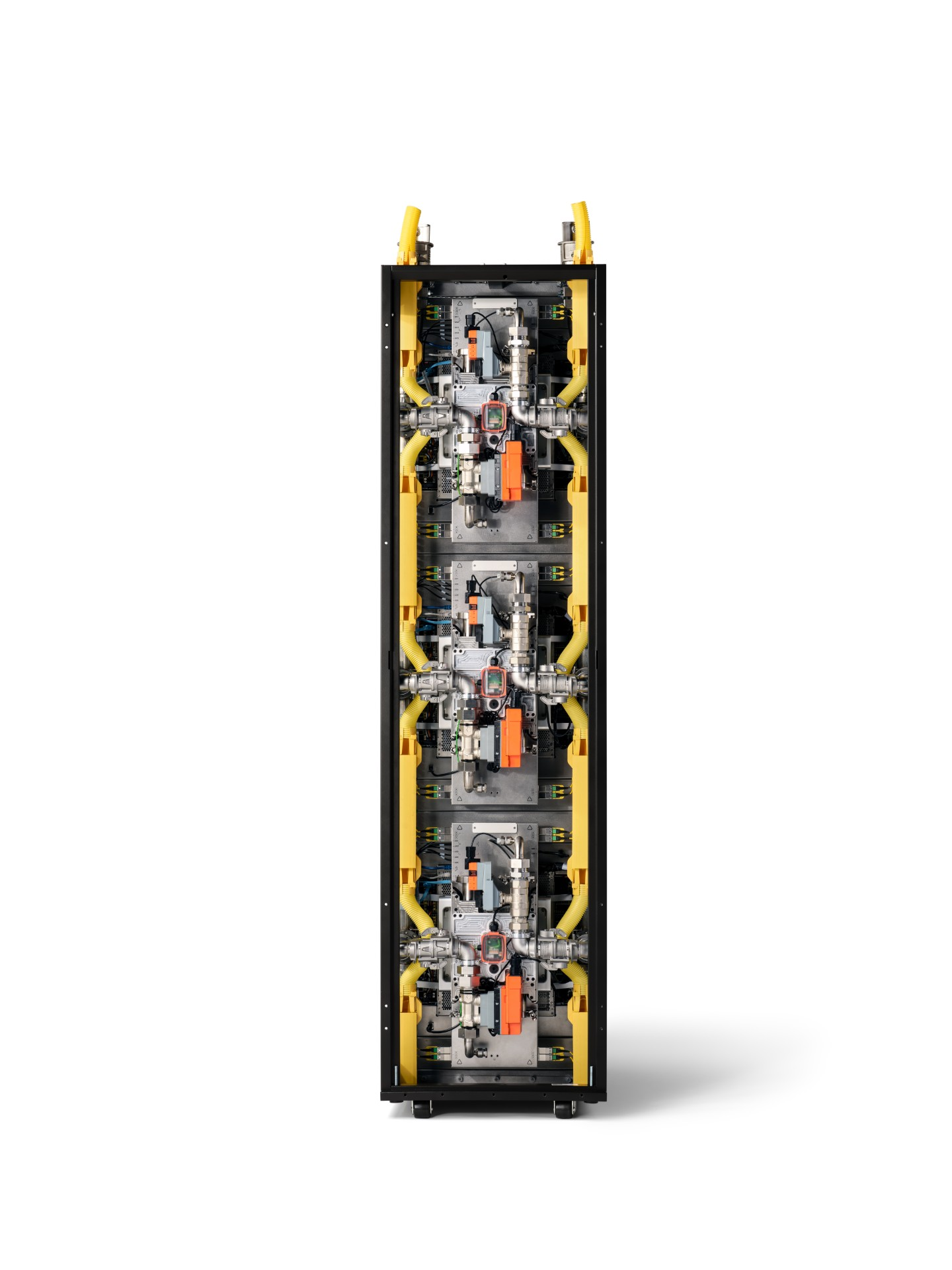
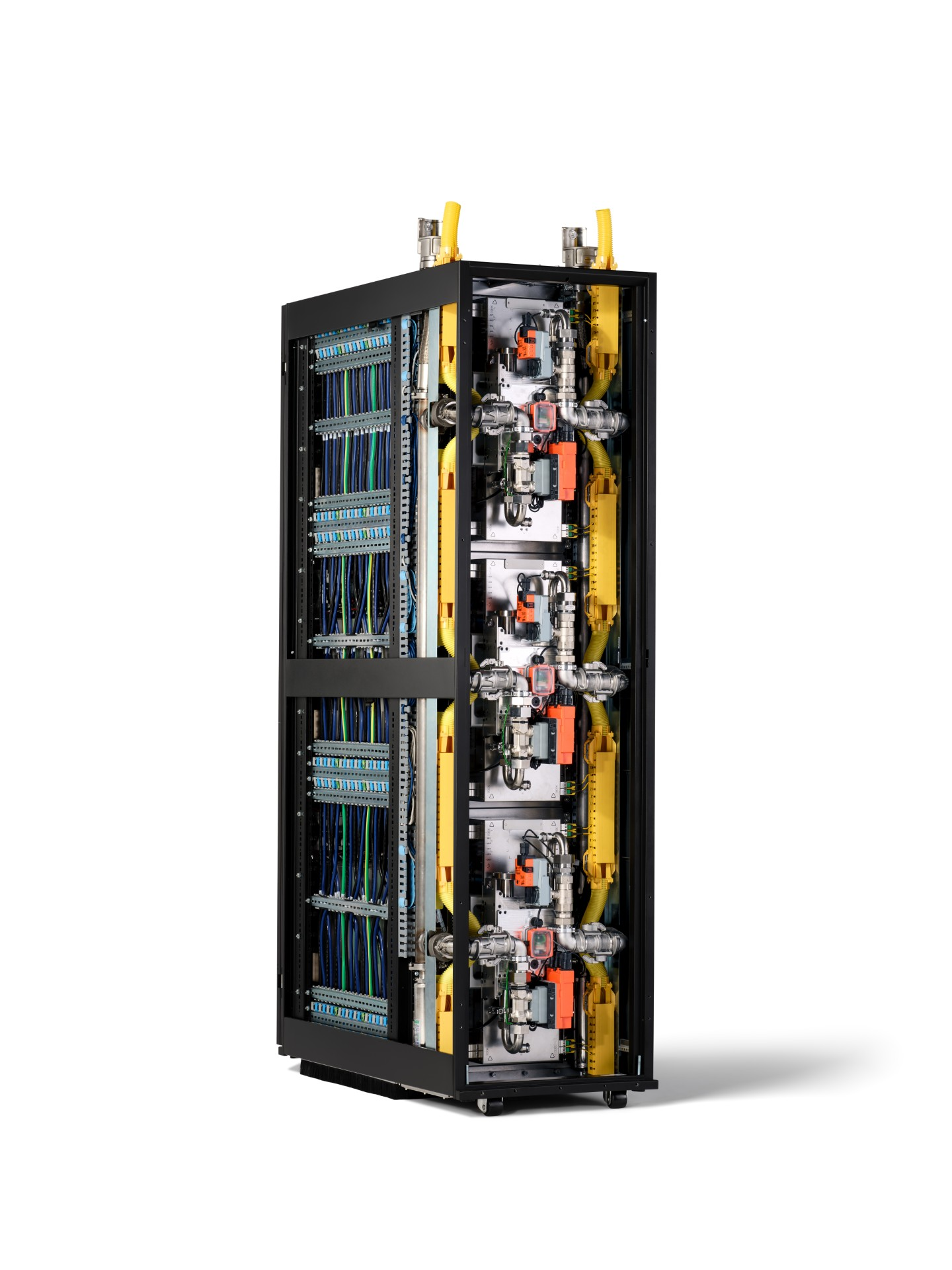
Power delivery has also been redesigned. Cerebras moves power conversion significantly closer to the processor, reducing losses between the power system and wafer. This allows approximately 2 times more power to reach the WSE 3 Turbo and enables higher operating frequencies without moving to a newer manufacturing node. Reuters confirms that the processor remains manufactured using TSMC's 5 nm process, showing that much of this generation's performance improvement comes from architecture, frequency, power delivery, cooling, and system integration rather than a process shrink.
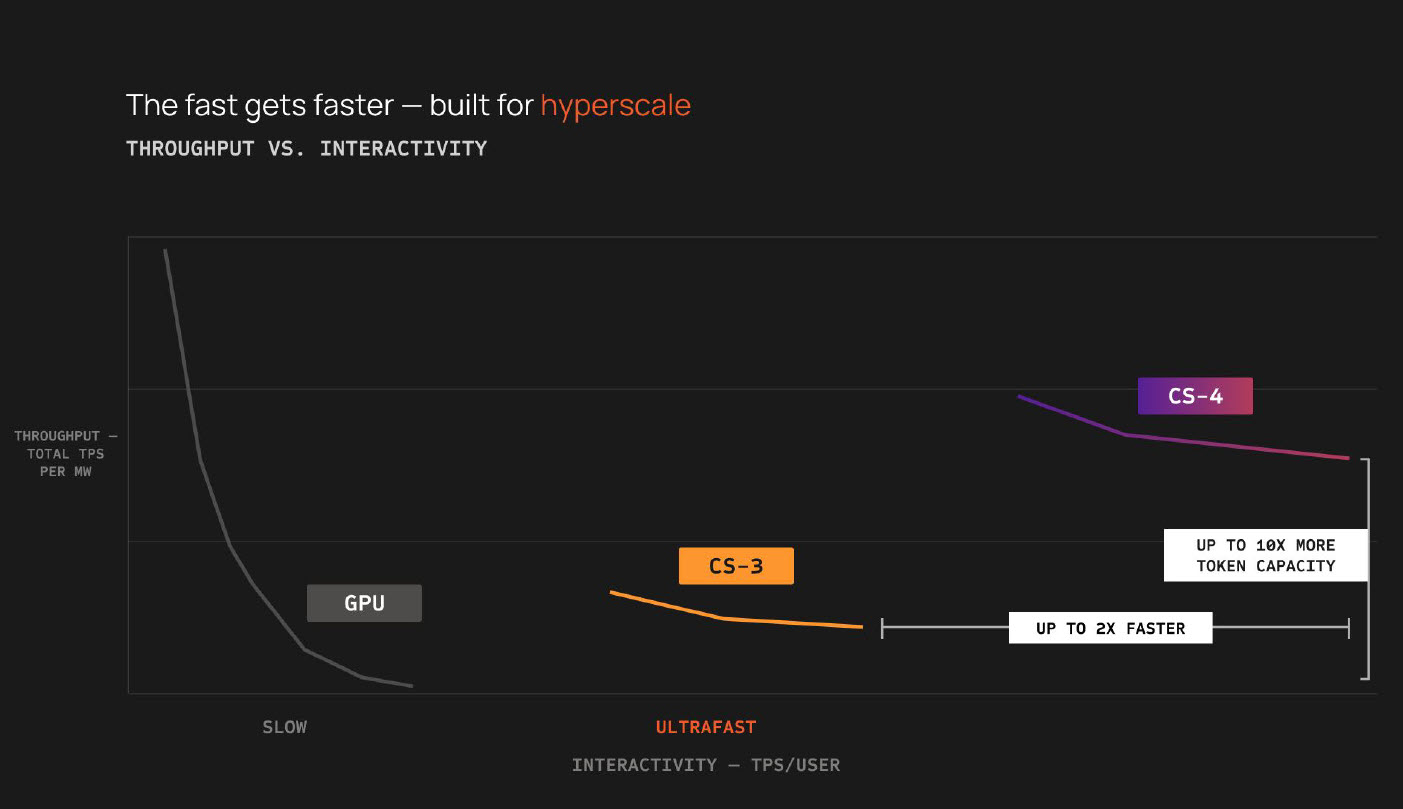
Cerebras claims CS-4 can deliver up to 10 times more throughput per watt than CS-3 while reaching up to twice its inference speed. These figures remain company supplied benchmarks and projections, so production deployments will provide a clearer picture of performance across different models and operating conditions.
The platform is also designed around disaggregated inference, separating prompt processing from token generation. A GPU or dedicated ASIC can process the initial prompt and context before transferring the resulting model state to Cerebras for fast decoding. Cerebras specifically identifies AMD Helios and AWS Trainium as compatible complementary platforms for this model.
That approach connects directly with the recently announced AMD partnership. Cerebras and AMD Helios inference development, AMD plans to combine Helios infrastructure with Cerebras wafer scale hardware so AMD accelerators can handle high throughput prompt processing while Cerebras focuses on latency sensitive token generation. OpenAI researcher Jeffrey Wang has also praised the inference speed of Cerebras hardware already used internally at OpenAI.
Cerebras expects the first CS-4 shipments to begin during Q3 2026. The company is also planning another generation of its wafer scale processor and server architecture for 2027 as it works toward deploying approximately 600 MW of compute capacity by the end of 2027.
The most important number here is not necessarily 750 PFLOPS. It is 4,400 tokens per second.
AI infrastructure is entering a stage where latency is becoming just as important as total compute. A model that can reason, verify an answer, use tools, inspect the result, and try again within the same time another system needs for a single response creates completely different possibilities for coding agents, search, robotics, research, and real time applications.
Cerebras is also demonstrating that challenging NVIDIA does not necessarily require building another conventional GPU. Its advantage comes from attacking the memory movement problem with an enormous processor and massive integrated SRAM bandwidth.
The 30 times comparison remains a vendor claim and will need continued independent testing, particularly under high concurrency and production workloads. But Cerebras is already showing that inference architecture is becoming much more diverse. GPUs may remain the dominant foundation of AI infrastructure, while specialized systems such as CS-4 increasingly handle the parts of the workload where speed matters most.
Could ultra fast token generation from systems such as Cerebras CS-4 become more important than raw GPU compute as AI shifts toward reasoning agents and real time applications?
