
Beelink Introduces 3 Wildcat Lake Mini PCs With Intel Core 3 304, DDR5 Memory, Dual M.2 Storage, and Up to Dual LAN
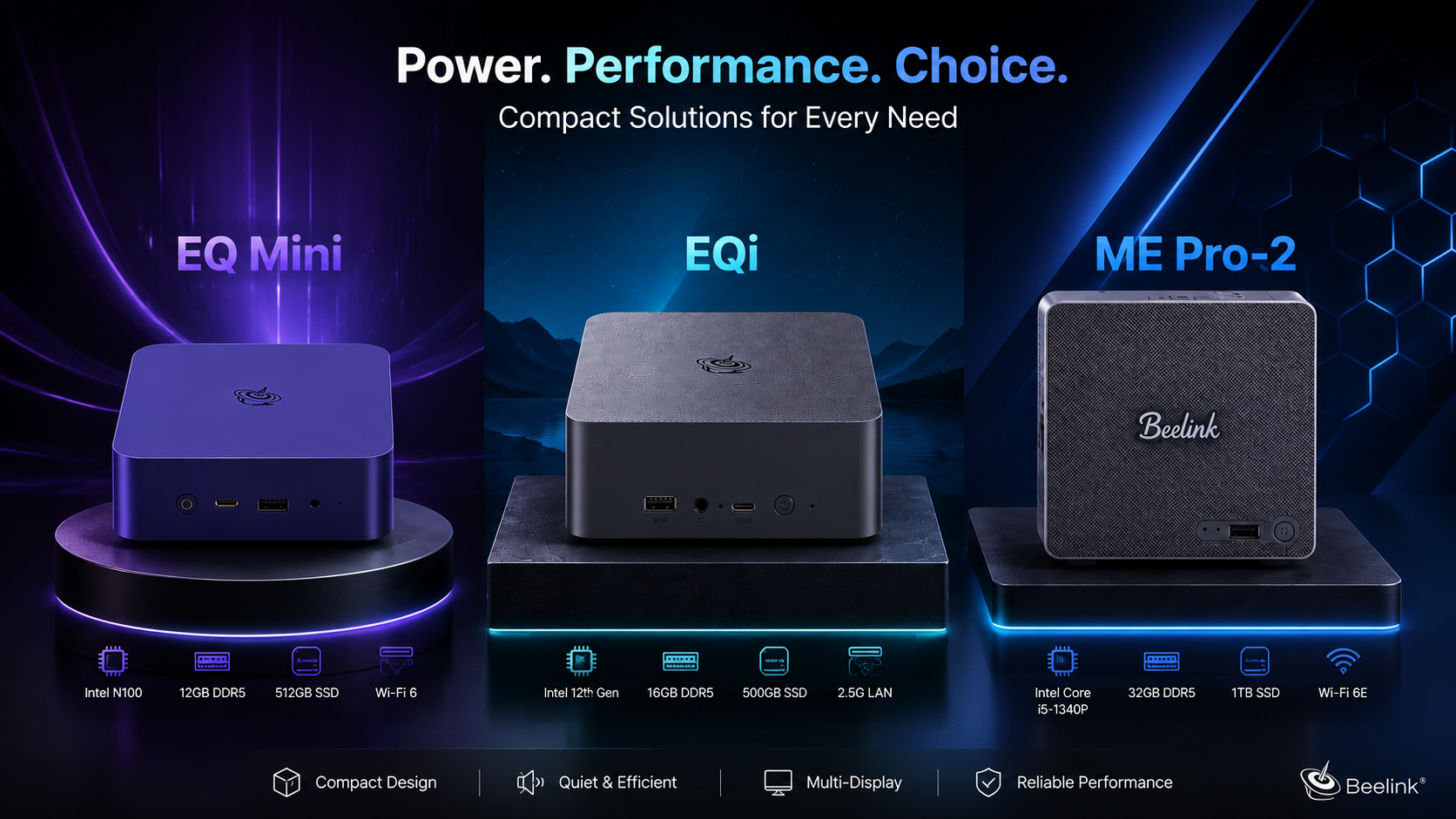
Beelink is preparing a new lineup of compact mini PCs powered by Intel’s entry level Wildcat Lake platform, with 3 models appearing ahead of wider availability. According to a report shared by Victor M on X, the upcoming systems include the Beelink EQ Mini, EQi, and ME Pro 2, all built around the same Intel Core 3 304 processor.
The Intel Core 3 304 is positioned as the slowest Wildcat Lake CPU in this lineup, using a 1+4 core configuration. This includes 1 Cougar Cove Performance core and 4 Darkmont LP E cores, making it a clear fit for lightweight computing, basic productivity, media playback, compact office deployments, and entry level home server style setups rather than demanding gaming or workstation workloads.
Beelink announces 3 Wildcat Lake mini PCs pic.twitter.com/wIpntI5719
— 孤城Hardware (@realVictor_M) May 27, 2026
Intel Wildcat Lake is expected to appear in entry level laptops, but Beelink’s upcoming systems show how the platform can also serve the mini PC market. These types of small form factor systems are increasingly popular for users who want quiet, efficient, low footprint machines for everyday work, network tasks, media centers, or lightweight server use. With Beelink offering 3 different configurations, the company appears to be targeting multiple compact computing use cases from basic desktop replacement to storage focused NAS style deployment.
The smallest system in the lineup is the EQ Mini, with a compact chassis measuring 112 x 112 x 37 mm. Despite its small size, it includes LPDDR5 memory, UFS 3.1 storage, dual M.2 PCIe 4.0 SSD slots, dual USB4 ports, and a single 10 GbE LAN port. The EQ Mini is powered by a 45W adapter, reinforcing its role as a compact and efficient system for users who want modern connectivity in a very small footprint.
The EQi is slightly larger and offers more flexibility. It supports both DDR5 and LPDDR5 memory compatibility, while keeping the dual M.2 storage configuration and dual USB4 ports. The biggest advantage of the EQi is its networking configuration, with dual LAN ports that include 10 GbE and 2.5 GbE connectivity. This makes it more interesting for users who need faster local networking, such as small office environments, high speed file transfers, or more advanced home lab setups. The EQi uses an 85W power adapter.

The ME Pro 2 takes a different approach by focusing more on storage. It comes in a larger chassis and supports 3.5 inch and 2.5 inch storage drives, giving it stronger NAS potential compared with the smaller EQ Mini and EQi. However, it only includes a single M.2 slot for NVMe SSD storage. The system is powered by a 120W adapter, which makes sense given its larger storage support and more specialized use case.
Pricing has not been announced yet, but these systems are expected to sit in a more affordable segment due to their use of Intel’s entry level Core 3 304 processor. With Wildcat Lake laptops expected to start below $600, Beelink’s mini PCs could arrive at even lower pricing depending on configuration, memory, storage, and regional availability.
For the mini PC market, Beelink’s new Wildcat Lake lineup looks practical rather than flashy. The Core 3 304 will not compete with higher end mobile processors or gaming oriented mini PCs, but it could offer strong value for users who prioritize compact size, modern I/O, SSD support, and efficient daily performance. The inclusion of 10 GbE networking on compact models is especially notable, as fast networking is becoming a valuable feature for home lab users, small businesses, creators moving large files, and NAS focused workflows.
The EQ Mini, EQi, and ME Pro 2 show that Beelink is looking beyond basic entry level desktops. By offering different chassis sizes, storage options, memory configurations, and LAN setups, the company is positioning Wildcat Lake as a flexible platform for affordable compact computing. Final pricing and launch details will determine how competitive these systems become, but the hardware direction already makes them worth watching for mini PC and home server enthusiasts.
Would you use a compact Wildcat Lake mini PC like this for daily office work, media playback, or a small home server setup?
